
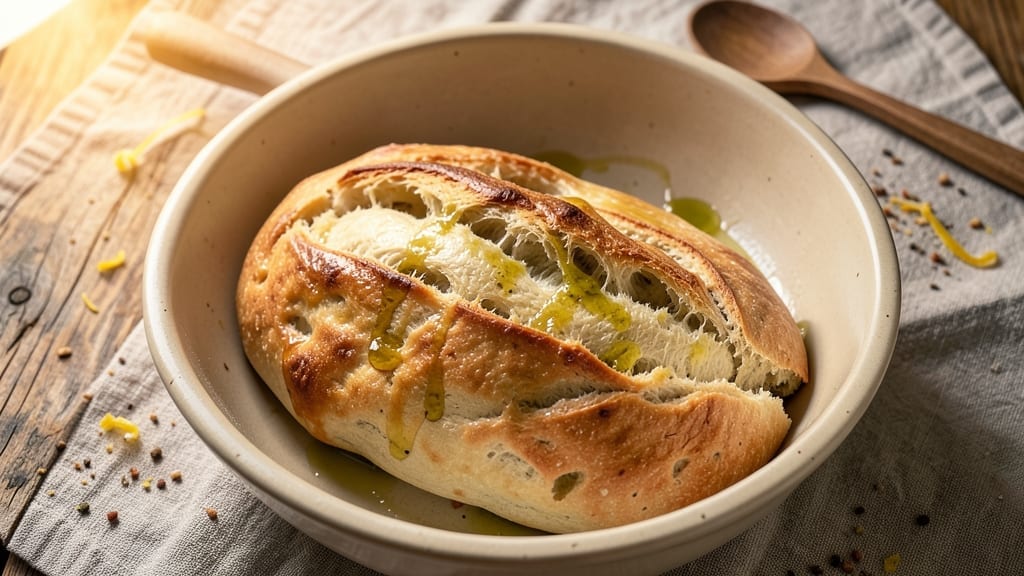
This 5-ingredient ciabatta bread recipe delivers restaurant-worthy crusty crunch without the fuss of traditional kneading or long proofing times. The secret lies in a simple dough that develops flavor and texture through minimal handling, yet still achieves that signature airy crumb and crisp exterior.
I’ve perfected this method after years of testing—no special equipment, no complicated techniques, just five basic ingredients and about 30 minutes of active time.
The beauty of this ciabatta is its foolproof process: mix, shape, proof, and bake. The dough’s high hydration creates those signature holes without requiring hours of fermentation, while the quick rise ensures you won’t spend all day waiting for it to double.
What makes this recipe truly special is how it transforms simple pantry staples into bread that rivals artisanal loaves—just with less effort.
By the time it emerges from your oven, you’ll have a loaf with a golden, shatteringly crisp crust that gives way to a soft, open crumb perfect for soaking up soups or pairing with olive oil and balsamic.
The best part? No need to wake up early or dedicate your entire day to baking—this ciabatta comes together during regular weekday hours and delivers professional results every time.
Whether you’re a beginner baker or simply want a reliable ciabatta recipe, this method delivers consistent, satisfying results. The dough is forgiving, the process is straightforward, and the end product is worth every minute of preparation.
Let’s get started on making your next loaf of bread the easiest—and most impressive—one yet.
Ingredients for 5 ingredient ciabatta bread
Five pantry staples transform into restaurant-quality ciabatta with minimal effort.
| Ingredient | Amount | Notes |
|---|---|---|
| All-Purpose Flour 🌾 | 3 ½ cups | High-protein preferred for better texture |
| Active Dry Yeast 🍞 | 1 tsp | Ensure yeast is fresh and active |
| Granulated Sugar 🍚 | ½ tsp | Feeds yeast for faster rise |
| Salt 🧂 | 1 ½ tsp | Diamond Crystal preferred for accuracy |
| Water 💧 | 1 ½ cups | Room temperature for optimal activation |
| Olive Oil 🫒 | 1 tbsp | Extra-virgin for enhanced flavor |
The flour is everything here. King Arthur or Caputo Tipo 00 elevate this recipe, but all-purpose works in a pinch—just expect slightly less open crumb. Yeast quality matters: Fresh yeast from the refrigerated section at Whole Foods or Trader Joe’s activates faster than those ancient packets in your pantry. Test your yeast first by mixing it with warm water and sugar—if it bubbles within 10 minutes, you’re good to go. Room temperature water is non-negotiable; cold water slows fermentation, while hot water kills the yeast. For the olive oil, California avocado oil is my go-to—neutral flavor that doesn’t compete with the bread’s natural taste.
No high-protein flour? Add 1 tbsp vital wheat gluten to regular all-purpose for better elasticity. Short on time? Instant yeast works at the same measurement, but active dry yeast develops more complex flavors. The sugar can be swapped for honey (reduce by 10%) if you prefer, though granulated sugar ensures consistent results. Olive oil substitutes? Melted butter adds richness but requires careful measurement—1 tbsp melted butter equals 1 tbsp oil by volume. For a vegan option, avocado oil maintains the same neutral profile. The salt is critical: Diamond Crystal kosher salt measures differently than table salt—use the scale if you’re unsure.
This dough is highly perishable once mixed. Use within 12 hours for optimal texture, though it can be refrigerated overnight if wrapped tightly in plastic. For longer storage, shape the dough into a log, wrap in plastic, and freeze for up to 3 months. Thaw overnight in the fridge before baking. The baked loaf keeps well at room temperature for 2-3 days when wrapped in a clean kitchen towel. For reheating, wrap the cooled loaf in foil and warm at 300°F (150°C) for 10 minutes to restore crispness.
Why You’ll Love This Recipe
- No-Fuss Dough: I swear by this—just mix flour, yeast, sugar, salt, and water. No kneading, no waiting hours. The yeast does all the work while I sip coffee, and the dough comes together in five minutes flat.
- Crispy Magic: That airy, shatteringly crisp crust with a soft, pillowy center? It’s all in the quick stretch and hot bake. Honestly, the first time I pulled it out of the oven, I nearly dropped it. Worth every second.
- Weeknight Hero: Toss it with olive oil and garlic for dipping, tear it over salads, or freeze slices for toast later. I keep a loaf in the fridge at all times—because nothing beats fresh ciabatta when I’m too tired to cook.
- Pantry Staple: Five ingredients, zero waste. The flour and yeast last forever, and the sugar/salt are already in my cabinet. Between us, I’ve made this on a $3 budget and fed four people. That’s not just bread—that’s a money move.
Step-by-step instructions for 5-Ingredient ciabatta bread
Here’s how to transform simple ingredients into artisanal-style ciabatta with minimal effort.
Activate the Yeast and Mix the Dough
In a large mixing bowl, combine the 1.5 cups water with the 0.5 tsp granulated sugar and 1 tsp active dry yeast. Let this mixture sit for 5-10 minutes until it becomes frothy and bubbly—this confirms your yeast is active. If it doesn’t bubble, your yeast may be old or your water too warm.
Once bubbly, add the 3.5 cups all-purpose flour and 1.5 tsp salt to the bowl. Using a wooden spoon or your hands, mix until a shaggy dough forms. Then add the 1 tbsp extra-virgin olive oil and continue mixing until the dough comes together. It should be sticky but manageable—this is normal for ciabatta. Avoid adding extra flour, as it will affect texture.
Shape and Rest the Dough
Transfer the dough to a lightly oiled work surface and gently shape it into a rough rectangle about 12×8 inches. Fold the dough over itself like a letter, then flip and repeat this process 2-3 times to develop gluten. This creates the signature air pockets and open crumb structure.
Place the shaped dough on a parchment-lined baking sheet, cover loosely with plastic wrap, and let it rest at room temperature for 1 hour. The dough should nearly double in size, with visible bubbles forming on the surface. If your kitchen is cold, place it in a slightly warm spot to encourage rising.
Preheat and Score the Dough
Preheat your oven to 425°F with a baking stone or inverted baking sheet on the middle rack. This ensures even heat distribution for crispy crust. While the oven heats, use a sharp razor blade or serrated knife to score the dough in a diagonal lattice pattern about ½-inch deep. This prevents over-expansion and creates those beautiful air pockets.
Lightly spray the dough with water using a spray bottle—this creates steam during baking for a crisp crust. Place the baking sheet on the preheated stone or rack and bake for 20-25 minutes until the bread is deep golden brown and sounds hollow when tapped on the bottom.
Cool and Serve
Remove the ciabatta from the oven and let it cool on a wire rack for at least 15 minutes before slicing. The internal temperature should drop to 130°F for optimal texture. Cutting too soon will make the bread gummy.
Serve warm or at room temperature. The crust should be crispy with shatterable edges, while the interior remains soft and airy. Store leftovers wrapped in a clean kitchen towel to maintain freshness for up to 3 days. For extra flavor, brush warm slices with olive oil and sprinkle with flaky sea salt before serving.
Pro Tips For Making 5 Ingredient Ciabatta Bread
- Mix Yeast with Warm Water First: Skip the dry yeast in flour—it’s a rookie move. Sprinkle that active dry yeast directly into the warm water (not boiling, but close) with sugar first, then let it foam for 5 minutes. This guarantees your yeast wakes up before meeting the flour, or you’ll end up with a brick instead of bread.
- Use Lukewarm Water: Cold water kills yeast; hot water cooks it. Fill your measuring cup with water, let it sit for 10 minutes after boiling, then test it by dipping your finger in—it should feel like bath water, not a sauna. Your dough’s rise depends on this.
- Don’t Over-Knead the Dough: This isn’t pizza dough—you’re not trying to build a muscle. Mix just until the flour is hydrated, then let it rest. Overworking it makes ciabatta dense. Trust the gluten to develop during the 45-minute bulk rise.
- Shape Loaves Early: Shape your dough into loaves right after the first rise, even if it’s not doubled. Waiting too long turns your airy crumb into a sad, compact mess. Wet your hands, fold the dough gently, and tuck it into pans—no need to force it.
Make-ahead tips for 5 ingredient ciabatta bread
Dough Prep Ahead
Mix your dough up to 24 hours in advance and store it in an airtight container lined with plastic wrap. Keep it in the fridge to slow fermentation—this actually deepens flavor!
When ready to bake, let it sit at room temperature for 1 hour before shaping and scoring. I often prep dough on Sunday evenings for fresh bread Monday morning. 💫
Proofing Shortcuts
Skip the hour-long proofing by using the oven’s pilot light (if your oven has one) or a proofing box with a bowl of hot water. Place the dough in a warm spot near the oven’s light for 30-40 minutes—it’ll rise just as well.
For even faster results, pop the dough in a 250°F (120°C) oven for 15 minutes with the light on, then finish proofing at room temp. This cuts active time in half!
Freezing Shaped Dough
Shape your ciabatta dough, wrap it tightly in plastic wrap, then place it in a freezer bag for up to 3 months. When ready to bake, thaw in the fridge overnight, then proceed with scoring and baking as usual.
The texture stays just as light and airy—no compromise! I freeze dough when I know I’ll be busy during the week. ❄️
Baked Loaf Storage
Cool your baked ciabatta completely, then wrap it in a clean kitchen towel (not plastic) to trap moisture and maintain crispness. Store at room temperature for 2-3 days—this method keeps it fresher than refrigeration.
For longer storage, slice the loaf, wrap each piece in parchment, and freeze for up to 1 month. Reheat slices in a 350°F (175°C) oven for 5-7 minutes for that just-baked crunch.
Make-Ahead Baking
Prep everything except baking the day before: mix dough, shape it, and refrigerate overnight. Score and bake in the morning—your kitchen will smell amazing when you wake up!
For a truly hands-off approach, use instant yeast (same measurement) to speed up fermentation. I’ve baked ciabatta this way for weekend brunches without any extra effort. 🌟
Batch Baking Tips
Double the recipe and bake two loaves at once by using a half-sheet pan or two baking stones. Divide the dough into two equal portions, shape and proof each separately, then bake simultaneously.
This is perfect for meal prep—store one loaf to enjoy fresh, and freeze the other. Just remember to leave 1 inch of space between loaves for even browning. 🔥
Nutrition facts
Frequently asked questions
Why does my ciabatta dough look too sticky?
The high hydration in ciabatta creates a naturally sticky dough—this is normal! Avoid adding extra flour, as it will make the crumb denser. Instead, wet your hands slightly when handling it, and use a dough scraper to prevent sticking. The stickiness actually helps create those signature air pockets when properly folded.
Can I use whole wheat flour instead of all-purpose?
Yes, but replace only half the all-purpose flour with whole wheat for best results. Whole wheat absorbs more liquid, so you may need to add 1-2 tablespoons extra water. The texture will be denser, but still delicious. For a lighter loaf, stick with all-purpose or bread flour.
What if my ciabatta doesn’t rise enough?
Cold kitchen? Try placing the dough in a slightly warm spot (like near the oven with the light on) for 30-40 minutes to help it proof faster. If using old yeast, it may not activate properly—always test your yeast first by mixing it with warm water and sugar to check for bubbles.
How do I get that perfect crispy crust?
Preheat your oven to 425°F with a baking stone or inverted sheet pan for 30 minutes before baking. Spray the dough with water right before baking to create steam, and bake on the middle rack. For extra crunch, broil for 1-2 minutes at the end (watch closely!).
Can I make ciabatta without olive oil?
Yes! Substitute with 1 tbsp melted butter (for richer flavor) or avocado oil (neutral taste). Just ensure the oil is at room temperature when mixing. The fat content helps create that signature tender crumb, so don’t skip it entirely.

- 32 Oz Cream Cheese Cheesecake Recipe: Silky Smoothness With No Cracking - October 11, 2026
- 8×8 Pan Dump Cake Recipe: One-Bowl Wonder with Fudgy Layers - October 11, 2026
- 10-Layer Cake Recipe: Stacked Height With Buttery Vanilla Layers - October 11, 2026