
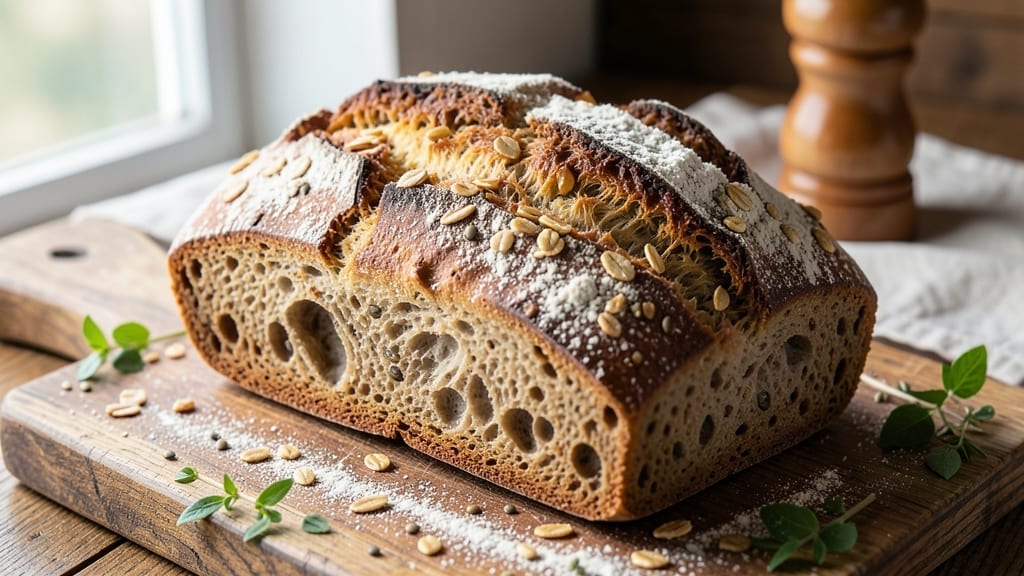
This 15-grain bread recipe delivers a hearty, nutty loaf packed with texture and wholesome flavor—perfect for sandwiches, toast, or serving alongside soups. 🌾 The secret lies in blending whole grains like wheat berries, spelt, and flaxseed with traditional flour for a complex, satisfying bite that’s far from your typical store-bought loaf.
I’ve perfected this recipe over years of baking, ensuring every slice offers that satisfying crunch and depth of flavor that keeps people reaching for seconds.
What sets this 15-grain bread apart is the balance of technique and simplicity. You’ll need a mix of flours and grains, along with a bit of patience for kneading and proofing, but the process is straightforward enough for home bakers.
The dough develops a rich, nutty aroma as it rises, and the crust turns a beautiful golden brown when baked at the right temperature. This recipe is designed to yield a loaf that’s both rustic and refined—ideal for those who appreciate artisanal bread without the fuss of professional equipment.
The result is a nutty, crunchy loaf with a tender crumb and a crust that’s just crisp enough to hold up to your favorite toppings.
Whether you’re making it for a family dinner or prepping for the week, this bread stays fresh longer than most, thanks to the natural oils in the grains. The flavor profile is complex—earthy from the grains, slightly sweet from the honey, and balanced by the tang of yeast.
It’s the kind of bread that makes you feel like you’ve achieved something special in your kitchen.
Ready in about 2 hours from start to finish, this recipe is perfect for a weekend project or a cozy weeknight baking session.
The key steps—kneading, proofing, and scoring the crust—are all manageable, and I’ll walk you through each one to ensure you get a loaf that’s as impressive as it is delicious. Let’s get started on creating your own wholesome, homemade bread.
Ingredients for 15 grain bread
Here’s your pantry-to-table guide for crafting wholesome, nutty 15-grain bread—no specialty stores needed.
| Ingredient | Amount | Notes |
|---|---|---|
| All-Purpose Flour 🌾 | 3 cups | Unbleached for best texture |
| Whole Wheat Flour 🌾 | 1 cup | Adds hearty texture and nuttiness |
| Wheat Berries 🌾 | ½ cup | Toasted for enhanced flavor (soak overnight if uncooked) |
| Spelt Flour 🌾 | ½ cup | Adds ancient grain depth |
| Flaxseed 🌾 | ¼ cup | Ground for omega-3 boost |
| Oat Flakes 🌾 | ¼ cup | Steel-cut or old-fashioned |
| Rye Flour 🌾 | ¼ cup | Adds earthy complexity |
| Cornmeal 🌾 | ¼ cup | For crust texture |
| Active Dry Yeast 🍞 | 2 ¼ tsp | Ensure freshness (test in warm water) |
| Honey 🍯 | ¼ cup | Light variety preferred |
| Unsalted Butter 🧈 | ½ cup | Cold, cubed for easier mixing |
| Warm Water 💧 | 1 ¼ cups | 110°F for ideal yeast activation |
| Salt 🧂 | 1 ½ tsp | Kosher or sea salt |
| Olive Oil 🫒 | 2 tbsp | For dough enrichment |
Most of these grains you’ll find in the baking aisle or bulk section—Bob’s Red Mill or King Arthur carry everything you need. Wheat berries and spelt can be pricey, so buy in bulk if you’ll use them often. Toast your grains before mixing (just 5 minutes in a dry pan)—this deepens their flavor. The flaxseed? Grind it fresh right before baking to preserve those healthy oils. If you’re short on time, skip the overnight soak for wheat berries—they’ll still add texture, just less chew.
No wheat berries? Substitute with extra oats or quinoa—same nutty vibe. Running low on spelt? Brown rice flour works in a pinch, though it’ll be less tender. The honey can be swapped for maple syrup or agave, but honey’s slight tang balances the grains beautifully. Butter hater? Coconut oil or vegan butter keeps the dough from drying out. And if your yeast isn’t fresh? Test it first—drop it in warm water with a pinch of sugar; if it bubbles in 5 minutes, you’re good to go.
Store your grains in airtight containers away from light—they’ll keep for 6-12 months. Once baked, this bread stays fresh for 5-7 days wrapped in a cloth, or freeze slices for 3 months. Pro tip: Toast slices before serving—it brings out the nuttiness and revives that crusty texture. Leftovers? Toss them in a toaster oven at 350°F for 5 minutes to refresh.
Why You’ll Love This Recipe
- No-Knead Magic: I swear by this—just mix, let it rise, and bake. The wheat berries and spelt do most of the work while you’re scrolling or sipping coffee.
- Nutty Crunch Surprise: That toasted wheat berry bite? It’s like hidden treasure in every slice. Honestly, I didn’t expect it, but now I add extra just for the texture.
- Weeknight Sandwich Hero: From PB&J to grilled cheese, this bread handles it all. (Yes, even on a Tuesday night.) The flaxseed keeps it sturdy—no soggy mess here.
- Budget-Friendly Staple: Uses pantry basics but feels fancy. I make two loaves, freeze one, and still save money. My wallet and freezer both thank me.
Step-by-step instructions for 15-Grain bread
This nutty, wholesome loaf comes together with patience and simple techniques.
👨🍳 Step 1: Prepare the Grains and Activate the Yeast
First, toast the 0.5 cup wheat berries in a dry skillet over medium heat for 5-7 minutes, stirring constantly until they’re fragrant and lightly golden. Let them cool completely before using—this enhances their nutty flavor. While they cool, grind the 0.25 cup flaxseed in a spice grinder or coffee grinder until you have a fine meal. This releases the omega-3s and helps bind the dough.
In a small bowl, combine the 2.25 tsp active dry yeast, 0.25 cup honey, and ½ cup of the 1.25 cups warm water (about 110°F). Let it sit for 5-10 minutes until it becomes frothy and bubbly. This confirms your yeast is alive and ready to work its magic. If it doesn’t bubble, start over with fresh yeast—this is the foundation of your bread!
🥘 Step 2: Mix the Dough with Wet and Dry Ingredients
In a large mixing bowl, combine the 3 cups all-purpose flour, 1 cup whole wheat flour, 0.5 cup spelt flour, 0.25 cup rye flour, 0.25 cup oat flakes, 0.25 cup cornmeal, and 1.5 tsp salt. Whisk to distribute everything evenly—this prevents pockets of dry flour later. Create a well in the center and add the yeast mixture, 0.5 cup cold cubed unsalted butter, and 2 tbsp olive oil. The butter should stay cold to prevent over-developing the gluten too quickly.
Using a wooden spoon or dough whisk, gradually mix the wet ingredients into the dry until you have a shaggy mass. Then, add the remaining ½ cup warm water and mix until just combined. The dough will be sticky—this is normal with all these grains! Scrape down the sides of the bowl and let it rest for 10 minutes to hydrate fully. This step ensures even gluten development and prevents a dense loaf.
🔥 Step 3: Knead and Develop the Gluten
Turn the dough onto a lightly floured surface (use just enough to prevent sticking) and knead for 8-10 minutes by hand, or use a stand mixer with a dough hook on medium speed for 5-6 minutes. You’re looking for a smooth, elastic dough that springs back when poked—this means the gluten has developed properly. The dough should feel slightly tacky but not wet. If it’s too sticky, add 1 tablespoon flour at a time until it’s workable.
Here’s the thing—this dough is different from regular bread dough because of all the grains. It won’t be as smooth, but that’s okay! The texture should be firm yet pliable. If you’re unsure, do the “windowpane test”: stretch a small piece of dough thin enough to see light through it. If it tears easily, knead for another 2 minutes. Once satisfied, shape the dough into a ball, place it back in the bowl, and cover with a damp towel. Let it rise in a warm place for 1-1.5 hours, or until it has doubled in size.
⏰ Step 4: Shape and Proof the Loaf
Punch down the risen dough to release air, then divide it into two equal pieces. Shape each piece into a round boule by pulling the edges toward the center and tucking them under. Place the boules seam-side up on a parchment-lined baking sheet, cover with the damp towel, and let them rise again for 30-45 minutes until puffy. The dough should spring back slowly when poked—this indicates it’s ready for the oven.
Preheat your oven to 375°F with a Dutch oven inside for 30 minutes. This creates a steamy environment that gives your bread a crisp crust and open crumb. Once preheated, carefully transfer the boules to the hot Dutch oven, cover, and bake for 30 minutes. Then, remove the lid and bake for another 15-20 minutes until the bread is deep golden brown and sounds hollow when tapped on the bottom.
🍞 Step 5: Cool and Enjoy Your Nutty Loaf
Remove the bread from the oven and let it cool on a wire rack for at least 1 hour before slicing. I know it’s tempting to dig in immediately, but cooling prevents a gummy texture. The crust should be crisp and the interior should have an open, airy crumb with visible pockets of grain texture—this is your reward for all that kneading!
Slice the bread and serve warm with butter or your favorite spread. The combination of wheat berries, rye flour, and oat flakes gives it a satisfying nutty crunch, while the spelt flour adds depth. Store leftovers in an airtight container for up to 3 days, or freeze for longer storage. This bread is perfect for toast, sandwiches, or simply enjoyed with soup—every bite is a celebration of wholesome grains!
Pro Tips For Making 15 Grain Bread
- TOAST THE GRAINS FIRST: Wheat berries and spelt flour need a quick toast in a dry pan for 3-4 minutes before mixing—this cuts bitterness and makes the bread lighter. I used to skip this and ended up with a dense, slightly sour loaf that took forever to bake.
- WEIGH YOUR FLOURS: Scooping flours leads to inconsistent results, especially with whole wheat and spelt. Use a kitchen scale for all dry ingredients—this recipe’s texture relies on precise ratios, and that extra cup of whole wheat you eyeballed will make the dough gummy.
- DON’T OVER-KNEAD: The flaxseed and extra fiber in this dough make it tough if you work it too hard. Stop when the dough pulls away cleanly from the bowl—about 8-10 minutes by hand—and let the gluten relax during the first rise. I’ve ruined loaves by overworking them, and you’ll know it when the crumb turns dense.
- USE COLD WATER FOR DOUGH: Mixing the dough with cold water (around 60°F) slows fermentation just enough to give you control, especially with whole grains. Warm water makes the dough rise too fast, leading to a collapsed loaf or uneven texture—trust me, I’ve seen both.
Creative variations of these flavors
Sweet Swirl Version
Add ¼ cup honey or maple syrup to the dough for a subtle sweetness, then fold in ½ cup chopped walnuts or pecans before shaping. Brush the baked loaf with melted butter and sprinkle with 1 tbsp cinnamon sugar for a breakfast-friendly twist.
This variation works beautifully with jam or peanut butter—perfect for morning toast. 🍯
Herb-Infused Crust
Mix 1 tbsp fresh rosemary or thyme leaves into the dough before shaping, then sprinkle with 1 tsp coarse sea salt before baking. The herbs add an aromatic depth that pairs wonderfully with roasted meats or hearty soups.
For extra flavor, brush the crust with garlic-infused olive oil after baking. This technique elevates the rustic appeal of your loaf. 🌿
Seed-Enhanced Texture
Boost the crunch by adding ¼ cup sunflower seeds and ¼ cup pumpkin seeds to the dough. These seeds contribute extra texture and a nutty complement to the grains. Toast the seeds in a dry pan for 3-5 minutes before mixing to enhance their flavor.
The result is a bread with satisfying bite in every slice—ideal for sandwiches or as a side. 🌱
Savory Garlic Twist
Incorporate 2 minced garlic cloves and 1 tsp garlic powder into the dough for a bold, savory profile. This variation shines when served with olive oil dips or as the base for garlic bread.
The garlic enhances the nuttiness of the grains while adding a robust flavor that pairs well with almost any meal. 🧄
Whole-Grain Flatbread
Skip the shaping step and roll the dough into a ¼-inch thick rectangle on a floured surface. Brush with olive oil and sprinkle with 1 tsp everything bagel seasoning before baking at 375°F for 15-20 minutes.
This creates a versatile flatbread perfect for wraps, dipping, or as a crust for personal pizzas. The texture is crispy yet tender, with a flavorful crust. 🌯
Spiced Pumpkin Loaf
Replace ½ cup of water with ½ cup pumpkin puree and add 1 tsp pumpkin pie spice to the dough. Shape into a loaf and bake as directed.
The pumpkin adds moisture and a subtle sweetness that balances the earthy grains. This variation is perfect for fall and pairs beautifully with chili or roasted vegetables. 🎃
Nutrition facts
Frequently asked questions
Why does this 15-grain bread recipe use so many different flours?
Each grain brings unique texture and flavor—wheat berries add chewiness, spelt contributes ancient grain depth, and rye provides earthy complexity. The combination creates a satisfying crunch while keeping the crumb tender. You can adjust ratios if you’re missing one grain, but aim for at least 10-12 grains for that signature nutty profile.
Can I make this bread without a stand mixer?
This dough is designed for hand-kneading. Work it on a lightly floured surface for 8-10 minutes until smooth and elastic. The grains make the dough slightly stickier, so use just enough flour to prevent sticking. For best results, use a dough scraper to help gather and fold the dough.
What’s the best way to store leftover 15-grain bread?
Wrap cooled slices in a beeswax wrap or cloth bag to maintain freshness for 3-4 days. For longer storage, freeze slices for up to 3 months. Toast frozen slices directly in the toaster for 2-3 minutes at 375°F to revive the crust. The grains’ natural oils help preserve moisture better than white bread.
Why did my bread turn out dense instead of light and airy?
Dense bread usually means underproofed dough or over-kneading. Let the dough rise until it doubles in size (about 1-1.5 hours for first rise). If your kitchen is cold, place the bowl near a warm oven with the light on. Also, check your yeast—it should bubble vigorously in warm water with honey before mixing.
Can I substitute any of the grains for gluten-free options?
For a gluten-free version, replace 1:1 with gluten-free flour blend (like Bob’s Red Mill 1:1) and add ½ tsp xanthan gum to bind the dough. Note the texture will differ—expect a denser crumb. For best results, use a gluten-free bread recipe as a base and add grains like quinoa or millet for texture. The flavor won’t be identical, but it’ll still be delicious!

- 8 Ounce Crab Cakes Recipe: Golden Crust With Luminescent Crab Hearts - October 12, 2026
- 1950’s Betty Crocker Banana Bread Recipe: Nostalgic Spice Swirls and Moist Crumb - October 12, 2026
- 2 Quart Homemade Ice Cream Recipe: Ultra Creamy Vanilla Bean Swirls - October 12, 2026