
This 3-egg pasta dough recipe delivers restaurant-quality results with just five ingredients and no kneading required—perfect for homemade pasta nights. The secret lies in the ratio of eggs to flour, which creates a silky, elastic dough that rolls out effortlessly.
I’ve tested countless variations, and this version consistently produces tender yet sturdy noodles with a delicate texture. What sets this recipe apart is the no-knead method, saving you time while ensuring a smooth, airy dough.
The eggs provide natural richness, while a touch of olive oil keeps the strands supple. Resting the dough for 30 minutes allows the gluten to relax, making rolling and cutting a breeze—no stiff, crumbly mess here.
By the time you’re done, you’ll have perfectly shaped pasta that cooks in minutes and absorbs sauces like a dream. The dough’s lightness comes from proper hydration and gentle handling, resulting in strands that hold their shape without turning mushy.
Serve with your favorite sauce for a meal that feels like a night in Italy. Whether you’re making fresh fettuccine, tagliatelle, or even ravioli, this dough is your foundation. Let’s get started—your kitchen is about to transform into a pasta workshop.
Ingredients for 3 egg pasta dough
Five simple ingredients transform your kitchen into a pasta workshop—no fancy tools needed.
| Ingredient | Amount | Notes |
|---|---|---|
| Large Eggs 🥚 | 3 whole | Room temperature for best mixing |
| All-Purpose Flour 🌾 | 2 ½ cups | Plus 1 tbsp for dusting |
| Extra-Virgin Olive Oil 🫒 | 1 tbsp | High quality, fruity flavor |
| Fine Sea Salt 🧂 | ½ tsp | Kosher or sea salt preferred |
| Freshly Ground Black Pepper 🌶️ | ¼ tsp | Freshly cracked for best flavor |
The eggs are the star here. Fresh, room-temperature eggs mix better and create a smoother dough. Kirkland Signature or Vital Farms are my go-tos—they’re consistently high quality. If you’re using cold eggs straight from the fridge, let them sit out for 30 minutes first. The flour matters too—King Arthur or Caputo Tipo 00 are ideal, but all-purpose works in a pinch. Just don’t use bread flour unless you’re making a different type of pasta. The olive oil keeps the dough supple, so look for extra-virgin with a harvest date—the fresher, the better. If you’re worried about the dough being too sticky, add flour gradually during mixing.
No room-temperature eggs? Run them under warm water for 2 minutes—works like a charm. Short on olive oil? Avocado oil or melted coconut oil works too, though the flavor will differ slightly. The salt and pepper are just for flavor, but if you’re sensitive to salt, you can reduce it to 1/4 teaspoon. Want to make this gluten-free? Substitute 2 cups of gluten-free all-purpose flour blend—just know the texture will be slightly different. The key is to handle the dough gently; overworking it will make it tough. And if your dough feels too dry, add water 1 teaspoon at a time until it comes together.
This dough keeps beautifully—wrap it tightly in plastic wrap and refrigerate for up to 3 days. For longer storage, freeze portions wrapped in plastic for 3 months. When ready to use, let it sit at room temperature for 30 minutes before rolling. The dough doubles in size when rested, so don’t panic if it looks huge after resting. And if you’re making more than you can use, portion and freeze—it thaws quickly and rolls out like a dream. Leftovers? Toss them in the fridge for up to 2 days before using.
Why You’ll Love This Recipe
- No-Knead Magic: I swear by this dough—just flour, eggs, and a drizzle of olive oil, then a quick fold. No stand mixer, no arm fatigue, just 10 minutes of hands-on time before letting it rest while you sip your coffee.
- Rich & Simple: That third egg makes all the difference—silky, tender strands with just the right chew. Honestly, the olive oil infusion gives it a subtle depth that store-bought can’t touch, and the salt and pepper balance it perfectly.
- Weeknight Flex: Between us, this dough is my secret weapon for busy nights. Roll it thin for quick fettuccine, cut it into squares for ravioli, or even press it into a crust. It’s the one recipe that turns “what’s for dinner?” into “oh, that was easy.”
- Budget Bulk: Three eggs stretch farther than you’d think, and the ingredients cost pennies. I make a double batch, freeze half, and always have backup for last-minute pasta nights—no wasted money, no wasted effort.
Step-by-step instructions for 3 egg pasta dough
Here’s how to make the perfect no-knead dough that’s light, tender, and ready for any shape.
Combine Wet Ingredients for Smooth Mixing
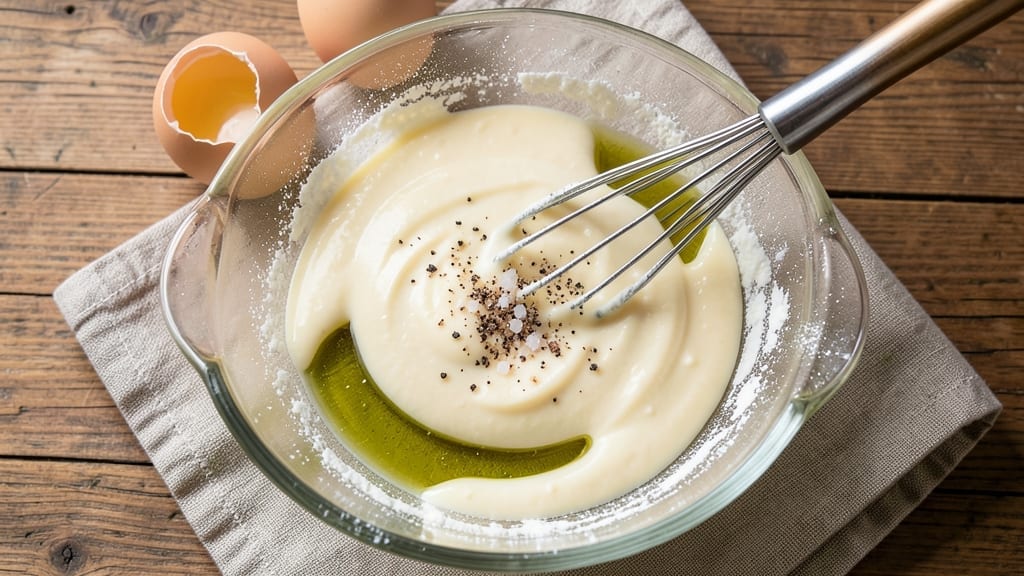
Crack the 3 whole Large Eggs into a large bowl. Add the 1 tbsp Extra-Virgin Olive Oil and whisk vigorously for 1-2 minutes until the yolks and whites are fully blended and the mixture turns pale yellow. This step ensures even distribution of fat, which prevents dry pasta later.
Add the 0.5 tsp Fine Sea Salt and 0.25 tsp Freshly Ground Black Pepper to the egg mixture. Whisk again for 30 seconds until completely dissolved. The salt should disappear entirely, and the pepper should be evenly distributed. This is your base—no lumps allowed, as they’ll create uneven texture in the final dough.
Gradually Incorporate the Flour
Add the 2.5 cups All-Purpose Flour to the bowl in a slow, steady stream while stirring continuously with a wooden spoon or silicone spatula. Start at the center and work your way outward to prevent clumping. You’ll notice the mixture will look shaggy at first—this is normal.
Once all the flour is incorporated, switch to your hands. Use your fingers to gently work the dough together for 2-3 minutes. You’re looking for a soft, slightly tacky consistency that holds together when pressed but doesn’t feel dry. If it’s too crumbly, add 1 teaspoon of olive oil at a time until it comes together. The dough should be just shy of smooth—no need to overwork it yet.
Rest the Dough for Maximum Elasticity
Lightly dust a clean work surface with 1 tablespoon of flour (from the extra amount mentioned in the ingredients). Turn out the dough and gently shape it into a loose oval. Cover it tightly with plastic wrap and let it rest at room temperature for 30 minutes. This resting period allows the gluten to relax, making the dough easier to roll out later.
During this time, I like to set up my rolling station. Place a clean kitchen towel on the counter and sprinkle it lightly with flour. Have your rolling pin ready—this prevents the dough from sticking as you work. The rest is crucial; skipping it will result in tougher pasta that’s harder to roll out smoothly.
Roll and Cut for Perfect Pasta
After resting, divide the dough into 4 equal pieces (about 8 ounces each). Work with one piece at a time, keeping the others covered with plastic wrap to prevent drying. On your floured towel, roll the dough piece into a thin sheet using a pasta machine or rolling pin. Start with the widest setting and gradually decrease until you reach your desired thickness—typically 1/16-inch for tagliatelle or 1/8-inch for fettuccine.
If using a pasta machine, feed the dough through 2-3 times at each setting to ensure even thickness. For a rolling pin, apply even pressure and rotate the dough as you roll to maintain consistent thickness. The dough should be smooth and slightly translucent when held up to the light—this indicates proper hydration and texture.
Shape and Cook Immediately
Cut the rolled dough into your desired pasta shape—whether it’s fettuccine strips, tagliatelle ribbons, or lasagna sheets. For fresh pasta, cook immediately in boiling salted water for 2-4 minutes (depending on thickness) until al dente. The pasta should float to the surface when done, and a quick taste test will confirm it’s perfectly tender.
Drain the pasta and toss immediately with your favorite sauce. The beauty of fresh pasta is its delicate texture and ability to absorb flavors instantly. Serve right away while still warm—this dough creates pasta that’s light as air, with a silky texture that store-bought versions can’t match. And the best part? No kneading required!
Pro Tips For Making 3 Egg Pasta Dough
- Crack Eggs Cold: I learned this the hard way—warm eggs slide out of their shells messily. Pop them straight from the fridge into a bowl, then let them sit for 5 minutes before mixing. The yolk stays intact, and your dough won’t turn into a sticky disaster.
- Measure Flour Right: Spoon that flour into the bowl, don’t scoop. Packing it compresses the dough, making it tough instead of tender. Use a scale if you’re serious, but at least level off the cup with a knife—no shaving the top.
- Knead Just Enough: You don’t need to turn this into a marathon. Once the dough comes together, give it 5–6 minutes of kneading—until it’s smooth but still slightly tacky. Overworking it makes it elastic and chewy, and nobody wants that.
- Rest It Properly: Wrap the dough in plastic and let it sit for at least 30 minutes before rolling. This relaxes the gluten, so it doesn’t shrink like crazy when you cook it. (Yes, even if you’re impatient like me.)
Best sauces and condiments for 3 egg pasta dough
Classic Tomato Sauce
This dough pairs beautifully with a simple tomato sauce made from 2 cups crushed San Marzano tomatoes, 2 tbsp olive oil, 3 garlic cloves minced, 1 tsp dried oregano, and a pinch of red pepper flakes.
Simmer for 20 minutes until thickened, then toss with your fresh pasta. The acidity of the tomatoes brightens the dough’s richness, creating a perfect balance. 🍅
Creamy Garlic Alfredo
For a decadent twist, try a garlic Alfredo sauce using ½ cup heavy cream, ½ cup grated Parmesan, 3 tbsp butter, and 3 minced garlic cloves.
Heat the butter and garlic over low heat for 2 minutes (don’t let it brown), then whisk in the cream and cheese until smooth. Toss with your pasta and finish with extra black pepper. The creamy texture contrasts the dough’s delicate structure beautifully.
Lemon Butter Sauce
A lemon butter sauce elevates this dough with its bright, zesty flavor. Melt 4 tbsp butter in a pan, then add 2 tbsp fresh lemon juice, 1 tbsp lemon zest, and a pinch of salt.
Toss with cooked pasta and garnish with chopped parsley. The citrus cuts through the richness of the eggs, making every bite refreshing and light.
Pesto Variations
Use this dough with homemade pesto made from 2 cups fresh basil, ¼ cup pine nuts, ½ cup grated Parmesan, 2 tbsp olive oil, and 1 garlic clove. Pulse in a food processor until smooth, then toss with pasta.
For a twist, add ¼ cup sun-dried tomatoes or walnuts for extra depth. The pesto’s bold flavors complement the dough’s silky texture perfectly. 🌿
Olive Oil & Herb Finish
For a no-sauce option, simply toss your cooked pasta with 2 tbsp high-quality extra-virgin olive oil, 1 tsp fresh thyme, 1 tsp fresh rosemary, and a sprinkle of flaky sea salt.
The oil’s richness enhances the dough’s natural flavor, while the herbs add a fragrant touch. This method highlights the pasta’s delicate texture without overpowering it.
Spicy Arrabbiata
Bring the heat with an arrabbiata sauce using 1 cup crushed tomatoes, 1 tbsp tomato paste, 2 garlic cloves minced, 1 tsp red pepper flakes, and ½ tsp dried basil.
Simmer for 15 minutes, then toss with pasta. The spicy kick pairs wonderfully with the dough’s mild flavor, creating a balanced, vibrant dish. 🌶️
Nutrition facts
Frequently asked questions
Why does this dough use only 3 eggs?
The 3-egg ratio creates the perfect balance between richness and lightness in your pasta. Too many eggs can make the dough overly dense, while too few result in dry strands. This ratio ensures tender yet sturdy noodles that hold their shape while absorbing sauces beautifully. It’s also more economical than traditional 4-egg recipes!
Can I substitute all-purpose flour for something else?
Yes, but with adjustments! For a gluten-free version, use a 1:1 blend like Bob’s Red Mill, adding 1 extra egg to help bind. For whole wheat, replace half the flour with whole wheat and add 1 tbsp olive oil to prevent dryness. The texture will differ slightly, but the flavor improves significantly.
How do I fix dough that’s too sticky?
Add flour 1 teaspoon at a time while mixing, but don’t overdo it! The dough should be soft and slightly tacky—not wet. If it’s still too sticky after adding flour, your work surface needs more dusting. For stubborn cases, chill the dough for 10 minutes before rolling to firm it up.
What’s the best way to store leftover dough?
Wrap tightly in plastic wrap and refrigerate for up to 3 days. For longer storage, freeze portions in airtight bags for 3 months. Thaw overnight in the fridge before using. Pro tip: Divide into 8-ounce portions before freezing to make rolling easier later.
Why does my pasta turn out gummy?
Overcooking or insufficient drying time causes gumminess. Cook fresh pasta for 2-4 minutes max—it’s done when it floats. For extra insurance, pat dried pasta strands with a paper towel before tossing with sauce. Also ensure your dough rested properly (no skipping the 30-minute rest!).

- Pea Soup Instant Pot Recipe: Velvety Green Smoothness in 20 Minutes - November 1, 2026
- Pork Loin Pulled Pork Crock Pot Recipe: Slow-Smoked Tenderness With Zero Dryness - November 1, 2026
- Baked Potatoes in Crock Pot Recipe: Buttery Interiors and Crispy Top Magic - November 1, 2026