
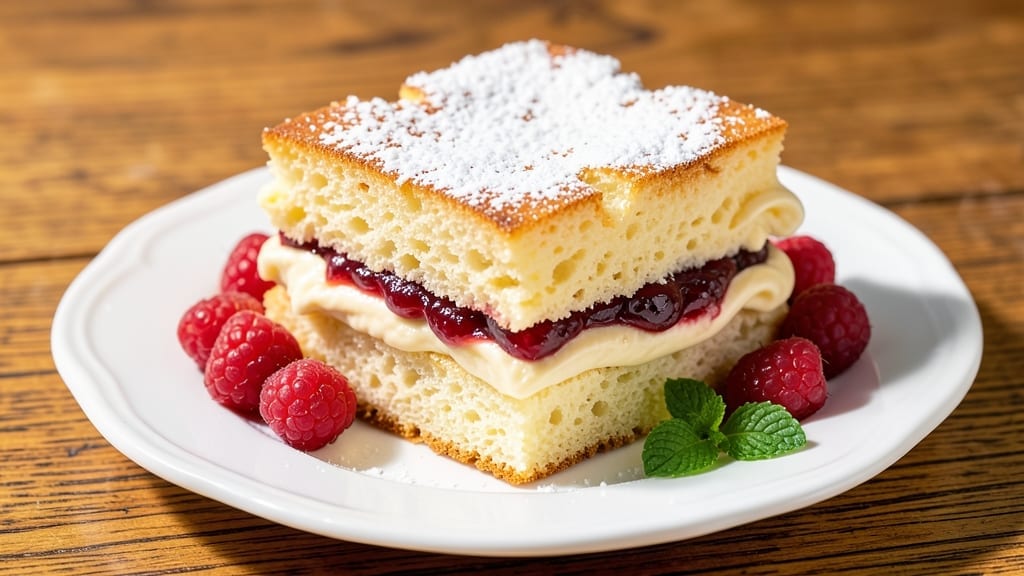
The 3 egg Victoria sponge cake delivers that perfect balance of tender crumb and delicate structure—no dense layers here. ✨ The secret lies in those three eggs, which create airy, light sponge layers that hold jam and cream like a dream.
I’ve baked this recipe countless times, and it never fails to impress with its classic elegance and foolproof technique.
This recipe focuses on simplicity without sacrificing quality. You’ll need basic pantry staples—flour, butter, sugar, and those three eggs—plus your choice of jam and whipped cream for filling.
The key is gentle folding to maintain airiness, and the result is a cake that’s crisp at the edges yet tender inside, with layers that stay perfectly intact.
What you’ll end up with is a timeless dessert that’s light enough to feel indulgent yet substantial enough to satisfy. The jam soaks into the sponge just enough to create a moist, flavorful bite, while the whipped cream adds a cloud-like finish.
It’s the kind of cake that feels both nostalgic and fresh—ideal for afternoon tea or special occasions.
Once you master this classic, you can experiment with flavors like lemon curd or raspberry filling, or even modern twists like matcha or salted caramel. But for now, let’s focus on the traditional method that makes this sponge legendary. Here’s how to achieve it every time.
Ingredients for 3 egg victoria sponge
Six simple ingredients create the perfect Victoria sponge—light, tender layers that hold jam and cream beautifully.
| Ingredient | Amount | Notes |
|---|---|---|
| All-Purpose Flour 🌾 | 2 cups | Sifted for light texture |
| Unsalted Butter 🧈 | 1 cup | Softened to room temp |
| Granulated Sugar 🍚 | 1 ½ cups | Superfine preferred |
| Large Eggs 🥚 | 3 whole | Room temperature |
| Vanilla Extract 🌿 | 1 tsp | Pure vanilla preferred |
| Baking Powder 🧂 | 1 tsp | For lift and structure |
| Salt 🧂 | ¼ tsp | Fine sea salt |
| Jam 🍓 | ¾ cup | Raspberry or strawberry |
| Heavy Whipping Cream 🥛 | 1 ½ cups | Cold for whipping |
| Powdered Sugar 🍚 | ½ cup | For sweetening cream |
| Lemon Juice 🍋 | 1 tsp | Stabilizes whipped cream |
The butter matters here. Use European-style butter if you can find it—it has a higher fat content that keeps the sponge extra tender. I always grab Plugrá or President from the international aisle at Whole Foods or Costco, but regular unsalted butter works fine in a pinch. Room temperature is key—press your finger into the butter, and it should leave a slight indent but not be greasy. The eggs? Room temperature is non-negotiable—they whip up much better and create a lighter batter. Crack them gently into a separate bowl first to avoid shell bits in your batter.
No vanilla extract? Vanilla bean paste works perfectly, or scrape seeds from a vanilla bean if you’ve got one. The jam can be anything you love—raspberry, strawberry, or apricot are classics, but don’t be afraid to try something unexpected like orange marmalade. For the whipped cream, if you don’t have powdered sugar, granulated sugar at half the amount works in a bind. The lemon juice is crucial though—it stabilizes the cream so it doesn’t deflate. If you’re feeling fancy, add a pinch of salt to the cream for extra flavor. And if you’re making this ahead, whip the cream right before assembling—it holds up better.
This cake keeps beautifully—2 days at room temperature covered loosely with plastic wrap, or 3 days in the fridge with a layer of parchment between slices. For longer storage, wrap tightly in plastic and freeze for up to 1 month. I always make a double batch because it disappears fast—perfect for afternoon tea or a quick dessert. The secret to serving? Let it sit at room temperature for 10 minutes before cutting so the layers stay intact. And trust me, the first slice is always the best—warm, jam-soaked sponge with that cloud of whipped cream.
Why You’ll Love This Recipe
- Three Eggs Only: The butter and sugar creaming alone is my favorite part—fluffy, light, and no one will guess it’s just three eggs holding it all together. That’s right, no extra yolks or complicated ratios. Honestly, the sponge rises higher than my expectations every single time.
- Vanilla Kiss Magic: That splash of vanilla extract in the batter? It’s the secret weapon—warm, cozy, and not too sweet. The eggs and butter give it a rich depth, but the vanilla ties it all into something that tastes like a hug from a bakery you’ll never find.
- Picnic or Tea Time: Slice it into squares, pack it in a tin, and you’ve got a showstopper for picnics, book club gatherings, or just a fancy afternoon tea. Between us, it’s the one dessert I actually bring to potlucks because it’s foolproof and always disappears first.
- Budget Baking Wins: Three eggs, a stick of butter, and basic pantry staples—that’s it. No specialty ingredients, no markup, and leftovers? Toast them with jam for a breakfast that feels like a treat. I’ll be real: my wallet thanks me every time.
Step-by-step instructions for Victoria sponge cake
Here’s how to create that perfect fluffy, tender cake with layers of jam and whipped cream.
👨🍳 Step 1: Whisk Dry Ingredients for Lightness
In a medium bowl, sift together the 2 cups all-purpose flour, 1 teaspoon baking powder, and ¼ teaspoon salt. I always sift these dry ingredients first—it prevents lumps and ensures a light, airy texture. Use a whisk to break up any remaining clumps, then set the bowl aside.
This step is crucial for that classic Victoria sponge texture. If you skip sifting, you risk dense layers that won’t separate cleanly when sliced. I like to give the flour mixture a quick shake in the bowl to aerate it before adding the wet ingredients.
🍳 Step 2: Cream Butter and Sugar Until Pale
In a large mixing bowl, beat the 1 cup softened unsalted butter and 1½ cups granulated sugar together using an electric mixer on medium speed for 3-4 minutes. You’re looking for a light, fluffy mixture that’s pale in color—this incorporates air that will help the cake rise beautifully.
I press down on the butter occasionally with a spatula to make sure it’s fully softened. If the mixture feels grainy or doesn’t lighten in color, keep mixing for another minute. This is the foundation of your cake’s texture, so don’t rush it.
🍳 Step 3: Add Eggs One at a Time
Add the 3 whole large eggs, one at a time, mixing well after each addition. After the last egg is incorporated, add the 1 teaspoon vanilla extract and mix for another 30 seconds. The mixture should be thick and ribbon-like when you lift the beaters.
Here’s the thing—adding eggs one at a time prevents curdling. I like to scrape down the sides of the bowl with a spatula between each addition to make sure everything gets fully incorporated. This step ensures your cake will be tender and moist, not dry or crumbly.
🥘 Step 4: Combine Wet and Dry Ingredients
Gradually add the dry ingredient mixture to the wet ingredients, mixing on low speed just until combined. Be careful not to overmix—you should still see some flour streaks. This prevents developing too much gluten, which would make the cake tough.
I always stop mixing as soon as the flour disappears. The batter should be smooth and slightly thick. If it looks too stiff, you can add 1-2 tablespoons of milk (though our recipe doesn’t call for it), but with these exact measurements, it should be perfect as is.
🔥 Step 5: Bake in Two Layers
Preheat your oven to 350°F. Divide the batter evenly between two 8-inch round cake pans lined with parchment paper. I use a kitchen scale for precision—each pan should get about 1 cup of batter. Bake for 20-25 minutes or until a toothpick inserted in the center comes out clean.
Don’t open the oven during baking—this causes the cakes to sink. You’ll know they’re done when the edges are golden and the center springs back slightly when touched. Let the cakes cool in the pans for 10 minutes, then transfer to a wire rack to cool completely.
🥘 Step 6: Assemble the Classic Layers
Once the cakes are completely cool, level the tops if needed. Spread ½ cup of the ¾ cup jam evenly over the first cake layer. I use a small offset spatula for this—it gives me better control than a knife.
Whip the 1½ cups heavy whipping cream with the ½ cup powdered sugar and 1 teaspoon lemon juice until soft peaks form. This acidity helps stabilize the whipped cream so it doesn’t deflate. Spread half of the whipped cream over the jam, then place the second cake layer on top.
🍽️ Step 7: Final Assembly and Serving
Spread the remaining whipped cream over the top and sides of the cake. Dust with additional powdered sugar if desired. I like to chill the cake for 30 minutes before serving—this helps the layers set properly and makes the first slice look even more impressive.
Slice with a serrated knife that’s been dipped in hot water and wiped dry. This ensures clean cuts through the layers. Serve with a dollop of extra whipped cream on the side for that classic tea-time presentation.
Pro Tips For Making 3 Egg Victoria Sponge
- Use Room-Temp Eggs: Cold eggs from the fridge will curdle your butter mixture faster than you can say “sponge.” Take them out 30 minutes before starting—yes, even if you’re eager to bake. I learned this the hard way when my first batch turned into a lumpy mess.
- Cream Butter and Sugar Slowly: Don’t rush the butter-sugar stage—beat it on medium speed for 3-4 minutes until it’s pale and fluffy, not just “looking creamy.” High heat makes sugar grainy, and that’s the last thing you want in a Victoria sponge. (Your mixer will thank you too.)
- Weigh Your Flour Properly: Scooping flour from the bag packs in air, and that’s how you end up with a dense cake. Spoon it into a scale, then level it off—no shaking the bowl. I used to skip this, and my sponge always felt heavy. Now it’s light as a cloud.
- Don’t Overbake the Layers: Pull the cake out when the center still has a slight wobble—overbaking dries it out fast. A toothpick should come out with a few moist crumbs, not completely clean. (And for heaven’s sake, don’t open the oven door mid-bake!)
Wine and beer pairings for 3 egg victoria sponge
Classic Tea Time Wines
For a traditional Victoria sponge experience, reach for a crisp Champagne or Sparkling Wine—the bubbles mirror the cake’s lightness. I love Moët & Chandon Brut or Laurent-Perrier for their bright acidity and delicate fruit notes that complement the jam and cream.
The effervescence cleanses your palate between bites, making each slice feel fresh. 🥂
Fruit-Forward Whites
If you prefer still wines, a Sauvignon Blanc or Pinot Grigio works beautifully. A New Zealand Sauvignon Blanc (like Oyster Bay) adds zesty citrus and herbal notes that pair wonderfully with raspberry jam.
For something lighter, try an Italian Pinot Grigio—its crisp acidity balances the richness of the whipped cream. Chill these wines well!
Rich Red Alternatives
For a bolder pairing, a light-bodied red like Pinot Noir or Beaujolais (such as Domaine Chanson) adds depth without overpowering. The earthy notes of Pinot Noir complement the vanilla in the sponge, while Beaujolais’ juicy berry flavors echo the jam.
Serve these slightly cooler than room temperature for a refreshing contrast.
Beer Pairings
A Belgian Witbier like Hoegaarden or Stella Artois (with a lemon wedge) makes a fun, unexpected pairing. The citrusy notes cut through the sweetness of the jam and cream, while the effervescence keeps the palate fresh.
For something stronger, try a light lager like Heineken—its clean finish lets the cake’s flavors shine.
Dessert Wine Surprise
If you’re feeling indulgent, a Moscato d’Asti or Riesling (like Dr. Loosen Blue Slate) adds a sweet contrast that enhances the cake’s flavors. The slight sweetness of these wines complements the jam and cream, making each bite feel even more luxurious. Serve chilled for the best experience!
Nutrition facts
Frequently asked questions
Why does this recipe use exactly 3 eggs?
The three eggs create the perfect balance of structure and tenderness for a Victoria sponge. They provide enough protein for a light but stable crumb while keeping the texture airy—too few eggs would make the cake collapse, while too many would make it dense. This count ensures that classic “sponge” quality where the layers stay intact when sliced.
Can I substitute butter with something else?
For best results, stick with butter—it creates that signature tender crumb. If you must substitute, use an equal amount of vegetable shortening (for a slightly denser texture) or coconut oil (for a lighter but more neutral flavor). Avoid margarine, as it contains water that can make your cake gummy. For a dairy-free option, try Earth Balance vegan butter.
How do I prevent my cake layers from falling apart?
Let the cakes cool completely before assembling, and don’t skip the jam layer—it acts as a glue. Also, chill the assembled cake for 30 minutes before slicing. If your layers are still separating, try spreading a thin layer of apricot jam (it’s less runny than raspberry) or brushing the layers with a simple syrup made from 1/4 cup sugar + 2 tbsp water before adding the whipped cream.
What’s the best way to store leftovers?
Cover loosely with plastic wrap and store at room temperature for 2 days, or refrigerate for up to 3 days. For longer storage, wrap tightly in plastic and freeze for 1 month. To refresh, let the cake sit at room temperature for 10 minutes before serving—this helps restore the texture. Never freeze with whipped cream, as it will turn grainy.
Can I make this cake gluten-free?
Yes, but you’ll need to use a 1:1 gluten-free flour blend (like Bob’s Red Mill) and add 1/2 teaspoon xanthan gum. You may also need to reduce your oven temperature by 25°F and bake for 5-10 minutes longer to prevent over-browning. The texture will be slightly denser, but still delicious with the jam and cream layers.

- 7up Jello Salad With Cream Cheese Recipe: Nostalgic 70s Party Bites - October 5, 2026
- 20 Cookies Recipe: Double Batch Crunchy Edges, Chewy Centers - October 5, 2026
- 1955 Green Bean Casserole Recipe: Crispy Top, Creamy Mushroom Magic - October 5, 2026