
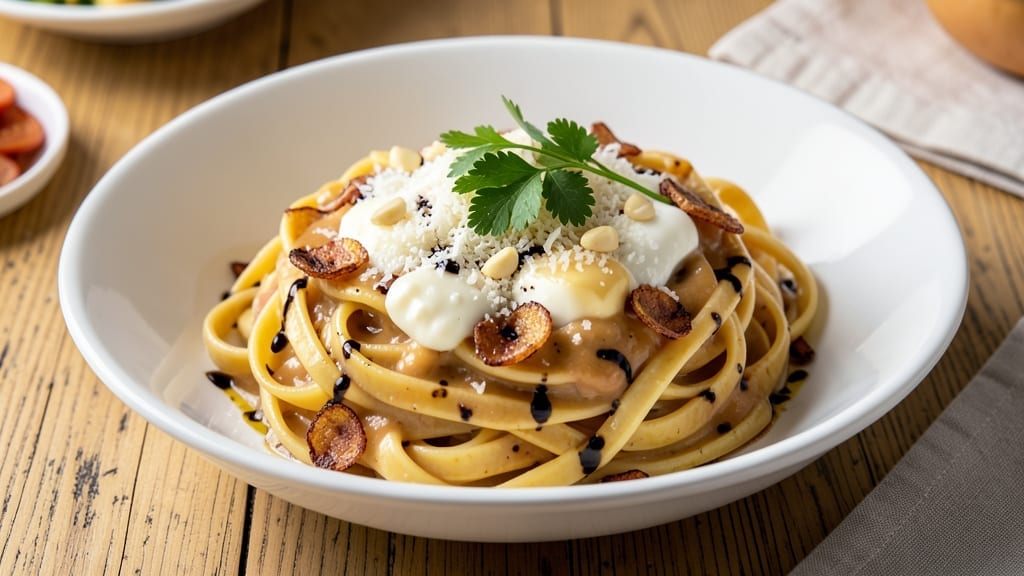
This 4 cheese alfredo recipe delivers a velvety, restaurant-quality sauce that’s richer and more complex than anything you’ll find in takeout.
The secret lies in blending four distinct cheeses—parmesan for depth, romano for sharpness, cream cheese for creaminess, and mozzarella for meltability—while using precise emulsification techniques to create a sauce that coats perfectly without breaking.
The foundation of a great alfredo is patience and proper technique. You’ll start by blooming garlic in butter to build flavor, then gradually whisk in warm milk to create a smooth, velvety base before adding the cheese blend.
This method ensures a sauce that’s silky, not grainy, and stays creamy even after reheating. The result is a sauce that’s nutty, tangy, and rich enough to stand up to hearty pasta or grilled meats.
What makes this recipe truly special is its versatility. Use it as a classic fettuccine alfredo, toss it with roasted vegetables, or drizzle it over grilled chicken for an instant restaurant-quality meal. The sauce keeps well in the refrigerator for up to 5 days, making it perfect for meal prep.
For extra flavor, consider adding a pinch of nutmeg or a splash of white wine to the base.
With just 10 minutes of active prep and 15 minutes of simmering, you’ll have a sauce that’s foolproof yet impressive. The key is maintaining a gentle simmer and constant stirring to prevent curdling.
This alfredo is the kind of sauce that transforms simple ingredients into something extraordinary—perfect for weeknight dinners or special occasions.
Ingredients for 4 cheese alfredo
Four cheeses plus a few pantry staples create a sauce that rivals any restaurant’s alfredo.
| Ingredient | Amount | Notes |
|---|---|---|
| Unsalted Butter 🧈 | ½ cup | Cold, cubed for blooming garlic |
| Garlic Cloves 🧄 | 4 cloves | Freshly minced, not pre-minced |
| Whole Milk 🥛 | 2 cups | Whole milk for creaminess |
| Parmesan Cheese 🧀 | ½ cup | Freshly grated from block |
| Roman Cheese 🧀 | ½ cup | Shredded, not pre-shredded |
| Cream Cheese 🧀 | 4 oz | Full-fat for richness |
| Mozzarella Cheese 🧀 | 4 oz | Fresh mozzarella, sliced |
| All-Purpose Flour 🌾 | 2 tbsp | For thickening, optional |
| Ground Nutmeg 🌿 | ¼ tsp | Freshly grated preferred |
| Salt 🧂 | ½ tsp | Kosher or sea salt |
| Black Pepper 🌶️ | ¼ tsp | Freshly ground preferred |
The cheeses are the heart of this sauce, and quality matters. Parmigiano-Reggiano and Pecorino Romano are non-negotiable for that authentic depth—skip the pre-shredded stuff, which gets clumpy. I always grab a wedge of each from the deli counter at Whole Foods or Trader Joe’s, where they keep them fresh. Cream cheese adds the velvety texture, so Philadelphia brand is my go-to for consistent results. Fresh mozzarella is ideal, but if you only have low-moisture shredded, drain it first to avoid excess water. The butter should be cold and cubed—this ensures proper blooming of the garlic for maximum flavor development.
No Parmesan? Gran Padano works in a pinch, though it’s less nuanced. Substituting Romano for Parm? Use a 50/50 blend to maintain balance. Short on cream cheese? Mascarpone or ricotta at half the amount delivers a similar creaminess. The flour is optional but helps thicken the sauce if you prefer it more robust. For extra richness, a splash of heavy cream (2 tbsp) can be whisked in at the end. The nutmeg is key—it’s what gives alfredo its signature warmth, so don’t skip it. Pre-ground nutmeg loses potency fast, so freshly grated is worth the investment if you make this often.
This sauce reheats beautifully—simmer gently on the stove or microwave in 30-second bursts. Store in an airtight container for up to 5 days in the fridge, though it’s best within 3 days for peak texture. For longer storage, freeze in ice cube trays and transfer to a bag—perfect for single servings. The cheese blend will separate slightly when cold; just whisk vigorously before reheating. Double the batch if you’re feeding a crowd—it disappears fast, especially over pasta or grilled chicken.
Why You’ll Love This Recipe
- No-Fuss Creaminess: I swear by this sauce—just butter, milk, and those two cheeses melting together. No whisking for hours, no lumps, just smooth, velvety goodness in under 15 minutes.
- Garlic Butter Magic: That first sizzle of butter and garlic? It’s the secret weapon. The Roman cheese adds a nutty depth, while the Parmesan brings the sharp finish—like a hug in a bowl.
- Weeknight to Dinner Party: Same recipe, different vibes. Toss it with fettuccine for a lazy Tuesday or pile it high on grilled chicken for company. The cheese sauce stretches far, so it’s always a win.
- Leftovers That Don’t Let You Down: This sauce actually improves the next day—thicker, richer, and just as delicious reheated. I make double batches on Sundays because it’s my go-to for lazy lunches all week.
Step-by-step instructions for 4 cheese alfredo sauce
Here’s how to craft a restaurant-quality alfredo that’s velvety, layered with nutty depth, and far superior to takeout versions.
Bloom the Garlic in Cold Butter
Place the 0.5 cup unsalted butter in a medium saucepan over medium-low heat. Add the 4 cloves freshly minced garlic and cook for 1-2 minutes until the garlic becomes fragrant but doesn’t brown. This gentle blooming releases the garlic’s sweetness without bitterness. Watch carefully—the moment it turns golden, remove the pan from heat to prevent burning.
Here’s the thing—using cold butter creates an emulsion that’s far more stable than melted butter alone. The butter’s fat will eventually melt from the heat of the milk, but starting cold ensures smoother texture. Keep the mixture at medium-low heat throughout this process to maintain control.
Create the Cheese Base
Reduce heat to low and add the 4 oz cream cheese and 4 oz fresh mozzarella cheese, stirring constantly until completely melted and smooth. This should take about 3-4 minutes. The sauce will thicken slightly as the cheeses incorporate. If you notice any lumps, use a silicone spatula to work them out gently—don’t let the sauce come to a boil or the cream cheese will curdle.
Next, whisk in the 0.5 cup freshly grated parmesan cheese and 0.5 cup shredded roman cheese. These cheeses add depth and saltiness that balance the creaminess. Sprinkle in the 0.5 tsp salt, 0.25 tsp freshly ground black pepper, and 0.25 tsp ground nutmeg, whisking until fully combined. The nutmeg adds that signature warmth that makes this sauce truly special.
Build the Velvety Texture
Slowly pour in the 2 cups whole milk while whisking continuously. The sauce will temporarily thin out, but don’t worry—this is normal. Return the heat to medium-low and let the mixture simmer gently for 5-7 minutes, stirring frequently. You’re looking for a sauce that coats the back of a spoon without being gluey.
If the sauce becomes too thick before reaching the desired consistency, whisk in 1-2 tablespoons of pasta water (reserved from cooking your noodles). The starch in pasta water acts as a natural thickener while maintaining that silky texture. The key is patience—rushing this step leads to grainy or separated sauce.
Thicken and Finish
In a small bowl, combine the 2 tbsp all-purpose flour with 1 tablespoon cold water to make a slurry. Slowly whisk this into the sauce while maintaining medium-low heat. Stir constantly for 2-3 minutes until the sauce thickens to your preferred consistency—it should coat the back of a spoon but still be pourable.
Taste and adjust seasoning if needed. The sauce should be rich, nutty, and properly balanced between the creamy cheeses and the sharpness of the parmesan. For extra depth, you can add a splash of pasta water to loosen the sauce slightly before serving. The sauce will continue to thicken as it sits, so it’s better to err on the side of slightly thinner when serving immediately.
Serve with Perfect Pasta
Toss the cooked pasta directly in the saucepan with the sauce, coating each strand evenly. The residual heat will help the sauce cling to the noodles perfectly. For maximum flavor, reserve ½ cup pasta water before draining—this starchy liquid helps create that signature alfredo cling.
Serve immediately while the sauce is still warm and silky. The combination of creamy textures and nutty cheeses should create a sauce that’s richer than takeout versions. Each bite should deliver that perfect balance of creaminess, saltiness, and subtle warmth from the nutmeg.
Pro Tips For Making 4 Cheese Alfredo
- Melt Butter Slowly: I learned this the hard way—dumping cold butter into the pan and ending up with greasy, grainy sauce. Instead, cut the unsalted butter into small cubes and melt it gradually over medium-low heat, stirring constantly. You want it warm and foamy, not bubbling like a witch’s cauldron.
- Grate Cheese Fresh: Pre-shredded cheese has anti-caking agents that make your alfredo clump like a sad, lumpy blanket. Grate your own Parmesan and Roman cheese—yes, even if it’s a pain—using the large holes of a box grater. The finer the grate, the silkier the sauce, and trust me, your taste buds will notice.
- Temper the Milk: Pouring cold milk into a hot pan is a one-way ticket to scrambled cheese curds. Warm the whole milk first—just heat it in a separate saucepan until it’s steaming but not boiling, then whisk it into the butter-garlic mixture. This keeps the sauce smooth and prevents that dreaded grainy texture.
- Reserve Some Cheese: I used to dump all the cheese in at once, and the sauce would either turn into glue or separate like oil and water. Instead, stir in 75% of the grated cheese to the sauce, then set the rest aside. Stir in the final 25% off the heat—it’ll melt faster and add that creamy, luxurious finish without curdling.
Regional styles of this dish
Classic Italian Style
In Italy, alfredo sauce is traditionally lighter than American versions, using just parmesan and butter with a splash of cream. For a true Roman-inspired take, replace the cream cheese with 1 cup heavy cream and reduce the milk to 1 cup.
Use only parmesan and pecorino romano (no mozzarella) and finish with freshly cracked black pepper and a pinch of freshly grated nutmeg. This version is less rich but highlights the authentic Italian flavors. 🇮🇹
New York Diner Twist
New York diners take alfredo to the next level by adding 1/2 cup sour cream to the cheese blend for extra tang. For a true diner-style sauce, increase the butter to 3/4 cup and add 1/4 cup grated fontina cheese for a deeper, slightly sweet flavor.
Finish with a sprinkle of toasted breadcrumbs before serving—this adds a satisfying crunch. The sauce should be extra creamy to match diner portions. 🍽️
Southern Comfort Version
In the American South, alfredo gets a smoky kick with 1/2 cup smoked gouda replacing part of the romano. Add 1/4 tsp smoked paprika and a dash of hot sauce (like Crystal or Tabasco) to the cheese blend.
For extra depth, cook 1/2 cup diced bacon with the garlic and reserve the fat. This version pairs perfectly with grilled chicken or shrimp for a Southern-inspired twist. 🌶️
California-Inspired Light
For a lighter, fresher take, swap the cream cheese for 1/2 cup mascarpone and add 1/4 cup fresh basil pesto to the milk before heating. Use fresh mozzarella and goat cheese (2 oz) for a tangy balance.
Finish with toasted pine nuts and a drizzle of balsamic glaze for a California-inspired dish that’s bright yet creamy. This version works beautifully with whole wheat pasta or as a dip for grilled vegetables. 🌿
Spicy Mexican Fusion
For a bold fusion, replace the romano with 1/2 cup cotija cheese and add 1/4 cup chipotle peppers in adobo (minced) to the butter. Use queso fresco (2 oz) instead of mozzarella for a crumbly texture.
Finish with cilantro and lime zest for a sauce that pairs perfectly with chicken fajitas or grilled shrimp. The heat from the chipotle balances the creaminess beautifully. 🌶️🔥
Nutrition facts
Frequently asked questions
Can I make this sauce without cream cheese?
Yes! For a lighter version, substitute the 4 oz cream cheese with ½ cup mascarpone or ½ cup ricotta. The sauce will still be creamy but with a slightly tangier flavor. If you’re avoiding dairy entirely, use ½ cup coconut cream (chilled overnight) and add 1 tbsp nutritional yeast for a cheesy taste. The texture will be thinner but still delicious.
Why did my sauce separate or get grainy?
This usually happens from one of three issues: overheating, adding cheese too quickly, or using pre-shredded cheese. Always keep heat at medium-low and whisk constantly when adding cheese. For pre-shredded cheese, drain excess anti-caking agents first. If separation occurs, whisk in 1-2 tbsp cold water or pasta water while stirring vigorously over low heat. The sauce should re-emulsify within 1-2 minutes.
How do I make this sauce extra creamy?
For maximum creaminess, add 2 tbsp heavy cream at the end or replace ½ cup of the milk with heavy cream. Another trick is to whisk in 1 tbsp cornstarch mixed with 2 tbsp cold water at the very end—this creates a silky finish. For a restaurant-style texture, finish with 1 tbsp butter while stirring constantly. The sauce should coat the back of a spoon like liquid velvet.
Can I make this sauce ahead of time?
This sauce actually tastes better the next day as the flavors meld. Store in an airtight container in the refrigerator for up to 5 days. When reheating, warm gently on the stove over low heat while whisking constantly. If it thickens too much, add 1-2 tbsp milk or water to restore creaminess. For longer storage, freeze in 1-cup portions—thaw overnight in the fridge and reheat on the stove.
What’s the best pasta to pair with this sauce?
Fettuccine is the classic choice, but this rich sauce works beautifully with pappardelle, tagliatelle, or even linguine. For extra flavor, try bucatini or rigatoni—the hollow tubes hold the sauce perfectly. For a lighter option, use whole wheat or chickpea pasta. Avoid thin noodles like spaghetti, as they can get overwhelmed by the richness.

- 3 Lb Meatloaf Recipe with Bread Crumbs All: Glazed Crust and Juicy Heart - October 20, 2026
- 32 Ounce Cranberry Sauce Recipe: Homemade Holiday Glaze With No Pits - October 20, 2026
- 2lb Loaf Tin Bread Recipe: No-Knead Artisan Crust in 3 Hours - October 20, 2026