
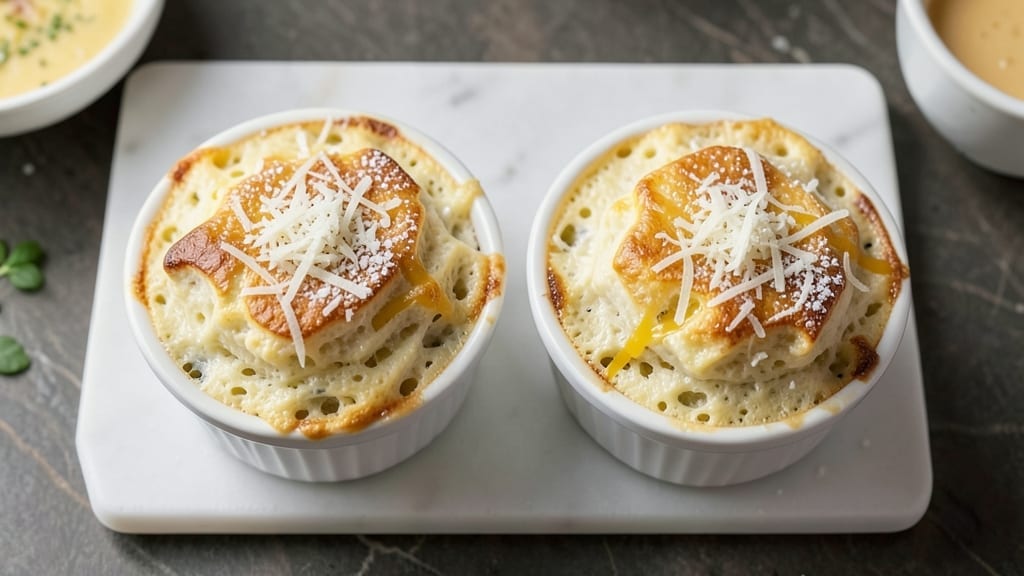
A 4-cheese egg souffle delivers that perfect balance of light, airy texture with a golden, crisp top—an elegant dish that feels restaurant-worthy yet stays entirely vegetarian.
The secret lies in tempering the eggs properly and folding in melted cheeses at the right moment, creating a structure that’s both delicate and rich. This recipe transforms simple pantry staples into a showstopping centerpiece that’s surprisingly foolproof once you master the technique.
What sets this souffle apart is the four-cheese blend—Gruyère for nutty depth, sharp cheddar for tang, cream cheese for creaminess, and Parmesan for umami richness.
Each cheese plays a role in the final texture: Gruyère and cheddar provide structure, while cream cheese and Parmesan ensure the souffle stays moist without being dense. The key is working quickly after folding the cheese into the egg mixture to maintain that signature airiness.
By the time it emerges from the oven, you’ll have a souffle with a golden, crackly top that hides a custardy interior—so light it practically melts on the tongue. The contrast between the crisp exterior and velvety center is what makes this dish so satisfying.
Serve it immediately with a simple green salad or roasted vegetables to let the souffle shine as the star of the meal.
This recipe is perfect for brunch gatherings, dinner parties, or even a special weeknight treat. The technique is straightforward once you understand the science behind it, and the results are always impressive. Let’s get started on creating your perfect souffle.
Ingredients for 4 cheese egg souffle
Six eggs plus four cheeses—this is where magic happens in your oven.
| Ingredient | Amount | Notes |
|---|---|---|
| Large Eggs 🥚 | 6 whole | Room temperature, separated |
| Gruyère Cheese 🧀 | ½ cup | Freshly grated, aged 12 months+ |
| Sharp White Cheddar Cheese 🧀 | ½ cup | Grated, not pre-shredded |
| Cream Cheese 🧈 | 4 oz | Room temperature, full-fat |
| Parmesan Cheese 🧀 | ¼ cup | Finely grated, fresh from block |
| Unsalted Butter 🧈 | 2 tbsp | Melted, cooled slightly |
| All-Purpose Flour 🌾 | 1 tbsp | For egg whites |
| Kosher Salt 🧂 | ½ tsp | Diamond Crystal preferred |
| White Vinegar 🍶 | 1 tsp | For egg white stability |
| Heavy Cream 🥛 | 2 tbsp | For egg white folding |
| Cornstarch 🌾 | ½ tsp | For crisp top |
The cheeses are non-negotiable here. Gruyère should be aged at least 12 months for that perfect nutty flavor, and sharp white cheddar is key for that tangy kick. I grab mine at Whole Foods or specialty cheese shops—they carry the good stuff. For the Parmesan, Parmigiano-Reggiano from a wedge is a game-changer (no pre-grated dust here!). The cream cheese needs to be full-fat—none of that low-fat nonsense. Melt it gently in the microwave, then let it cool slightly before mixing. Pro tip: if your Gruyère isn’t aged enough, the souffle will taste too mild. Trust me on this one.
No Gruyère? Comté cheese works in a pinch, but it’s not the same. Pre-shredded cheese has anti-caking agents that ruin texture—always grate your own. Running short on egg whites? Add 1 extra whole egg, but your souffle might be slightly denser. The cornstarch is crucial for that golden crust—don’t skip it. For a richer flavor, add a pinch of nutmeg to the cheese mix. And if you’re nervous about the egg whites, use a stand mixer on high speed for maximum volume. Just don’t overbeat them, or you’ll end up with meringue instead of souffle.
This souffle is a one-shot deal—it doesn’t reheat well. Prep everything ahead, but whisk the eggs last minute since they deflate fast. For the perfect rise, preheat your oven to 375°F and let it sit for 15 minutes. The ramekins should be room temperature too. Once baked, serve immediately—it’s meant to be eaten right out of the oven. Store any leftovers (if there are any) in the fridge for up to 2 hours, but honestly, it’s better the first time around.
Why You’ll Love This Recipe
- No Fuss Setup: I swear by this recipe because it’s basically hands-off after the initial whisk. You separate eggs, fold in the cheeses—Gruyère’s nutty kick and that sharp cheddar? Chef’s kiss—then let the oven do the magic. Even if you burn the toast, you’ve still got a winning soufflé.
- Four-Cheese Magic: That first bite? Creamy, salty, and just a little crisp on top—it’s like a hug in dish form. The Gruyère melts into gooey strands while the cheddar adds bite, and the cream cheese keeps it rich without being heavy. (Yes, even my picky husband asks for seconds.)
- Weeknight to Brunch: Make a batch on Sunday, and you’ve got breakfast, dinner, or a fancy brunch covered. Serve it with toast for a lazy morning or pair it with greens for a quick lunch. Honestly, it’s my go-to when I don’t want to think too hard.
- Leftovers That Don’t Suck: Unlike most soufflés, these reheat like a dream—microwave for 20 seconds, and it’s still light and airy. Plus, the cheeses stretch, so you’re not left with sad, dry scraps. (I’ve tested this. Twice.) Budget-friendly too—eggs and cheese are cheaper than takeout.
Step-by-step instructions for 4 cheese egg soufflé
Here’s how to create a soufflé so light it vanishes on your tongue with a golden, crisp top.
Prepare the Cheese Base
Preheat your oven to 350°F and grease four 6-ounce ramekins generously with the 2 tablespoons melted butter, rubbing it on all interior surfaces. Set them aside. In a medium bowl, combine the 4 ounces room-temperature cream cheese, ½ cup freshly grated Gruyère cheese, and ½ cup freshly grated sharp white cheddar cheese.
Use a hand mixer or whisk to beat this mixture until completely smooth and lump-free. This step is crucial—any lumps will show up in your finished soufflé. The cheese should look like a thick, velvety paste. Set this mixture aside while you prepare the egg yolks.
Incorporate Egg Yolks and Seasonings
In a separate bowl, whisk together the 6 egg yolks, ¼ cup finely grated Parmesan cheese, ½ teaspoon kosher salt, and ½ teaspoon cornstarch. The cornstarch helps create that perfect crisp top, while the Parmesan adds depth of flavor. Slowly pour this yolk mixture into the cheese base while mixing continuously on low speed.
Combine everything until fully incorporated and smooth. This mixture should be thick but pourable. If it’s too thick, add 1 tablespoon heavy cream to loosen it slightly. The batter should coat the back of a spoon but still flow easily. This is your soufflé base—treat it gently from here on out.
Whip the Egg Whites to Stiff Peaks
In a clean, grease-free bowl, combine the 6 egg whites and 1 teaspoon white vinegar. The vinegar stabilizes the egg whites, helping them hold their shape better. Using a hand mixer, whip the egg whites on medium speed until soft peaks form. Gradually increase the speed to high and continue whipping until the egg whites form stiff, glossy peaks that stand straight up when the whisk is lifted.
This is the moment that matters: your egg whites should be able to hold their shape without collapsing. If they’re not quite there, whip for another 30 seconds. Be careful not to overwhip, or you’ll end up with dry, rubbery egg whites. Gently fold 1 tablespoon all-purpose flour into the egg whites using a spatula to help stabilize them further.
Fold the Egg Whites into the Cheese Mixture
Now comes the delicate part—folding the egg whites into the cheese mixture. Using a large spatula, gently fold about one-third of the egg whites into the cheese base to lighten it. Then, carefully fold in the remaining egg whites in two additions, being sure to cut through the center of the mixture and gently lift and turn the bowl to incorporate everything without deflating the air.
Your batter should be smooth and uniform with no streaks of egg white. If you see any deflation, don’t worry—just gently fold a bit more until it’s consistent. Fill each of the prepared ramekins with the batter, dividing it evenly among the four ramekins. The batter should come about ¾ full of each ramekin, leaving room for rising.
Bake to Perfection
Place the ramekins on a baking sheet and transfer them to the preheated oven. Bake for 15-18 minutes until the soufflés have risen dramatically and the tops are golden brown with a crisp texture. The edges should pull away slightly from the ramekin, and the center should still look slightly underdone—this is normal and will finish cooking as they rest.
Open the oven door slightly to check for doneness—this helps prevent sudden collapse. Once they’re done, remove the soufflés from the oven and let them rest for 2-3 minutes before carefully loosening the edges with a thin knife. Serve immediately while still warm, as they’ll deflate as they cool. Each bite should be light as air with a crisp top and creamy, cheesy center—pure magic!
Pro Tips For Making 4 Cheese Egg Souffle
- Whisk Eggs Cold: Grab a bowl from the fridge first—room-temperature eggs whip up stiffer, but if you’re in a rush, cold eggs still work. Just whisk them harder and longer to cut through the fat in the cream cheese. I used to skip this, and my soufflés would collapse like sad pancakes.
- Grate Cheese Fine: Skip the food processor for Gruyère and cheddar—hand-grating them through a box grater (not the big holes) melts them smoothly into the egg mixture. Cream cheese and Parmesan can stay in chunks, but those two? Lumpy cheese = lumpy soufflé. Trust me, your future self will notice.
- Preheat Oven to 375°F: No, 350°F isn’t close enough—this isn’t casserole. A hotter oven (375°F) ensures the outside sets up fast enough to hold the rise while the inside stays creamy. I learned this after watching my first batch turn into a sad, deflated cheese blob.
- Salt the Eggs: Season the egg whites before whipping—just a pinch of salt stabilizes the foam. And yes, even if your cheeses are salty (especially that sharp cheddar), the whites need their own boost. I was skeptical until I tried it—now I never skip it.
Dietary considerations for this 4 cheese egg souffle
Vegetarian-Friendly
This recipe is already vegetarian by design, using only eggs and cheeses as its protein sources. The Gruyère, cheddar, cream cheese, and Parmesan provide rich, satisfying flavors without any meat or dairy substitutes.
The egg whites create the signature light texture, while the yolks bind everything together beautifully. 🥚
Gluten-Free Adaptation
For a gluten-free version, simply omit the 1 tablespoon all-purpose flour from the egg whites. The flour stabilizes the egg whites, but you can achieve similar results by whipping the egg whites for an extra 30-60 seconds until they hold stiff peaks.
The texture will be slightly less stable, but still delicious. Just be gentle when folding to maintain airiness.
Dairy-Free Substitutes
To make this recipe dairy-free, replace the cheeses with nutritional yeast (for umami depth) and cashew cream cheese (blend soaked cashews with lemon juice and salt). Use 1 cup cashew cream cheese instead of the dairy version, and add ¼ cup nutritional yeast for that cheesy flavor.
The egg whites remain unchanged, but the texture will be slightly denser without dairy fats.
Vegan Adaptation
For a vegan version, replace eggs with a silken tofu base—blend 1 cup silken tofu, 2 tbsp cornstarch, and 1 tbsp vinegar until smooth. Use ½ cup aquafaba (chickpea brine) whipped to stiff peaks instead of egg whites.
Fold the aquafaba into the tofu mixture gently, then bake in greased ramekins at 375°F for 20-25 minutes. The result won’t be identical, but it’s a surprisingly close vegan alternative!
Nut-Free Considerations
This recipe is naturally nut-free, but always double-check your cheese labels—some pre-shredded cheeses contain anti-caking agents with nut derivatives. Stick to freshly grated cheeses from blocks to ensure safety.
The egg whites and other ingredients are inherently nut-free, making this a safe option for nut allergies when using proper cheese sources. 🧀
Nutrition facts
Frequently asked questions
Can I use pre-shredded cheese in this recipe?
No, pre-shredded cheese contains anti-caking agents that absorb moisture and create lumps in your souffle. Always use freshly grated cheese from a block—it melts more smoothly and gives you that perfect velvety texture.
Why did my souffle collapse?
Soufflés collapse when they cool too quickly or are opened too soon. The oven door should stay closed during baking, and you must serve them immediately after removing from the oven. Also, ensure your egg whites are properly whipped to stiff peaks and folded gently into the cheese mixture.
Can I make this souffle ahead of time?
No, soufflés are best served immediately after baking. However, you can prep all ingredients ahead—just keep the egg whites and yolks separate until ready to bake. The cheese mixture can be made 1 day ahead and stored in the fridge, then brought to room temperature before mixing with eggs.
What size ramekins should I use?
Use 6-ounce ramekins for this recipe—they hold about ½ cup batter each and allow room for rising. If your ramekins are larger, reduce the batter by ¼ cup per ramekin to prevent overflow. Always grease them well with butter to ensure easy removal.
How do I fix runny egg whites?
If your egg whites are too thin, add ½ teaspoon cornstarch and whip for another 1-2 minutes until they thicken. For extra stability, fold in 1 tablespoon flour at the end of whipping. If they’re overwhipped (dry and grainy), start over with fresh egg whites—they won’t hold their shape properly.

- 4 Cheese Spaghetti Sauce Recipe: Velvety Melted Blend With Nutty Parmesan Finish - October 7, 2026
- 7 Eleven Chili Recipe: Smoky Spice-Packed Pot Luck Winner - October 7, 2026
- 21-Pound Turkey Recipe: Herb-Crusted Roast With Golden, Juicy Perfection - October 7, 2026