
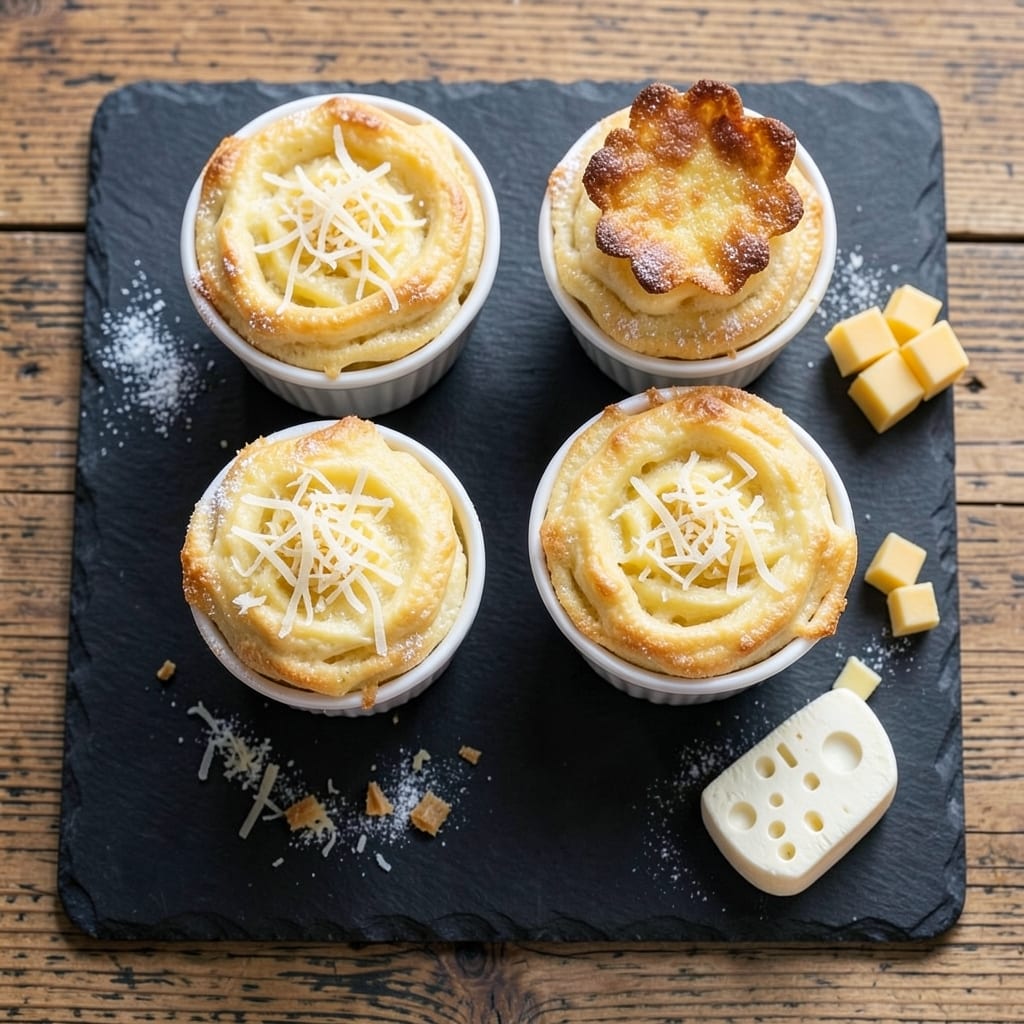
Mastering a 4-cheese soufflé transforms a simple dinner into an impressive centerpiece that rises to dramatic heights—literally. The secret lies in precise technique and the perfect cheese blend: Gruyère for structure, Emmental for melt, sharp cheddar for depth, and Parmesan for umami richness.
Every element must work together to create those signature airy clouds with gooey, golden centers.
This recipe delivers restaurant-quality results with a foolproof method that ensures consistent success, even for beginners. The key steps—whipping egg whites to stiff peaks, gently folding in the cheese mixture, and preheating the oven to 425°F—create the ideal conditions for that signature rise.
A 15-minute bake transforms your soufflé from humble batter to a towering masterpiece.
What you’ll achieve is a soufflé with crispy, golden edges and a light, airy interior that melts in your mouth. The four-cheese combination delivers complex flavors—nutty Gruyère, creamy Emmental, sharp cheddar, and salty Parmesan—all perfectly balanced. Serve immediately with a simple green salad or crusty bread to complement its elegance.
For best results, use room-temperature eggs and cheeses, and avoid opening the oven door during baking. The soufflé’s magic happens in the first 10 minutes of baking, so timing is everything. With this recipe, you’ll create a dish that looks and tastes like it belongs in a fine-dining restaurant.
Ingredients for 4 cheese souffle
Precision matters here—room-temperature cheeses, separated eggs, and exact measurements create restaurant-quality soufflé clouds.
| Ingredient | Amount | Notes |
|---|---|---|
| Large Eggs 🥚 | 6 whole | Room temperature, separated carefully |
| Gruyère Cheese 🧀 | 1 cup | Finely grated, aged 12+ months |
| Emmental Cheese 🧀 | 1 cup | Finely grated, mild variety |
| Sharp White Cheddar Cheese 🧀 | ½ cup | Finely grated, aged 6+ months |
| Parmesan Cheese 🧀 | ½ cup | Finely grated, freshly grated preferred |
| All-Purpose Flour 🌾 | 2 tbsp | Sifted for lightness |
| Unsalted Butter 🧈 | 2 tbsp | Room temperature, cubed |
| Salt 🧂 | ½ tsp | Diamond Crystal preferred |
| White Wine 🍷 | 1 tbsp | Dry, chilled, optional |
| Nutmeg 🌿 | ¼ tsp | Freshly grated |
| Heavy Cream 🥛 | 2 tbsp | For garnish, optional |
The cheese selection is non-negotiable for texture and flavor. Gruyère provides the essential structure, while Emmental delivers that signature melt. For Gruyère, seek aged varieties from specialty cheese shops—the nuttier, the better. Whole Foods or Murray’s Cheese carry excellent options. Sharp white cheddar should have visible crystals and a tangy bite, while Parmesan must be freshly grated from a block (pre-grated contains anti-caking agents that ruin texture). All cheeses should be room temperature—cold cheese won’t blend properly with the egg yolks. If you’re short on time, place cheese blocks in warm water for 10 minutes before grating.
Egg whites must be completely free of yolk—even trace amounts prevent stiff peaks. For the egg yolks, room temperature is critical—they should feel slightly warm to the touch. No wine? Substitute with an extra tablespoon of heavy cream for richness. The nutmeg should be freshly grated using a microplane (pre-ground loses potency quickly). If you’re concerned about the soufflé rising, add 1/4 teaspoon baking powder to the cheese mixture, but omit the flour. For a dairy-free option, substitute nutritional yeast and vegan cream cheese (though texture will differ significantly). The butter should be room temperature but not melted—it should hold its shape when pressed.
Prep ahead only the cheese mixture—it can sit at room temperature for up to 2 hours before whipping the egg whites. Store any unused cheese in airtight containers with parchment between layers to prevent sticking. The egg whites can be whipped 1 hour ahead if covered and refrigerated, but fold them in just before baking. Leftover cheese mixtures freeze beautifully for up to 3 months—thaw overnight in the fridge before using. For a make-ahead soufflé, bake in a buttered soufflé dish, chill, then reheat at 350°F for 10 minutes before serving (though texture won’t be as perfect). Always serve immediately after baking—soufflés deflate completely within 30 minutes.
Why You’ll Love This Recipe
- No Fuss, Big Payoff: I swear by this recipe because it’s the kind of dish that feels fancy but isn’t. Whisk eggs, grate cheese, bake—done. No tempering custards or stressing over timers. The Gruyère melts into that signature creamy cloud, while the sharp cheddar adds a bite that keeps it interesting.
- Cheese Love Bomb: Between us, this is the only souffle I’ll make. Gruyère’s nutty depth, Emmental’s gentle stretch, and that sharp cheddar? It’s like a flavor party in your mouth. Parmesan on top? The finishing touch that makes it the dish at the table.
- Weeknight to Weekend: Honestly, this works for everything. Serve it warm with a salad for a quick dinner, or let it cool for a picnic-friendly appetizer. My kids even ask for it on school nights—yes, even on a Tuesday.
- Leftovers That Don’t Suck: Most soufflés are “eat now or regret it” territory, but not this one. The baked version stays light and delicious for days. I’ll reheat slices in the oven or even toss them into a frittata later. Zero waste, all flavor.
Step-by-step instructions for 4 cheese soufflé
Mastering this delicate technique transforms simple ingredients into a restaurant-worthy dessert.
Prepare the Cheese Base
Preheat your oven to 375°F and position a rack in the center. Generously butter four 6-ounce ramekins, then dust each with 2 tablespoons of the all-purpose flour, tapping out any excess. This creates the perfect nonstick surface for rising.
In a medium heatproof bowl, combine the 1 cup Gruyère Cheese, 1 cup Emmental Cheese, 0.5 cup Sharp White Cheddar Cheese, and 0.5 cup Parmesan Cheese. Add the 0.5 teaspoon Salt and 0.25 teaspoon Nutmeg, then stir until fully blended. The cheese mixture should be smooth with no visible lumps—this ensures even texture throughout the soufflé.
Temper the Egg Yolks
Place the bowl of cheese over a pot of simmering water (double boiler method), stirring constantly until the mixture reaches 160°F on an instant-read thermometer. Remove from heat and let cool slightly to 150°F. In a separate bowl, whisk the 6 egg yolks until smooth, then gradually pour the warm cheese mixture into the yolks while whisking continuously.
This tempering process is critical—adding cold eggs to hot cheese creates scrambled eggs rather than a silky custard. The mixture should thicken slightly as it cools, forming a smooth, velvety base. Add the 1 tablespoon White Wine and whisk until fully incorporated. The alcohol helps prevent overcooking and adds subtle depth of flavor.
Whip the Egg Whites
While the cheese mixture cools, prepare the egg whites. Using a clean, grease-free bowl, beat the 6 egg whites with an electric mixer on medium speed until soft peaks form. Gradually increase speed to high and continue beating until the meringue is stiff and glossy, forming peaks that hold their shape when the whisk is lifted.
Here’s the thing—don’t overmix or underwhip. Underwhipped meringue won’t provide enough lift, while overwhipped meringue can deflate during baking. You’ll know it’s perfect when the meringue stands in a peak that barely bends at the tip when you lift the whisk. This is the foundation of your soufflé’s airy structure.
Fold and Bake
Gently fold one-third of the whipped egg whites into the cheese mixture using a spatula, being careful not to deflate the meringue. Then, in three additions, fold in the remaining egg whites until just combined. The batter should be smooth and thick, with no visible streaks of meringue. Divide the batter evenly among the prepared ramekins, filling each about two-thirds full.
Place the ramekins in a deep baking dish and pour hot water into the dish until it reaches halfway up the sides of the ramekins. This water bath creates a gentle, even heat that prevents the soufflés from cracking. Bake for 20-25 minutes until the tops are golden brown and the soufflés have risen to nearly double their original size.
Serve Immediately
Remove the soufflés from the oven and serve immediately while they’re still rising. The dramatic expansion continues even after removal from the oven—this is why soufflés are always served straight from the heat. Top each with a dollop of 2 tablespoons Heavy Cream if desired, and serve with a sprinkle of freshly grated Parmesan Cheese.
For the perfect presentation, carry the ramekins to the table on a tray. The soufflés should have a golden crust with a light, airy interior that melts in your mouth. Each bite should deliver that perfect balance of gooey cheese and delicate egg white structure. Don’t wait to serve—these delicate clouds deflate quickly once cooled.
Pro Tips For Making 4 Cheese Souffle
- Preheat to 375°F: DESCRIPTION: That’s the magic number—hot enough to get a golden crust but not so hot it burns before the center sets. I learned this after watching my first souffle collapse like a sad pancake because the oven was too cool. Trust the thermometer, not your guesswork.
- Grate Cheeses Fresh: DESCRIPTION: Pre-shredded cheese has anti-caking agents that make your souffle gummy. Use a box grater for Gruyère and Emmental—skip the fine holes, aim for medium shreds so they melt smoothly. Sharp cheddar? Pulse it in a food processor for even distribution.
- Whisk Eggs Until Ribbon Stage: DESCRIPTION: No streaks, no lumps—this is non-negotiable. Use a stand mixer or arm strength until the egg yolks and whites stretch like syrup when you lift the whisk. I used to rush this, and my soufflés would either deflate or turn dense. Take the extra 2 minutes.
- Butter the Dish Sparingly: DESCRIPTION: Just enough to coat the bottom—about 1 tablespoon—so the souffle releases cleanly. Too much butter, and it’ll stick even after dusting with breadcrumbs. (Yes, even if you’re impatient like me.)
Wine and beer pairings for this recipe
White Wine Pairings
For this elegant dish, a crisp Chardonnay from Burgundy or California is my go-to choice. Look for unoaked varieties with bright acidity—like Meursault or Santa Barbara Chardonnay—to complement the soufflé’s delicate cheese flavors without overpowering them.
The wine’s citrus notes play beautifully against the nutty Gruyère and sharp cheddar. 🍷
Red Wine Options
If you prefer red, a light-bodied Pinot Noir from Oregon or Burgundy works surprisingly well. The fruit-forward profile balances the richness of the Emmental and Parmesan, while its subtle earthiness enhances the nutmeg. Avoid heavy reds like Cabernet Sauvignon—they’ll clash with the soufflé’s delicate texture.
Sparkling Wine
For a celebratory touch, serve with Prosecco or Cava. The effervescence cuts through the richness, cleansing your palate between bites. I love pairing it with a dry Brut from Italy—its crisp acidity mirrors the soufflé’s airy structure perfectly. Keep the bubbles chilled to 45-50°F for optimal refreshment.
Beer Complements
A Belgian Witbier like Hoegaarden or Stella Artois adds a refreshing contrast with its citrusy coriander notes. The beer’s light body won’t overpower the soufflé, while the slight sweetness balances the sharp cheddar.
For a richer option, try a German Helles Lager—its malty profile pairs beautifully with the Parmesan’s umami depth.
Non-Alcoholic Choices
Don’t overlook sparkling water with a splash of lemon juice and a pinch of salt. The acidity mimics wine’s cleansing effect, while the effervescence enhances the soufflé’s airy texture. For something more indulgent, try a ginger beer—the spicy kick complements the nutmeg in the recipe wonderfully.
Nutrition facts
Frequently asked questions
Why does my 4-cheese soufflé collapse?
The most common causes are opening the oven door too early or underwhipped egg whites. Soufflés continue rising even after removal—wait until they’ve fully expanded (about 20-25 minutes at 375°F) before checking. Also ensure your egg whites reach stiff peaks and fold them gently into the cheese mixture to maintain air pockets.
Can I make this recipe without wine?
Replace the 1 tablespoon white wine with an equal amount of heavy cream or even water. The wine adds subtle depth but isn’t essential for structure. For a non-alcoholic alternative, try apple cider vinegar (1 tsp) for acidity that mimics wine’s effect on the cheese flavors.
What’s the best way to reheat leftover soufflé?
Unfortunately, soufflés don’t reheat well—they’ll lose their signature airy texture. If you must, place individual portions in a 350°F oven for just 5-7 minutes until warmed through. For best results, always bake and serve immediately. The magic happens in that 15-minute window after baking when they’re at their peak.
How do I substitute cheeses if I can’t find Gruyère?
For Gruyère’s nutty structure, use a mix of aged Gouda (1/2 cup) and Comté (1/2 cup). Both provide similar melt and depth. If you’re avoiding dairy, nutritional yeast (1/4 cup) plus vegan cream cheese (1/2 cup) can mimic some of the richness, though texture will differ significantly.
Can I bake soufflés in regular oven-safe dishes?
Yes, but ramekins are ideal for their shape and heat conduction. Use 6-ounce oven-safe dishes (ceramic or glass) that can handle 375°F temperatures. Avoid metal dishes—they conduct heat differently and may cause uneven baking. Always butter and flour them thoroughly to prevent sticking, just like the recipe specifies.

- 3 Layer Eggnog Cake Recipe: Spiced Rum-Infused Frosting and Boozy Swirls - October 6, 2026
- 1800 Ultimate Margarita Mix Recipe: Frozen or On-The-Rocks Versatility - October 6, 2026
- 3 Eggs and Cabbage Recipe: Savory Scramble With Crispy Edges - October 6, 2026