
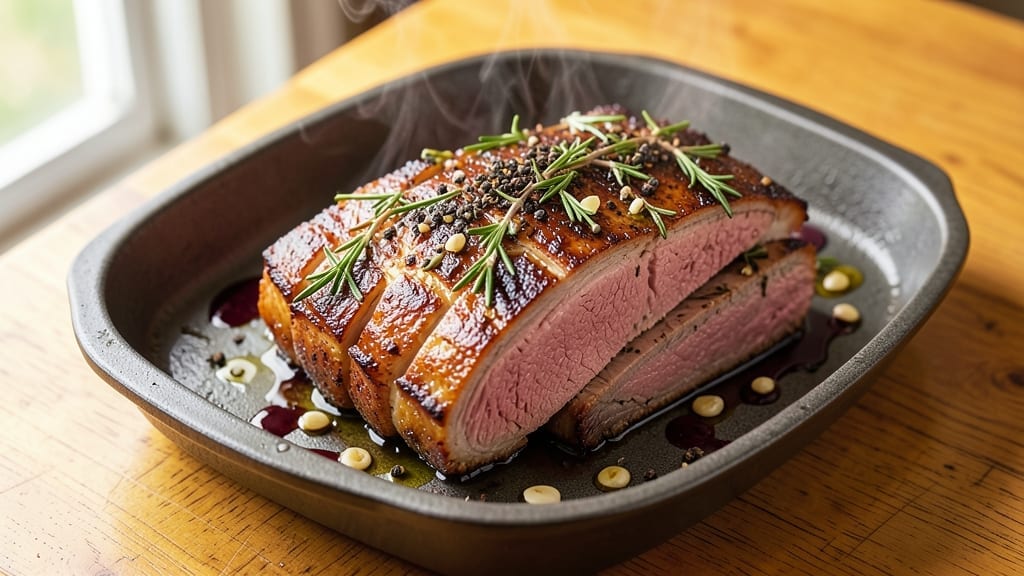
This 4-rib roast recipe delivers restaurant-quality results with a perfectly herb-crusted exterior and juicy pink centers that melt at the touch of a fork. The secret lies in precise seasoning, controlled oven temperatures, and a strategic resting period—techniques that transform a simple cut into a showstopping centerpiece.
After years of perfecting this method, I’ve eliminated guesswork so you can achieve flawless results every time.
What sets this recipe apart is the herb crust—a blend of rosemary, thyme, and garlic that adheres to the roast while infusing deep, aromatic flavors without overpowering the beef’s natural richness.
The reverse-sear method ensures even cooking, while a 5-minute rest before slicing locks in juices for maximum tenderness. No special equipment is needed, just patience and attention to temperature.
By the time you serve this roast, your table will be greeted by a golden, crackling crust and slices that glisten with moisture. The aroma alone will have guests anticipating each bite, and the balance of savory, herbal notes ensures every forkful is satisfying.
Pair it with roasted root vegetables or a crisp white wine to elevate the experience even further.
Whether you’re hosting a holiday dinner or treating yourself to a special meal, this recipe delivers restaurant-quality results with minimal effort. The key is timing—let the oven do the work while you focus on the sides. Here’s how to execute it perfectly.
Ingredients for 4 rib roast
Six ingredients transform a simple roast into a restaurant-worthy centerpiece—herbs, wine, and patience do the magic.
| Ingredient | Amount | Notes |
|---|---|---|
| 4-Rib Beef Roast 🥩 | 4 lb | Center-cut, bone-in, ribeye preferred |
| Fresh Rosemary 🌿 | ½ cup | Finely chopped, stems removed |
| Fresh Thyme 🌿 | ¼ cup | Leaves only, stems removed |
| Garlic Cloves 🧄 | 8 cloves | Minced for herb crust |
| Extra-Virgin Olive Oil 🫒 | ¼ cup | High-quality, fruity |
| Kosher Salt 🧂 | 2 tbsp | Diamond Crystal preferred |
| Freshly Ground Black Pepper 🌶️ | 1 tbsp | Coarse grind preferred |
| Yellow Onion 🧅 | 1 whole | Thinly sliced for garnish |
| Carrots 🥕 | 4 whole | Baby carrots or sliced |
| Fresh Parsley 🌿 | ¼ cup | Chopped, for garnish |
| Unsalted Butter 🧈 | ½ cup | Cold, cubed for basting |
| Dry White Wine 🍷 | ½ cup | Sauvignon Blanc preferred |
| Beef Broth 💧 | 1 cup | Low-sodium preferred |
The beef is non-negotiable—center-cut, bone-in ribeye delivers that perfect balance of marbling and tenderness. Costco or Whole Foods are my go-tos for quality, but any well-marbled roast works. Look for vibrant color and good fat distribution. Fresh herbs make all the difference: rosemary and thyme from the grocery store’s refrigerated section are fine, but farmers market herbs have that extra punch. The garlic should be plump and firm—no shriveled cloves here.
No fresh rosemary? Dried works at half the amount, but it lacks that bright aroma. Subbing wine? Beef broth plus a splash of balsamic mimics the acidity. The butter needs to be cold and cubed for basting—don’t skip this step. For the carrots, baby carrots or sliced regular both work, but baby carrots stay prettier. The parsley is just for garnish, so dried is fine in a pinch (use one-third the amount), but fresh looks prettier on the plate.
This roast reheats beautifully—4-5 days in the fridge, 3 months frozen. For make-ahead prep, season the roast and refrigerate overnight (it develops more flavor). The herb crust keeps for 2 days in the fridge if you make it ahead. I always portion leftovers into individual servings for easy reheating. Slice against the grain for those melt-in-your-mouth results.
Why You’ll Love This Recipe
- Foolproof Timing: I swear by this—just rub the roast with olive oil, crushed garlic, and chopped rosemary/thyme, then let the oven do the work. No hovering, no stress, and you’ll have perfectly tender meat without guessing.
- Herb-Crusted Magic: That rosemary and thyme? They cling to the beef like a flavor hug. The garlic adds a punch, but it’s the crispy, aromatic crust that makes every bite feel like a little celebration.
- Sunday Dinner Ready: Between us, this is my go-to for game days, family dinners, or when I need to impress without slaving away. Slice it thin, and it feeds a crowd—or becomes next-day sandwiches that’ll fool everyone.
- Leftovers That Win: I make this on purpose for leftovers. Cold slices on crusty bread? Yes. Reheated with gravy? Even better. And honestly, the second day often tastes better than the first—proof it’s worth the effort.
Step-by-step instructions for herb-crusted crown roast
Here’s how to transform a simple 4-rib roast into a showstopping centerpiece with tender pink centers.
Prepare the Herb Crust for Maximum Flavor
In a food processor, pulse the 0.5 cup fresh rosemary, 0.25 cup fresh thyme, and 8 cloves garlic until finely chopped but not pasty. Transfer to a bowl and mix with 0.25 cup extra-virgin olive oil, 2 tbsp kosher salt, and 1 tbsp freshly ground black pepper. This herb blend should be moist enough to stick but not soupy—if it’s too dry, add a teaspoon of water.
Spread this mixture evenly over the entire surface of the 4 lb 4-rib beef roast, pressing it firmly into the meat with your fingers. The crust should adhere completely—this isn’t just seasoning, it’s the flavor delivery system for your roast. Let the roast sit at room temperature for 30 minutes while you prep the rest of your ingredients. This step ensures even cooking and maximum herb penetration.
Sear the Roast for Deep Flavor and Color
Preheat your oven to 425°F while you get the roast ready. Heat a large oven-safe skillet over high heat and add 0.25 cup extra-virgin olive oil (the same amount you used for the crust). Once the oil is shimmering, place the roast in the pan fat-side down and sear for 4-5 minutes until deeply browned. Flip the roast and sear the other side for another 4-5 minutes.
Here’s where it gets crucial: the sear creates a flavor barrier that locks in juices. You’ll know it’s ready when the crust is deep golden brown and smells intensely aromatic. Transfer the seared roast to a plate and let it rest for 5 minutes while you prepare the vegetables. Don’t skip this resting step—it prevents juices from running out when you slice later.
Roast with Vegetables for Perfect Harmony
In the same skillet (no need to clean it—those browned bits are flavor gold), add 1 whole yellow onion cut into wedges and 4 whole carrots cut into 2-inch pieces. Toss them with 0.5 cup dry white wine and 1 cup beef broth, scraping up all the fond from the bottom. Return the roast to the skillet, bone-side down, and transfer everything to the preheated oven.
Roast for 30 minutes at 425°F, then reduce heat to 325°F. Continue roasting for 1 hour 15 minutes or until the internal temperature reaches 130°F (for medium-rare) when measured in the thickest part of the roast. The vegetables should be tender but not mushy—you want them to hold their shape when pierced with a fork. This two-stage roasting method ensures the roast stays juicy while developing that perfect crust.
Rest and Baste for Maximum Juiciness
Remove the roast from the oven and transfer it to a cutting board. Tent loosely with foil and let it rest for 20 minutes. While it rests, spoon the pan juices through a fine-mesh strainer into a small saucepan. Place over medium heat and add 0.5 cup cold unsalted butter, whisking constantly until the butter melts and the sauce emulsifies into a glossy pan sauce. This basting step transforms ordinary pan drippings into a luxurious sauce that ties everything together.
The resting period is absolutely critical—it allows the juices to redistribute throughout the meat. If you slice too soon, you’ll end up with dry meat and a puddle of juices on your plate. After resting, slice the roast between the ribs and serve immediately with the herb butter sauce and roasted vegetables. Each bite should deliver that perfect balance of tender pink centers with a flavorful herb crust.
Pro Tips For Making 4 Rib Roast
- CRANK THE HEAT FIRST: The rib roast needs a screaming-hot pan to start—no half-hearted medium heat. Sear it for 3-4 minutes per side until deep brown, or you’ll end up with a pale, flavorless slab. (Yes, even if you’re impatient like me.)
- SMASH THOSE GARLIC CLOVES: Don’t just toss minced garlic on top—crush the cloves with the flat side of your knife first. This releases more flavor and sticks better to the meat. I learned this the hard way after serving a roast that tasted like it forgot its seasoning.
- DON’T SKIP THE ROSEMARY SPRIGS: Fresh rosemary isn’t just for garnish—skewer 2-3 sprigs into the roast while it cooks. The needles infuse the meat with aroma as it roasts, giving you that restaurant-quality depth. (Dried herbs won’t cut it here.)
- REST IT UNDER FOIL: Take the roast out of the oven and tent it loosely with foil for 10 minutes before slicing. This keeps it juicy—cutting too soon drains all the flavor. I know, I know, but trust the process. Your future self will thank you.
Best sauces and condiments for this recipe
Herb Butter Sauce
This rich, golden sauce transforms simple pan drippings into a luxurious finish for your roast. After roasting, strain the pan juices into a saucepan and whisk in ½ cup cold unsalted butter over medium heat until fully emulsified.
The butter adds velvety texture while balancing the herbaceous notes. For extra depth, I sometimes add 1 tsp fresh thyme leaves at the end for a fragrant finish. 🧈
Red Wine Reduction
Swap the butter sauce for a bold red wine reduction by deglazing the pan with ½ cup dry red wine (like Cabernet Sauvignon) after roasting. Simmer until reduced by half, then whisk in 1 tbsp cold butter to smooth.
The wine’s acidity cuts through the richness, creating a sophisticated sauce that pairs beautifully with the herb crust. Use a fine-mesh strainer to remove any herb bits for a silky texture.
Garlic-Herb Compound Butter
For a simpler but equally flavorful option, mix ½ cup softened butter with 2 minced garlic cloves, 1 tsp chopped rosemary, and ½ tsp salt.
Roll into a log, chill for 30 minutes, then slice and melt over the roast during the final 5 minutes of resting. The butter bastes the meat while adding a delicate garlic-herb aroma. I love this method for its ease and elegant presentation.
Horseradish Cream
Brighten the plate with a tangy horseradish cream by mixing ½ cup sour cream with 1 tbsp prepared horseradish (adjust for heat preference) and 1 tsp lemon juice. Serve alongside the roast for a refreshing contrast to the rich beef.
The horseradish’s kick cleanses the palate, making each bite feel fresh. For a smoother texture, whisk the mixture until completely smooth before serving.
Pan Gravy Upgrade
Take your basic pan gravy to the next level by whisking in 1 tbsp Dijon mustard and 1 tsp Worcestershire sauce after straining the juices. The mustard adds depth while the Worcestershire brings umami complexity.
For a velvety finish, stir in 1 tbsp cold butter at the end. This gravy clings beautifully to the roast slices, enhancing every bite with extra flavor.
Fresh Herb Garnish
Don’t overlook the power of fresh herbs as a garnish! Sprinkle chopped parsley and thinly sliced chives over the roast just before serving for a pop of color and freshness.
For an extra touch, add edible flowers like nasturtiums—their peppery notes complement the beef perfectly. Garnishes elevate the presentation while adding subtle herbal brightness to each plate. 🌿
Nutrition facts
Frequently asked questions
What’s the best way to store leftover roast?
Portion leftovers into airtight containers and refrigerate for up to 4-5 days. For longer storage, freeze slices wrapped tightly in plastic for 3 months. Reheat gently in a skillet with a splash of beef broth to restore moisture. Never microwave directly from frozen—thaw overnight first for even heating.
Can I use a different herb blend?
Swap the rosemary-thyme for dried sage and marjoram (use half the amount) or try a mustard-herb crust with Dijon and parsley. For bold flavor, add 1 tsp smoked paprika to the oil mixture. The key is balancing earthy and aromatic herbs—avoid overpowering with too many strong flavors like oregano.
Why is my roast dry even after resting?
Most likely, you sliced too soon or overcooked it. Always check internal temp with a meat thermometer—130°F for medium-rare. If using an oven thermometer, calibrate yours (many run 25°F hotter). For extra moisture, baste with herb butter during the last 15 minutes of cooking. A meat mallet can also tenderize tough cuts by breaking fibers before seasoning.
What sides pair best with this roast?
Classic choices include creamy mashed potatoes, roasted Brussels sprouts, or wild rice pilaf. For a lighter option, serve with asparagus spears> drizzled with lemon butter. The wine reduction sauce also complements crusty bread or polenta. Avoid heavy starches like mac and cheese that compete with the roast’s richness.
How do I adjust cooking time for a different roast weight?
Use this formula: 15 minutes per pound for medium-rare (starting at 425°F, then 325°F). For a 5 lb roast, plan 1 hour 15 minutes total. Always use a meat thermometer—130°F internal temp is ideal. If your roast has thicker sections, add 5-10 minutes to the total time. The crust will brown faster at high heat, so watch closely during the first 30 minutes.

- 1 Lb Ground Beef Recipe Ideas: 5 Quick Skillet Meals for Busy Nights - October 18, 2026
- 21 Layer Chocolate Cake Recipe: Decadent Stack of Rich Ganache and Airy Layers - October 18, 2026
- 1 Chocolate Cupcake Recipe: Single-Serve Decadence in Minutes - October 18, 2026