
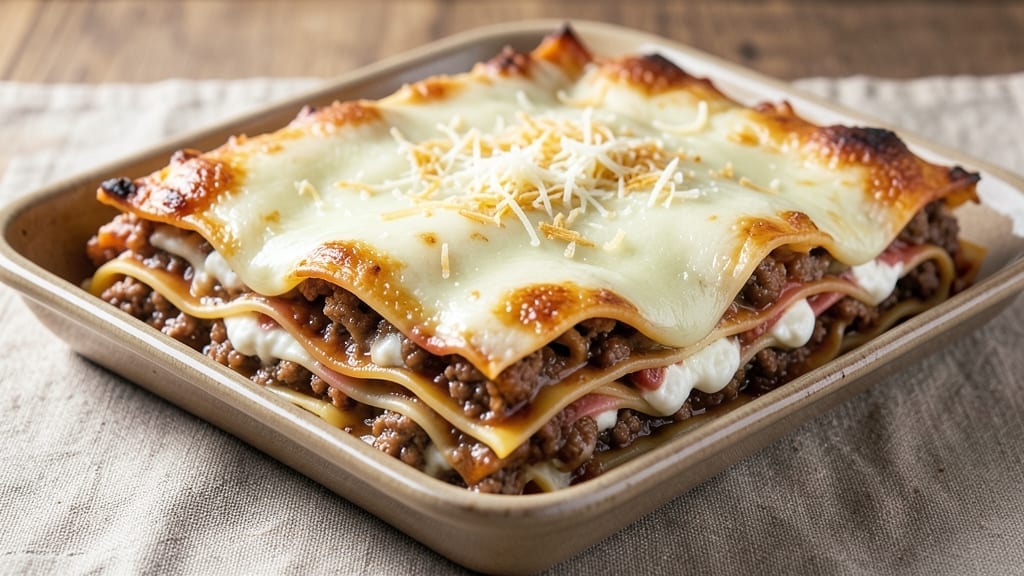
Mastering a 5 cheese meat lasagna recipe means creating layers of rich, gooey perfection that transforms any dinner into a showstopper. This classic Italian dish combines tender meat, five distinct cheeses, and perfectly layered noodles for a restaurant-quality experience at home.
The secret lies in balancing textures—creamy ricotta, melty mozzarella, and sharp parmesan—while ensuring each layer bakes to golden perfection.
The foundation starts with a flavorful meat sauce—ground beef simmered with Italian seasonings—that forms the heart of every lasagna. Five cheeses (mozzarella, ricotta, parmesan, provolone, and fontina) create depth and creaminess, while no-boil noodles cut prep time without sacrificing texture.
Baking at 375°F for 40-45 minutes ensures a crispy top layer and tender, cheesy interior that holds together beautifully.
What you’ll achieve is a lasagna with crispy edges, gooey cheese pockets, and layers that stay intact even when sliced. The combination of savory meat, creamy ricotta, and sharp parmesan delivers a flavor profile that’s both comforting and sophisticated.
Serve with garlic bread and a simple salad for a complete Italian feast that feels like a homemade restaurant experience.
This recipe works with traditional or modern twists—add spinach for extra greens, use gluten-free noodles for dietary needs, or top with extra parmesan before serving. The flexibility makes it perfect for family dinners, potlucks, or impressing guests. Let’s build this lasagna layer by layer!
Ingredients for 5 cheese meat lasagna
Five distinct cheeses, tender meat, and no-boil noodles create restaurant-quality lasagna at home.
| Ingredient | Amount | Notes |
|---|---|---|
| Ground Beef (80% lean) 🥩 | 1 ½ lb | Finely ground, no pre-seasoned blends |
| Lasagna Noodles (No-Boil) 🍝 | 12 sheets | 9×13-inch pan size preferred |
| Ricotta Cheese 🧀 | 15 oz | Whole-milk, part-skim preferred |
| Mozzarella Cheese (Low-Moisture) 🧀 | 12 oz | Shredded, block preferred |
| Parmesan Cheese (Freshly Grated) 🧀 | 1 cup | From a wedge, not pre-grated |
| Provolone Cheese 🧀 | 6 oz | Shredded, mild variety |
| Fontina Cheese 🧀 | 6 oz | Shredded, nutty flavor |
| Marinara Sauce 🍅 | 2 ½ cups | Homemade or high-quality jarred |
| Italian Seasoning 🌿 | 1 tbsp | Dried, includes basil/oregano |
| Garlic Cloves 🧄 | 4 cloves | Minced, fresh preferred |
| Extra-Virgin Olive Oil 🫒 | 2 tbsp | For sautéing meat |
| Large Eggs 🥚 | 2 whole | For binding ricotta mixture |
| Diamond Crystal Kosher Salt 🧂 | 1 ½ tsp | For seasoning throughout |
| Freshly Ground Black Pepper 🌶️ | ½ tsp | For meat seasoning |
| Fresh Basil Leaves 🌿 | ¼ cup | Chopped, for garnish |
The cheese selection elevates this dish—fontina’s nutty depth pairs perfectly with provolone’s mild sweetness, while freshly grated Parmesan adds umami punch. For the best results, source block cheeses from specialty grocers like Whole Foods or local Italian markets—pre-shredded contains anti-caking agents that prevent proper melting. The ricotta should be whole-milk, part-skim for creaminess without excessive water content. When building layers, use 9×13-inch no-boil noodles for optimal coverage and texture. For the meat, 80% lean ground beef provides enough fat for moisture without excessive grease.
No ricotta? Cottage cheese blended with cream cheese works in a pinch, though texture differs slightly. Substituting cheeses? Gouda replaces provolone for a sharper bite, while Asiago can swap Parmesan at a 1:1 ratio. The marinara should be homemade if possible—San Marzano tomatoes and a splash of red wine create depth, but quality jarred sauces like Rao’s or Barilla work well. For the meat, Italian sausage blends can replace half the beef for extra flavor. Fresh basil is ideal for garnish, but dried oregano at one-third the amount suffices if needed. Always mince garlic fresh—pre-minced lacks potency.
Prep ahead by assembling the lasagna up to 24 hours before baking, then refrigerate uncovered to crisp the top layer. Store leftovers in airtight containers for 4-5 days, though it reheats best at 350°F for 20-25 minutes until bubbly. For freezer storage, wrap tightly in foil and freeze for up to 3 months. Thaw overnight in the fridge before reheating. The cheese layers will continue to meld, creating even richer flavor. Portion individual slices with parchment paper between layers to prevent sticking when stacking.
Why You’ll Love This Recipe
- No-Boil Magic: I swear by those no-boil noodles—no waiting for water to boil, no soggy edges, just layers that hold together like they were glued. The ricotta stays creamy, the mozzarella melts just right, and the beef stays juicy because there’s no pre-cooking step to suck out the moisture.
- Cheese Overload: Five cheeses might sound excessive, but trust me—ricotta adds that silky texture, mozzarella brings the melt, and freshly grated parmesan? That’s the secret weapon. Every bite has that crispy, cheesy pull that makes you reach for another slice.
- Weeknight Hero: This is my go-to when I’ve got friends over or the kids are home from school. It feeds a crowd, reheats like a dream, and honestly? No one will guess it took me less than an hour to throw together. The beef’s seasoned just enough to stand out, but the cheeses steal the show.
- Leftovers That Don’t Suck: Most lasagnas turn into a greasy mess the second day, but not this one. The no-boil noodles stay firm, the ricotta doesn’t curdle, and the parmesan keeps things rich without being heavy. I make it on Sundays and have solid leftovers for lunches—no sad, dry slices here.
Step-by-step instructions for layered 5 cheese meat lasagna
Here’s the professional method for constructing a lasagna with perfect texture and rich flavor.
Prepare the Meat Sauce Foundation
Heat the 2 tablespoons extra-virgin olive oil in a large skillet over medium-high heat. Add the 1.5 pounds ground beef (80% lean) and cook, breaking it apart with a wooden spoon, until it loses its raw color and begins to brown—about 5-7 minutes. This should yield about 1 cup of rendered fat.
Add the 4 minced garlic cloves and 1 tablespoon Italian seasoning, stirring constantly for 30 seconds until fragrant. Pour in the 2.5 cups marinara sauce, scraping up any browned bits from the bottom of the pan. Simmer uncovered for 10 minutes to deepen the flavors. Season with 1 teaspoon Diamond Crystal kosher salt and 0.25 teaspoon freshly ground black pepper. The sauce should be thick enough to coat the back of a spoon but still spoonable.
Create the Ricotta Cheese Mixture
In a large mixing bowl, combine the 15 ounces ricotta cheese, 2 whole large eggs, 0.5 teaspoon Diamond Crystal kosher salt, and the remaining 0.25 teaspoon freshly ground black pepper. Using a wooden spoon or rubber spatula, mix until just combined—don’t overwork it. The ricotta should remain slightly lumpy, which helps create a tender texture in the lasagna.
In a separate bowl, shred the 12 ounces low-moisture mozzarella cheese, 6 ounces provolone cheese, and 6 ounces fontina cheese using a box grater or food processor with a shredding attachment. Set aside for layering. The combination of these cheeses creates a perfect balance of meltiness and texture—mozzarella for stretch, provolone for saltiness, and fontina for nutty depth.
Assemble the Lasagna Layers
Preheat your oven to 375°F. Grease a 9×13-inch baking dish with a thin layer of olive oil to prevent sticking. Begin by spreading 1 cup of the meat sauce evenly over the bottom of the dish. This creates a flavorful barrier between the lasagna and the baking dish.
Layer 4 sheets of no-boil lasagna noodles over the sauce, slightly overlapping them if needed to cover the bottom completely. Spread one-third of the ricotta mixture evenly over the noodles, followed by one-third of the shredded cheese blend. Repeat this sequence—noodles, ricotta, cheese—two more times, ending with a final layer of noodles. Top with the remaining 1 cup of meat sauce and sprinkle the 1 cup freshly grated Parmesan cheese evenly over the top. The Parmesan adds umami depth and creates a beautiful golden crust.
Bake to Perfection
Cover the lasagna tightly with two layers of heavy-duty aluminum foil, sealing the edges completely to prevent moisture from escaping. This creates a steam bath that ensures tender noodles and melts the cheeses perfectly. Bake for 45 minutes, then remove the foil and bake for an additional 10 minutes to allow the top to brown and develop a crispy crust.
The lasagna is done when the edges are bubbling, the top is golden brown, and the cheese has melted completely. Let it rest for 15 minutes before slicing—this allows the layers to set slightly, preventing them from sliding apart. The internal temperature should reach 165°F in the thickest part of the lasagna. Garnish with the 0.25 cup chopped fresh basil leaves just before serving for a bright, aromatic finish.
Pro Tips For Making 5 Cheese Meat Lasagna
- Pre-Cook the Noodles: DESCRIPTION:
- Drain and Pat the Ricotta: DESCRIPTION:
- Layer Like a Brick Wall: DESCRIPTION:
- Bake Covered, Then Uncovered: DESCRIPTION:
Troubleshooting perfect results
Cheese Not Melting?
If your cheese stays clumpy or doesn’t melt properly, it’s likely due to too much moisture in the ricotta or pre-shredded cheese. For the ricotta mixture, always use whole-milk, part-skim and avoid overmixing—slightly lumpy is ideal.
For the cheese blend, shred fresh using a box grater or food processor (pre-shredded contains anti-caking agents that prevent proper melting). If you must use pre-shredded, sprinkle it directly over the lasagna during the final 10 minutes of baking to melt it in place. 🧀
Sauce Too Watery?
Lasagna sauce often becomes watery when the noodles absorb too much liquid. To fix this, reduce your marinara sauce on the stovetop before assembling—simmer uncovered for 10-15 extra minutes until thickened.
For assembly, spread sauce only on the bottom layer and between noodles, not directly on top of the final layer. If your lasagna still seems soggy, bake it uncovered for 5-10 extra minutes at the end to evaporate excess moisture. 🍅
Noodles Too Soft?
Overly soft noodles usually mean the lasagna baked too long or was undercooked initially. For no-boil noodles, follow the package instructions precisely—overcooking them before assembly makes them mushy. If using regular lasagna noodles, boil them 1 minute less than directed.
To prevent soggy noodles during baking, cover tightly with foil for the first 45 minutes, then uncover for the final 10 minutes to crisp the top. 🍝
Layers Falling Apart?
This common issue happens when the lasagna isn’t given enough time to set after baking. Always rest for 15 minutes before slicing—this allows the cheese to firm up slightly and the layers to bond.
If your lasagna still slides apart, your ricotta mixture may be too wet. Drain excess liquid from ricotta by placing it in a fine-mesh strainer for 5 minutes before mixing with eggs. For extra stability, chill the assembled lasagna uncovered in the fridge for 1 hour before baking. ⚡
Top Not Browning?
A pale top layer usually means the lasagna didn’t bake long enough uncovered. After the initial 45 minutes covered, uncover and bake for 10-15 minutes until golden brown. For an extra crispy crust, sprinkle 1 tablespoon breadcrumbs mixed with 1 teaspoon grated Parmesan on top before the final baking phase.
If your oven runs hot, reduce the temperature to 350°F for the final 10 minutes to ensure even browning without overcooking the interior. 🔥
Meat Too Greasy?
Excessive grease in the meat sauce can make your lasagna taste unbalanced. To control fat, pat the ground beef dry with paper towels before cooking, and drain excess fat after browning using a slotted spoon.
For a leaner sauce, blot the cooked meat with clean paper towels before mixing with marinara. If your sauce still seems too rich, add 1-2 tablespoons tomato paste to balance the flavors. 🥩
Nutrition facts
Frequently asked questions
Can I use regular lasagna noodles instead of no-boil?
Yes, but you’ll need to cook them 1 minute less than package instructions to prevent mushiness. For best texture, boil until al dente, drain well, and layer immediately. No-boil noodles are ideal for convenience and texture, but regular noodles work if you adjust the cooking time.
What’s the best way to make this lasagna ahead of time?
Assemble the lasagna up to 24 hours ahead and refrigerate uncovered. This helps crisp the top layer. For freezing, wrap tightly in foil and freeze for up to 3 months. Thaw overnight in the fridge before baking—never at room temperature.
Can I substitute any of the five cheeses?
Gouda replaces provolone, Asiago swaps Parmesan, or Swiss can stand in for fontina. For best results, maintain a balance of melty (mozzarella), creamy (ricotta), and sharp (Parmesan) cheeses. Avoid all pre-shredded cheeses—they contain anti-caking agents that prevent proper melting.
Why does my lasagna get watery after baking?
Watery lasagna usually means too much sauce or undercooked noodles. Reduce your marinara sauce before assembling, and spread it only between layers—not on top. For no-boil noodles, follow package instructions precisely. If using regular noodles, boil them 1 minute less than directed.
How do I make this gluten-free?
Use gluten-free lasagna noodles and ensure all cheeses are certified gluten-free. Check labels on cheeses and marinara sauces—some contain hidden gluten. The ricotta mixture and meat sauce remain the same, but verify your Italian seasoning blend for gluten-free certification.

- 3 Layer Eggnog Cake Recipe: Spiced Rum-Infused Frosting and Boozy Swirls - October 6, 2026
- 1800 Ultimate Margarita Mix Recipe: Frozen or On-The-Rocks Versatility - October 6, 2026
- 3 Eggs and Cabbage Recipe: Savory Scramble With Crispy Edges - October 6, 2026