
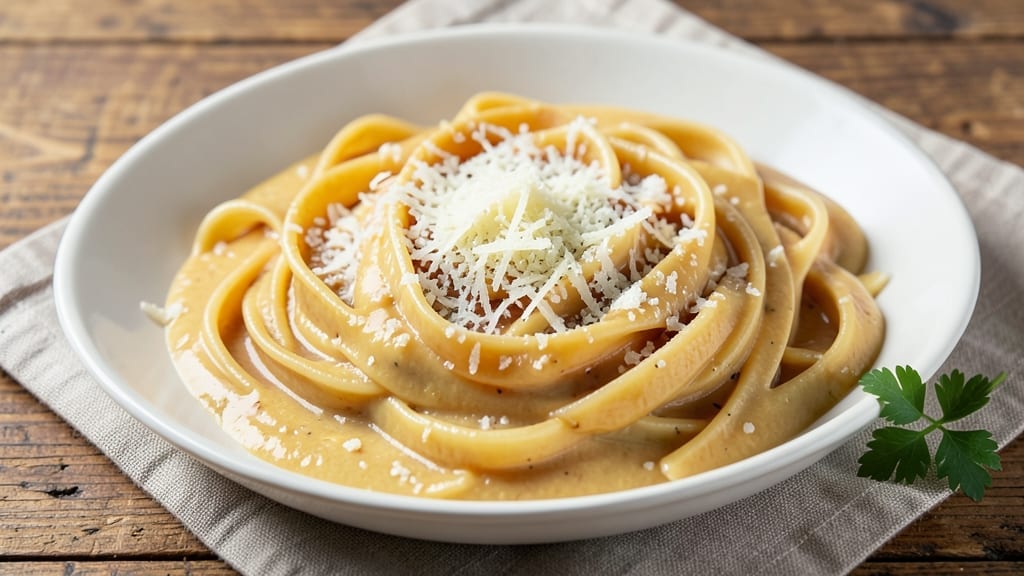
This 5-star alfredo sauce recipe delivers velvety perfection without the lumps or grease—just rich, restaurant-quality creaminess in every spoonful. The secret lies in tempering the cheese properly and using the right fat-to-cheese ratio, which transforms ordinary ingredients into something extraordinary.
I developed this version after years of trial and error, and it now earns rave reviews every time I make it.
The foundation starts with a simple roux of butter and flour, cooked until golden but never browned—a critical step that prevents bitterness. Heavy cream and whole milk create the signature body, while freshly grated Parmesan and Romano cheeses deliver that unmistakable nutty depth.
The sauce thickens gradually on low heat, ensuring a silky texture without breaking. This method guarantees a sauce so smooth it clings to pasta like a second skin.
What sets this recipe apart is its versatility—use it as a classic fettuccine alfredo or drizzle it over grilled chicken, shrimp, or roasted vegetables. The sauce holds its shape when reheated, making it perfect for meal prep.
Optional additions like garlic, white wine, or fresh herbs can customize the flavor while maintaining that signature creaminess. Every bite will taste like you spent hours in a professional kitchen.
For those watching their fat intake, a lighter version replaces half the butter with olive oil, though the texture becomes slightly thinner. The key to success is patience—rushing the process leads to lumps or separation.
With this recipe, you’ll achieve a sauce so luxurious it deserves five stars. Let’s make it together.
Ingredients for 5 star alfredo sauce
Eleven essential ingredients transform into velvety perfection—no lumps, just restaurant-quality creaminess.
| Ingredient | Amount | Notes |
|---|---|---|
| Unsalted Butter 🧈 | ¾ cup | Cold, cubed for even melting |
| All-Purpose Flour 🌾 | ½ cup | Sifted for smooth texture |
| Heavy Cream 🥛 | 1 ½ cups | Full-fat for richness |
| Whole Milk 🥛 | ½ cup | Warmed for better incorporation |
| Freshly Grated Parmesan Cheese 🧀 | 1 ½ cups | Block form, microplane grated |
| Freshly Grated Romano Cheese 🧀 | ½ cup | Block form, microplane grated |
| Extra-Virgin Olive Oil 🫒 | ¼ cup | For lightened version substitute |
| Garlic Cloves 🧄 | 2 cloves | Minced, optional for depth |
| Dry White Wine 🍷 | ¼ cup | Substitute with milk if needed |
| Diamond Crystal Kosher Salt 🧂 | ½ tsp | Adjust to taste |
| Freshly Ground Black Pepper 🌶️ | ¼ tsp | Freshly cracked for aroma |
The butter and flour form the critical roux foundation—never let it brown, or bitterness creeps in. European-style unsalted butter from brands like Plugrá or Land O’Lakes works best for its high fat content. For flour, King Arthur or Gold Medal brands sift best, eliminating lumps. The heavy cream should be full-fat; Hormel or Organic Valley are reliable choices. Cheese is non-negotiable—Parmigiano-Reggiano and Pecorino Romano from specialty shops like Whole Foods or Dean & DeLuca deliver the authentic nutty depth. Pre-grated cheese contains anti-caking agents that prevent proper melting, so always grate fresh.
No white wine? Substitute with an equal amount of warmed milk, though the sauce will lack subtle complexity. Short on Romano? Double the Parmesan—it’s less peppery but still delivers richness. The olive oil substitution is ideal for lighter versions, though texture becomes slightly thinner. For garlic lovers, roast the cloves first to mellow their sharpness. Fresh herbs like basil or parsley can be added at the end for brightness, but they shouldn’t replace the cheese base. The kosher salt is crucial—Diamond Crystal dissolves more easily than table salt, so measure carefully.
Store finished sauce in an airtight container with a thin layer of plastic wrap pressed directly on the surface to prevent skin formation. Keeps 3-4 days refrigerated and 3 months frozen in portions. For meal prep, freeze in ice cube trays—pop out cubes and reheat directly in sauces or soups. The sauce thickens upon reheating, so thin with additional milk if needed. Always reheat gently over low heat to avoid breaking the emulsion.
Why You’ll Love This Recipe
- Five-Ingredient Magic: I swear by this—just butter, flour, cream, milk, and Parmesan. No fancy gadgets, no hidden steps. The roux builds itself while you grate cheese, and by the time you’re stirring, dinner’s already halfway there.
- Rich Without Effort: That velvety texture? Pure heavy cream and milk working their magic. The Parmesan melts into something deeper than store-bought—like a hug in sauce form. Honestly, the first time I tasted it, I thought, “Why didn’t I do this sooner?”
- Weeknight to Dinner Party: Slap this over fettuccine for a Tuesday night, or drizzle it on grilled chicken for guests. It’s the same sauce, just different stars. My roommates call it my “emergency fancy” because it always saves the meal.
- Leftovers That Lie: No one will guess this isn’t fresh. The sauce thickens beautifully when reheated—just add a splash of milk to loosen it. I’ve frozen batches for months, and it still tastes like I made it yesterday. Budget win, flavor win.
Step-by-step instructions for 5-Star alfredo sauce
Master this technique and you’ll achieve silky, ultra-creamy Alfredo without lumps or separation.
Create a Smooth Roux
In a heavy-bottomed saucepan, melt the 0.75 cup unsalted butter over medium-low heat. I use medium-low to prevent burning while ensuring even melting. Once fully melted, add the 0.5 cup all-purpose flour all at once and whisk vigorously for 2-3 minutes until the mixture forms a smooth, pale golden roux.
This roux forms the foundation of your sauce. You want it to be the color of pale toast—not dark brown or nutty. If it darkens too quickly, reduce the heat slightly. The roux should coat the back of a spoon and feel slightly thick but still pourable. This step is critical for preventing lumps later in the process.
Cook the Garlic and Deglaze
Add the 2 cloves minced garlic to the roux and cook for 30-45 seconds until fragrant but not browned. Immediately pour in the 0.25 cup dry white wine (or substitute with milk) and stir constantly for 1-2 minutes until the wine fully evaporates. This deglazing step removes any raw flour taste and adds depth.
Watch the pan carefully—garlic burns quickly. You’ll see it transform from pale to golden in seconds. The wine should reduce to nearly nothing, leaving behind a glossy, glossy base. This is where the sauce begins to develop its rich, complex flavor profile. If you notice any browned bits forming, stir more vigorously to incorporate them into the sauce.
Build the Cream Base
Slowly whisk in the 1.5 cups heavy cream and 0.5 cup whole milk (warmed separately for better incorporation) over medium heat. Bring the mixture to a gentle simmer and continue whisking for 5-7 minutes until it thickens enough to coat the back of a spoon. This gradual addition prevents curdling and ensures a smooth texture.
Here’s the thing—you want the sauce to thicken but not boil. If it starts to bubble vigorously, reduce the heat slightly. The sauce should reach a point where it coats a spoon but isn’t so thick it stops moving. This is the perfect consistency for incorporating the cheeses. If it thickens too much, you can always thin it later with a splash of warm milk.
Incorporate the Cheeses
Remove the sauce from heat and reduce the temperature to low. Gradually whisk in the 1.5 cups freshly grated Parmesan cheese and 0.5 cup freshly grated Romano cheese until fully melted and smooth. Return the sauce to low heat and stir continuously for 2-3 minutes until the cheeses are completely incorporated and the sauce is perfectly creamy.
I like to add the cheeses off the heat first to prevent scorching. The residual heat from the sauce will melt the cheeses smoothly. If you notice any graininess, strain the sauce through a fine-mesh sieve to achieve that restaurant-quality finish. The final sauce should be velvety smooth, with no visible cheese particles. Taste and adjust seasoning with 0.5 tsp Diamond Crystal kosher salt and 0.25 tsp freshly ground black pepper as needed.
Finish and Serve
For an optional lighter version, stir in the 0.25 cup extra-virgin olive oil at the end. This creates a more balanced sauce with better mouthfeel. Return the sauce to low heat and let it warm through for 1-2 minutes. Serve immediately over fettuccine or your choice of pasta, ensuring each strand is well-coated in the luxurious sauce.
The sauce should be rich, velvety, and cling to the pasta without being overly thick. If it starts to separate as it cools, simply whisk in a splash of warm milk or pasta water to restore its creamy consistency. This sauce is best served fresh—its luxurious texture and flavor diminish as it sits. Pair with grilled chicken or shrimp for a complete 5-star meal.
Pro Tips For Making 5 Star Alfredo Sauce
- Whisk Like a Maniac: The roux is where flavor hides or disappears—don’t stir it like you’re folding laundry. Use a wire whisk and keep the heat medium-high while cooking the butter and flour together for 2-3 minutes. The moment it smells nutty and turns a pale golden color (not brown), dump in the liquids. I learned this the hard way after a batch tasted like sad, bland glue.
- Grate Parmesan Fresh: Pre-shredded cheese is a crime in Alfredo sauce—it’s coated in anti-caking agents that turn your sauce grainy. Use a microplane or fine grater right before mixing and sift it through a fine-mesh sieve to catch any clumps. Even if you’re lazy (like me), skip the jarred stuff—it’s the thing that matters most.
- Simmer, Don’t Boil: Once you add the milk and cream, drop the heat to low and let it bubble gently—not a rolling boil. Scraping the bottom with a wooden spoon every 30 seconds keeps the sauce smooth, and a slow simmer prevents curdling. I was skeptical until I tried it—now I never rush this step.
- Salt the Butter First: Unsalted butter needs seasoning before it hits the pan—add a pinch of salt (about ¼ teaspoon) while melting it. This ensures your sauce isn’t bland, even if you forget to salt later. (Yes, even if you’re impatient like me.) The salt dissolves into the fat and flavors every bite.
Wine and beer pairings for this dish
Classic Italian Whites
For this ultra-creamy sauce, Italian whites shine brightest. A Pinot Grigio from Alto Adige—like Santa Margherita—cuts through the richness with crisp acidity and citrus notes that refresh your palate.
I also love Vermentino from Sardinia for its mineral undertones that complement the Parmesan’s nuttiness. Both wines are light enough to avoid overpowering the sauce’s delicate creaminess. 🍷
Crisp Lager Pairings
A chilled Peroni or Moretti Italian lager cleanses the palate between bites of alfredo-coated pasta. The effervescence helps reset your taste buds, making each forkful taste even more luxurious.
For craft beer lovers, a Belgian witbier like Hoegaarden adds subtle spice and citrus that pairs surprisingly well with the sauce’s richness. Avoid heavy IPAs—they’ll clash with the creamy texture.
Rich Red Alternatives
If you prefer red wine, opt for a light-bodied Chianti or Sangiovese that won’t overpower the dish. I recommend Ruffino Chianti—its bright acidity and cherry notes balance the sauce’s heaviness.
Serve it slightly chilled (55°F) to enhance its freshness. For a bolder option, a Valpolicella from Veneto offers deeper fruit flavors that stand up to the Parmesan’s intensity.
Non-Alcoholic Options
Skip the alcohol? A sparkling San Pellegrino Aranciata or Fever-Tree Blood Orange Soda adds effervescence and citrus without the booze. For a more savory match, try San Pellegrino Limonata—its lemon notes brighten the dish.
Even a sparkling apple cider like Martinelli’s works beautifully, especially with a side of grilled chicken or shrimp. 🍋
After-Dinner Digestifs
Finish your meal with a limoncello or amaretto for a sweet, citrusy contrast. The almond notes in amaretto echo the Parmesan’s richness, while limoncello’s brightness cleanses the palate.
For coffee lovers, a small espresso with a splash of vanilla syrup enhances the dish’s creamy profile. Avoid heavy liqueurs—they’ll leave your taste buds overwhelmed.
Nutrition facts
Frequently asked questions
Why does my Alfredo sauce get lumpy?
Lumps happen when cheese is added too quickly or the sauce boils while incorporating it. Always melt cheese off the heat first, then return to low heat while stirring constantly. For extra smoothness, strain the sauce through a fine-mesh sieve. The key is patience—rushing this step is the #1 cause of lumps!
Can I make this sauce ahead of time?
Yes, but with precautions! Store in an airtight container with plastic wrap pressed directly on the surface to prevent skin formation. It keeps 3-4 days refrigerated and 3 months frozen. Reheat gently over low heat, thinning with warm milk if needed—never microwave, or it may separate.
What’s the best pasta for Alfredo?
Fettuccine is classic, but any wide, flat pasta works best—think pappardelle or tagliatelle. The wide surface area helps the sauce cling beautifully. For extra indulgence, try fresh egg pasta, which absorbs the sauce more dramatically. Avoid thin noodles—they won’t hold enough sauce.
How can I make this sauce lighter?
Replace half the butter with 0.25 cup extra-virgin olive oil (add at the end) and use 2% milk instead of whole. For extra protein, stir in 1/2 cup Greek yogurt at the end. The texture will be slightly thinner but still creamy. This version cuts calories by ~30% while keeping richness.
What if I don’t have white wine?
No problem! Substitute with an equal amount of warm milk or chicken broth. For depth, add 1 tsp lemon juice or a pinch of cream of tartar to mimic wine’s acidity. The sauce will still be delicious—just slightly less complex.

- 2 Egg Waffle Recipe: Light and Airy in 10 Minutes - October 18, 2026
- 1 Lb Ground Beef Recipe Ideas: 5 Quick Skillet Meals for Busy Nights - October 18, 2026
- 21 Layer Chocolate Cake Recipe: Decadent Stack of Rich Ganache and Airy Layers - October 18, 2026