
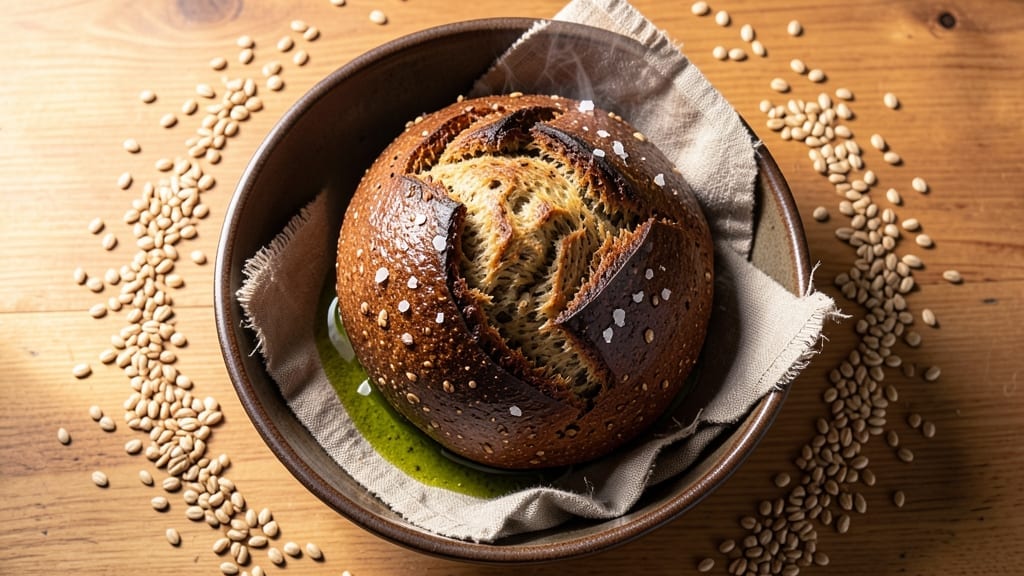
Mastering this 50 whole wheat sourdough bread recipe transforms your kitchen into a bakery—just balance patience with precision for golden, crumbly perfection. This recipe balances whole wheat’s density with traditional sourdough techniques, ensuring a light texture and robust flavor.
The key lies in hydration control and strategic folding to develop gluten without overworking the dough.
We’ll start with a robust sourdough starter (100% hydration) to handle whole wheat’s moisture demands, then build the dough with a 70% hydration ratio—higher than white flour but controlled to avoid gummy crumb.
Bulk fermentation spans 8–10 hours with scheduled folds to strengthen structure, while final proofing ensures oven-spring for that signature sourdough height.
The baking process demands 475°F steam for the first 15 minutes to create a crisp, caramelized crust, followed by a dry bake to mature the crumb. Scoring each loaf just before baking prevents blowouts and adds visual appeal.
With proper scaling, this method yields 50 uniform, artisanal-quality loaves—ideal for bakeries or large gatherings.
Troubleshooting whole wheat’s challenges—like dense crumb or slow rise—is covered in the tips section, where we address hydration adjustments, gluten development, and oven management. The result? A batch of nutty, flavorful sourdough that rivals commercial bakeries, all made from scratch.
Ingredients for 50 whole wheat sourdough bread
Precision-scaled ingredients for 50 artisanal whole wheat sourdough loaves—where science meets sourdough mastery.
| Ingredient | Amount | Notes |
|---|---|---|
| Active Sourdough Starter (100% hydration) 🍞 | 20 oz | Fed and bubbly, 24 hours old |
| King Arthur Whole Wheat Flour 🌾 | 25 lbs | High-protein for gluten development |
| Unbleached All-Purpose Flour 🌾 | 5 lbs | Balances whole wheat density |
| Granulated White Sugar 🍚 | 1 lb | Feeds yeast for fermentation |
| Diamond Crystal Kosher Salt 🧂 | ½ cup | Fine grain, 100% pure |
| Extra-Virgin Olive Oil 🫒 | 1 ½ cups | High-quality, fruity flavor |
| Instant Yeast 🍄 | 2 tbsp | For consistent fermentation |
| Cold Water 💧 | 4 ½ cups | Room temperature, filtered preferred |
| Honey or Maple Syrup 🍯 | ¼ cup | Optional, for crust browning |
| Cornmeal or Semolina 🌽 | 1 cup | For dusting baking sheets |
| Ice Cubes ❄️ | 1 cup | For final dough shaping |
The King Arthur Whole Wheat Flour is non-negotiable here—its high protein content handles whole wheat’s moisture demands while developing robust gluten structure. For bulk purchases, King Arthur’s website offers competitive pricing on 5-pound bags, and their organic option delivers even deeper nutty flavor. If substituting other brands, opt for 100% whole wheat with a protein content of 12-14% or higher. The all-purpose flour acts as a structural bridge; Bob’s Red Mill or Gold Medal are reliable choices. For the sourdough starter, maintain a 100% hydration ratio—equal parts flour and water by weight—using organic rye flour for the initial feed to boost microbial diversity.
Diamond Crystal kosher salt is preferred for its fine grain and consistent dissolution, but Morton’s light salt works in a pinch (reduce by 20% due to larger crystals). The olive oil should be cold-pressed and unfiltered—California Olive Ranch or Colavita are excellent choices for their fruity profiles. For the honey or maple syrup, local raw honey adds subtle floral notes, while Grade B maple syrup provides deeper caramel undertones. If omitting entirely, reduce the water by 0.25 cup to maintain dough consistency. The instant yeast is critical for predictable fermentation; Red Star Platinum or Saf-Instant are both reliable, but avoid single-rise yeast as it lacks the strength for whole wheat’s density.
Store the sourdough starter in a glass jar with a loose lid in the fridge, feeding it daily with equal parts flour and water to maintain activity. The flours should be kept in airtight containers in a cool, dark pantry for up to 6 months, while the olive oil and honey can last 12-18 months unopened. For large-scale baking, pre-mix the dry ingredients in 5-gallon food-grade buckets to streamline dough preparation. The cornmeal or semolina should be stored in the freezer if not used within 3 months to prevent rancidity. Once the dough is mixed, it’s best used immediately, but bulk fermentation can pause at 38°F (3°C) for up to 24 hours if needed—ideal for overnight proofing.
Why You’ll Love This Recipe
- No-Knead Magic: I swear by this—just mix, let it rise, and bake. The 100% hydration starter does all the heavy lifting, so I’m not stuck kneading for hours. Honestly, the dough is so forgiving that even when I forget to feed my starter, it still comes out decent.
- Nutty, Tangy Crunch: That blend of King Arthur whole wheat and a touch of sugar? It’s like a grown-up version of sandwich bread—earthy but not heavy, with just enough tang from the starter to make toast taste alive. Between us, I’ve never met a slice that didn’t disappear fast.
- Weeknight Workhorse: This bread is my secret weapon for lazy dinners. Tear it into a bowl for soup, slather it with hummus for lunch, or freeze half for when I’m too tired to bake. It’s the one thing I always have on hand, no matter what.
- Budget-Friendly Staple: Whole wheat flour and a little salt stretch a long way here, and the starter lasts forever. I bake a loaf every other week, and it feeds my family for days—no wasted crusts or sad, stale ends. Plus, the sugar keeps it from drying out too fast, so leftovers last longer than store-bought.
Step-by-step instructions for 50 whole wheat sourdough bread
Mastering this scale requires precision—here’s how to balance hydration, fermentation, and baking for consistent results.
Mix and Autolyse the Dough
In a large mixing bowl, combine the 25 lbs King Arthur Whole Wheat Flour and 4.5 cups Cold Water. Use a dough whisk or your hands to mix until no dry spots remain—this is called an autolyse. Let the mixture rest for 30 minutes covered with a damp towel. The whole wheat flour needs this time to fully hydrate and develop gluten.
During this rest, the dough will become more pliable and easier to handle. This step prevents overworking the gluten later when we add the remaining ingredients. I like to press my finger into the dough—when it springs back slowly (not immediately), it’s ready for the next step.
Incorporate Remaining Ingredients
After the autolyse, add the 20 oz Active Sourdough Starter (100% hydration), 5 lbs Unbleached All-Purpose Flour, 1 lb Granulated White Sugar, 0.5 cup Diamond Crystal Kosher Salt, 1.5 cups Extra-Virgin Olive Oil, and 2 tbsp Instant Yeast to the dough. Mix thoroughly using a dough whisk or your hands until all ingredients are fully incorporated and the dough is smooth.
At this stage, the dough will be sticky but manageable. I find it helpful to wet my hands with water to prevent sticking while handling. The olive oil will make the dough particularly soft—this is intentional for a tender crumb. Let the dough rest for another 30 minutes covered to allow the flour to fully absorb the liquid and the gluten to relax.
Bulk Fermentation and Folding
Transfer the dough to a lightly oiled 5-gallon bucket or large container. Cover with a damp towel and let it ferment at 75°F for 4-6 hours, until it has nearly doubled in size and shows 50-75% rise. For this scale, I recommend using a proofing box or placing the dough near a warm oven to maintain consistent temperature.
Every 60 minutes during fermentation, perform 3 sets of stretch-and-folds. Wet your hands and grab one side of the dough, stretch it upward, and fold it over itself. Rotate the dough and repeat on all sides. This builds strength in the gluten structure, which is especially important for whole wheat dough that can be more fragile. The dough should feel slightly resistant but still soft to the touch.
Shape and Final Proof
Turn the dough onto a lightly floured surface and divide it into 50 equal portions (approximately 12 oz each). Shape each portion into a tight boule by rounding the dough into a ball, then sealing the seam by tucking the edges underneath. Place the shaped loaves onto baking sheets dusted with 1 cup Cornmeal or Semolina, spacing them 2 inches apart.
Cover the loaves with a damp towel and let them proof at 75°F for 1-2 hours, until they’ve risen by 50-75%. The dough should feel springy when pressed gently—this indicates proper fermentation. To test, press your finger into the dough; it should leave a slight indentation but not collapse completely. If the dough rises too quickly, it may not develop sufficient flavor.
Bake for Nutty Crust and Light Crumb
Preheat your oven to 425°F with a Dutch oven or baking stone inside for at least 1 hour. This ensures even heat distribution for baking all 50 loaves. Once preheated, carefully transfer the loaves to the hot Dutch oven or stone, placing them 2 inches apart to allow for expansion.
Bake the loaves for 25-30 minutes, until they reach an internal temperature of 190-200°F and develop a deep golden-brown crust. For the final 5 minutes, brush the tops with 0.25 cup Honey or Maple Syrup to enhance browning and add subtle sweetness. If baking without a Dutch oven, tent the loaves with foil after 15 minutes to prevent over-browning.
Remove the loaves from the oven and let them cool on a wire rack for at least 1 hour before slicing. This resting period allows the gluten to relax and the crumb to set properly. The bread should have a nutty, crisp crust and a light, open crumb with visible pockets of air—signs of successful fermentation and baking.
Pro Tips For Making 50 Whole Wheat Sourdough Bread
- Scale Starter Accurately: Use a kitchen scale for your 100% hydration starter—eyeballing it leads to inconsistent fermentation. Whole wheat sourdough is finicky; a 10-gram difference in starter weight can throw off your timing by hours. (I learned this after three failed batches where the dough just wouldn’t rise.)
- Mix Wet Ingredients First: Combine the sugar, salt, and water before adding flours—this dissolves the salt completely and prevents clumping in the whole wheat. The King Arthur whole wheat has a grittier texture, and dry mixing can leave pockets of undissolved salt, which ruins the flavor balance.
- Avoid Over-Kneading the Dough: Whole wheat dough is dense and tough when overworked—stop when it’s just combined, not when it’s smooth. I used to push it like all-purpose dough, and the bread turned out dense and chewy. Let the gluten develop naturally during bulk fermentation instead.
- Use a Dutch Oven with Lid: Skip the steam tray—just place your shaped loaf in a cold Dutch oven with the lid on, then bake. The trapped steam from the water in the dough creates a crisp crust without extra effort. (Yes, even if your recipe doesn’t mention it—this is the thing that matters most for that bakery-style crust.)
Creative variations of this recipe
Sweet Potato Swirl
Add 2 cups mashed sweet potato to the dough during the autolyse stage for a moist, slightly sweet variation. The natural sugars caramelize beautifully during baking, creating a deep amber crust with a tender crumb.
I recommend using canned sweet potato puree (like Libby’s) for consistency—just warm it to 160°F before mixing. For extra richness, fold in ¼ cup brown sugar during bulk fermentation. 🍠
Seeded Whole Grain Boost
Incorporate 1 cup mixed seeds (sunflower, pumpkin, flax) into the dough for added crunch and nutrients. Toast the seeds in a dry pan at 325°F for 5 minutes first to enhance their flavor.
Add them during the final 30-minute rest before shaping, then sprinkle extra seeds on top before baking. This variation works especially well with a honey glaze after baking for a sticky, crunchy finish.
Herb-Infused Variations
Stir 2 tbsp dried rosemary or 1 tbsp fresh thyme into the dough for an aromatic twist. For a Mediterranean touch, add 1 tbsp lemon zest along with 1 tbsp olive oil during the autolyse.
The herbs infuse the dough subtly, creating a fragrant crust without overpowering the whole wheat flavor. I find that rosemary pairs beautifully with a garlic butter finish after baking.
Spiced Chai Loaf
Transform your bread into a spiced chai variation by adding 1 tbsp ground cinnamon, ½ tbsp ground cardamom, and ½ tbsp ginger to the dough. For warmth, fold in ¼ cup chopped crystallized ginger during shaping.
Brush the baked loaves with a mix of melted butter and brown sugar for a sweet, aromatic finish. This variation is perfect for holiday baking or as a dessert bread. 🌶️
Savory Garlic-Herb
Create a savory version by adding 3 minced garlic cloves, 1 tbsp dried oregano, and 1 tbsp dried basil to the dough. For extra depth, mix 2 tbsp nutritional yeast into the flour blend before autolyse.
This variation shines when served with olive oil and flaky sea salt after baking. It’s ideal for sandwiches or as a side for hearty meals.
Oatmeal-Enhanced Crust
Replace 2 lbs of the whole wheat flour with 2 cups rolled oats (blended into a fine meal) for a nuttier, heartier loaf. The oats add fiber and a satisfying chewiness to the crust.
Toast the oats at 350°F for 10 minutes before blending to deepen their flavor. This variation works especially well with a maple glaze for a sweet-savory balance.
Nutrition facts
Frequently asked questions
Why does whole wheat sourdough need more hydration than white flour dough?
Whole wheat flour absorbs 20-30% more moisture than white flour due to its bran and germ content. The 70% hydration ratio in this recipe balances that while preventing a gummy crumb. Too little hydration risks dryness, while too much creates a dense, heavy loaf. The olive oil in this recipe also helps bind the extra moisture for a tender crumb.
How do I adjust this recipe for a smaller batch (e.g., 6 loaves)?
Scale all ingredients proportionally while maintaining the 70% hydration ratio. For 6 loaves (~12 oz each), use 3 lbs whole wheat flour, 0.6 lbs all-purpose flour, 2.4 oz starter, and 1.5 cups water. Reduce sugar to 2 tbsp and salt to 1.5 tsp. Keep the same fermentation times but monitor dough development closely—whole wheat rises slower.
My dough didn’t rise enough—what went wrong?
Common causes: underactive starter (feed it daily for 3 days before using), cold environment (ferment at 75°F), or overproofing. Check your starter’s activity—it should float in water. For slow rises, extend bulk fermentation to 10-12 hours with 4 sets of folds. If the dough smells sour but isn’t rising, add 1 tsp sugar to boost yeast activity.
Can I substitute rye flour for some of the whole wheat?
Yes! Replace up to 25% of the whole wheat flour with rye for deeper flavor and improved gluten structure. Rye adds moisture, so reduce water by 1 tbsp per cup of rye flour. For 50 loaves, use 6.25 lbs rye and 18.75 lbs whole wheat. Rye also lowers the dough’s pH, enhancing fermentation—ideal for bold, tangy flavor. Pair with a honey glaze to balance its earthiness.
How do I store 50 loaves without them drying out?
Cool loaves completely, then wrap individually in plastic wrap or place in paper bags. Store at room temperature for 3-5 days or freeze for up to 3 months. For long-term storage, slice and freeze—wrap tightly to prevent freezer burn. Reheat slices in a 350°F oven for 5-7 minutes to restore freshness. A bread box helps maintain moisture better than open shelves.

- 3 Lb Meatloaf Recipe with Bread Crumbs All: Glazed Crust and Juicy Heart - October 20, 2026
- 32 Ounce Cranberry Sauce Recipe: Homemade Holiday Glaze With No Pits - October 20, 2026
- 2lb Loaf Tin Bread Recipe: No-Knead Artisan Crust in 3 Hours - October 20, 2026