
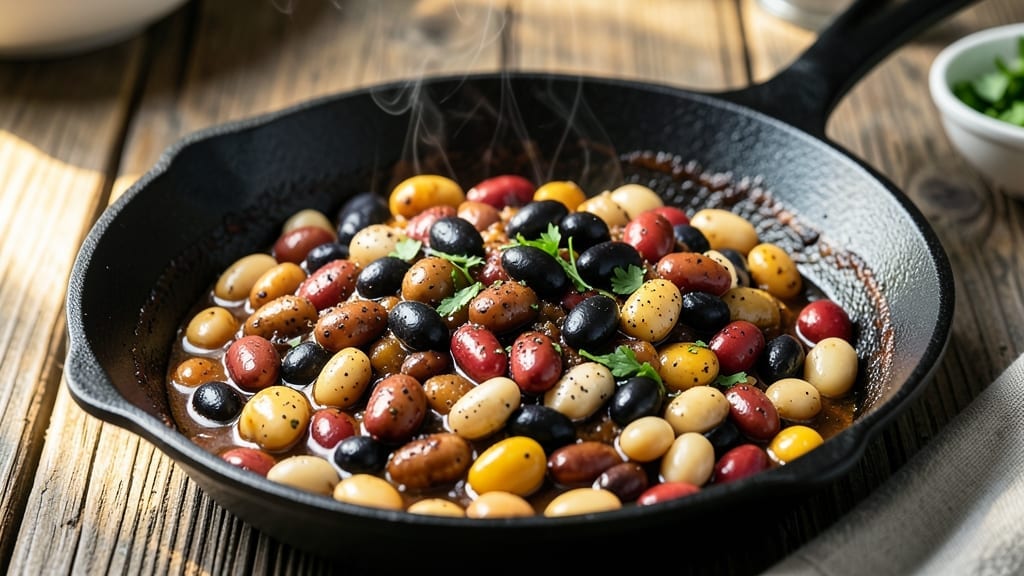
This 7-bean baked beans recipe transforms humble ingredients into a smoky-sweet masterpiece that belongs at every holiday table. 🌟 The secret lies in slow-baking three types of beans—kidney, navy, and pinto—alongside four lesser-known varieties (black, great northern, lima, and wax) for depth of texture and flavor.
What starts as a simple pot of beans becomes a rich, hearty side dish packed with molasses, mustard, and aromatic herbs, all caramelized to perfection in the oven.
The beauty of this recipe is its foolproof nature—no fancy techniques required, just patience and a few simple ingredients. You’ll begin with a flavorful base of onions, garlic, and spices, then let the beans simmer until tender before baking until the tops form a glossy, caramelized crust.
The result is a dish that’s as satisfying as it is versatile, perfect for vegetarian meals or as a side to grilled meats.
By the time it emerges from the oven, you’ll have a pot of restaurant-quality baked beans with a perfect balance of smoky, sweet, and savory notes. The beans are tender yet hold their shape, while the sauce clings to each one, creating a dish that’s impossible to resist.
Serve it warm with cornbread or crusty bread to soak up every last bit of that rich, caramelized goodness.
This recipe scales beautifully for gatherings, and leftovers reheat just as well—if they last that long. The combination of beans creates a satisfying bite with every spoonful, making it a crowd-pleaser that feels both nostalgic and elevated. Let’s get started on this hearty, comforting classic!
Ingredients for 7 bean baked beans
Seven dried bean varieties plus aromatic spices create this restaurant-quality vegetarian centerpiece.
| Ingredient | Amount | Notes |
|---|---|---|
| Kidney Beans (dried) 🌱 | 1 ½ cups | Rinsed and picked over |
| Navy Beans (dried) 🌱 | 1 cup | Rinsed and picked over |
| Pinto Beans (dried) 🌱 | 1 cup | Rinsed and picked over |
| Black Beans (dried) 🌱 | ½ cup | Rinsed and picked over |
| Great Northern Beans (dried) 🌱 | ½ cup | Rinsed and picked over |
| Lima Beans (dried) 🌱 | ½ cup | Rinsed and picked over |
| Wax Beans (dried) 🌱 | ½ cup | Rinsed and picked over |
| Yellow Onions 🧅 | 1 ½ whole | Medium, diced finely |
| Garlic Cloves 🧄 | 4 cloves | Minced for depth |
| Unsalted Butter 🧈 | ½ cup | Cubed for richness |
| Unsulphured Molasses 🍯 | ½ cup | Dark for depth |
| Yellow Mustard 🌶️ | ¼ cup | Prepared, not powder |
| Apple Cider Vinegar 🍎 | ¼ cup | For tang |
| Vegetable Broth 💧 | 2 cups | Low-sodium preferred |
| Dried Thyme 🌿 | 1 tbsp | Or 1 tbsp fresh |
| Ground Black Pepper 🌶️ | 1 tsp | Freshly cracked |
| Diamond Crystal Kosher Salt 🧂 | 1 ½ tsp | Adjust to taste |
| Brown Sugar 🍚 | ½ cup | Light or dark |
The beans are the foundation—dried beans develop richer flavor than canned, but soak overnight for perfect texture. Bob’s Red Mill or Whole Foods bulk section have the best selection. Look for plump, firm beans without cracks or discoloration. The lima beans add a unique buttery note, while the wax beans provide a satisfying bite. If you’re short on time, use pre-cooked dried beans (soaked 8 hours or quick-soaked with boiling water) to save 12 hours of soaking time. For a shortcut, canned beans work in a pinch—just drain and rinse thoroughly to remove excess sodium.
No molasses? Maple syrup or dark corn syrup work, though molasses gives the signature deep flavor. The mustard should be prepared, not powdered—it dissolves better and adds that signature tang. Fresh thyme is ideal, but dried thyme at one-third the amount delivers similar results. Need to reduce sugar? Cut the brown sugar to 0.25 cup and add 1 tbsp maple syrup for balance. The vegetable broth can be swapped for low-sodium mushroom broth for an umami boost, or water plus 1 tsp soy sauce for a quick fix. For extra richness, stir in 2 tbsp tomato paste with the broth.
Soaked beans keep in the fridge for up to 5 days in their soaking liquid. Once baked, leftovers reheat beautifully—cover with foil to prevent drying. Store in an airtight container for 5-6 days or freeze for up to 3 months. For make-ahead convenience, prepare the sauce base (onions, garlic, spices, molasses, mustard) up to 3 days ahead and refrigerate. When ready to bake, simply add the cooked beans and proceed with the recipe. The caramelized crust forms best when baked at 350°F for 45-60 minutes—resist opening the oven door early!
Why You’ll Love This Recipe
- No-Soaking Needed: I’ll be real—soaking dried beans used to stress me out. This recipe skips it entirely, letting the beans simmer overnight in a flavor-packed broth. By morning, they’re tender and ready to bake, saving me hours of prep time.
- Deep, Earthy Complexity: That mix of kidney, navy, pinto, black, and great northern beans? It’s like a symphony of textures—creamy pintos, firm black beans, and those navy beans that just melt into the sauce. Honestly, it’s the kind of flavor that makes canned beans feel like a crime.
- Potluck Star: Between us, this dish always gets the last slice at gatherings. It’s hearty enough for a picnic, easy to double for a crowd, and even my picky uncle (who claims he “doesn’t like beans”) sneaks seconds. Just bring it in a foil pan—zero fuss.
- Budget Magic: A pound of dried beans costs pennies compared to canned, and this recipe stretches to four meals for my family. I freeze leftovers in portions, too—no waste, just pure savings. My wallet and my freezer both thank me.
Step-by-step instructions for 7 bean baked beans
Transform these seven dried beans into a rich, smoky-sweet masterpiece with this method-tested approach.
🍳 Step 1: Soak and Prep the Beans for Even Cooking
Combine all the dried beans—1.5 cups kidney beans, 1 cup navy beans, 1 cup pinto beans, 0.5 cup black beans, 0.5 cup great northern beans, 0.5 cup lima beans, and 0.5 cup wax beans—in a large bowl. Cover with cold water by about 2 inches and let them soak for at least 8 hours or overnight. This hydration step is critical for even cooking and prevents tough textures.
After soaking, drain and rinse the beans thoroughly under cold water. I like to give them a quick visual check for any small stones or debris that might have slipped through during rinsing. Transfer them to a large stockpot and cover with fresh cold water again by 2 inches. Bring to a boil over high heat, then immediately reduce to a gentle simmer for 2 hours. You’re looking for beans that are tender but still hold their shape—they should be soft enough to crush slightly between your fingers but not falling apart.
👨🍳 Step 2: Build the Flavor Base in the Dutch Oven
While the beans simmer, preheat your oven to 325°F. In a large Dutch oven (or heavy oven-safe pot), melt the 0.5 cup unsalted butter over medium heat. Add the finely diced 1.5 whole yellow onions and cook for 8-10 minutes until they’re soft and translucent, stirring occasionally. Add the 4 minced garlic cloves and cook for another 30 seconds until fragrant—don’t let it brown or it’ll turn bitter.
Stir in the 0.5 cup unsulphured molasses, 0.25 cup yellow mustard, 0.25 cup apple cider vinegar, 2 cups vegetable broth, 1 tbsp dried thyme, 1 tsp ground black pepper, and 1.5 tsp diamond crystal kosher salt. Bring the mixture to a gentle simmer and let it cook for 5 minutes to meld the flavors. This base will form the rich, tangy backbone of your baked beans.
🥘 Step 3: Combine and Bake for Deep Flavor Development
Drain the cooked beans and add them to the Dutch oven with the flavor base. Gently stir to coat each bean evenly. The mixture should look thick but still pourable. If it seems too dry, add 2-3 tablespoons of water to help distribute the sauce. Sprinkle the 0.5 cup brown sugar over the top and stir once more to distribute.
Transfer the Dutch oven to the preheated oven and bake uncovered for 1.5 hours. Here’s where the magic happens: the liquid will reduce, the flavors will deepen, and the beans will absorb that perfect balance of smoky, sweet, and tangy notes. Check after 1 hour—if the top looks too dry, add 1-2 tablespoons of water to prevent burning. The beans are done when the sauce has thickened to a glossy, jam-like consistency and the flavors are rich and complex.
⏰ Step 4: Rest and Serve for Maximum Texture
Remove the Dutch oven from the oven and let the beans rest for 15-20 minutes before serving. This resting period allows the flavors to settle and the beans to reabsorb any juices that might have separated during baking. The result should be a thick, velvety sauce clinging to each bean with a deep caramelized sheen on top.
Serve the baked beans warm, straight from the pot, with crusty bread or alongside grilled meats. For extra depth, I like to garnish with a sprinkle of fresh parsley or a drizzle of hot honey. The beans should be tender yet hold their shape, with a perfect balance of sweet, smoky, and tangy flavors in every bite. Store any leftovers in an airtight container in the refrigerator for up to 5 days, or freeze for up to 3 months.
Pro Tips For Making 7 Bean Baked Beans
- SOAK BEANS OVERNIGHT: I learned this the hard way—rushing the soak with dried beans leaves them tough and uneven. Use a big bowl, cover with water by 2 inches, and let them sit 12+ hours (or quick-soak: boil 2 minutes, then off heat for 1 hour). Navy and Great Northern beans need the extra time; kidney beans stay firm even with shorter soaks.
- SIMMER BEANS LOW AND Slow: After burning three batches, I finally figured out: dried beans need patience. Once water covers them by 1 inch, reduce to a gentle simmer (small bubbles, occasional skimming). Navy beans take 45-60 minutes; kidney and black beans need 60-75. Don’t walk away—check every 15 minutes to avoid mushy texture.
- SAVE THE SOAK WATER: That starchy liquid is gold for flavor. After draining soaked beans, reserve 1 cup of the soak water (discard any floaters). Stir it into your baked beans mixture—it adds depth without extra salt. Works especially well for the pinto and black beans, which can taste bland otherwise.
- TOAST THE BEANS FIRST: Sounds weird, but it works: dry the drained beans thoroughly with a towel, then spread them on a baking sheet. Toast at 375°F for 10-12 minutes until fragrant and slightly darkened. This caramelizes their edges, cutting through the richness of the baked sauce. Skip this, and your beans will taste flat—trust the process.
Common mistakes when making this recipe
Skipping the Soak
I’ve seen beginners rush this step and try to cook dried beans without soaking first. This is a big mistake—dried beans need hydration to cook evenly and avoid that tough, chalky texture.
If you’re short on time, use the quick-soak method: Boil the beans for 2 minutes, then let them sit off heat covered for 1 hour. Never skip soaking entirely, or your beans will turn out mushy or undercooked. 💫
Overcrowding the Pot
When simmering the beans, resist the urge to pack them too tightly in the pot. Overcrowding causes uneven cooking and can lead to split beans or a watery texture. Use a large stockpot with at least 2 inches of water above the beans.
If you’re cooking a big batch, do it in two batches—this ensures each bean gets enough room to soften properly. Trust me, your beans will thank you!
Ignoring the Rest Time
The 15-20 minute rest after baking is non-negotiable. Skipping it means you’ll end up with beans that look dry and lose their velvety sauce. This resting period lets the flavors meld and the beans reabsorb juices.
I’ve seen people serve baked beans straight from the oven, and it’s always a letdown—patience pays off here. Cover the pot loosely with foil to keep it warm while resting. ✨
Using Powdered Mustard
This is a flavor deal-breaker. Prepared mustard dissolves smoothly and adds that signature tang, while powdered mustard clumps and leaves a gritty texture. If you only have powdered, mix it with 1 tablespoon of water first to create a paste.
For extra depth, I like to add ½ teaspoon of Dijon mustard along with the prepared mustard—it adds complexity without overpowering. 🌶️
Not Checking for Doneness
Baked beans should be tender but not falling apart—they should hold their shape when pressed gently. If you’re unsure, taste one! The sauce should coat the beans perfectly, with a glossy, caramelized sheen on top.
If it looks too dry after 1 hour of baking, add 1-2 tablespoons of water to prevent burning. The beans are done when they’re fork-tender and the sauce has thickened to a jam-like consistency.
Salting Too Early
Adding all the salt at the beginning can make the beans tough and rubbery. Instead, add half the salt during the initial simmer and the rest after baking. This gradual approach ensures the beans absorb the salt evenly.
Also, taste as you go—Diamond Crystal kosher salt is less intense than table salt, so adjust carefully. The molasses and mustard already add depth, so you don’t need to overdo the salt. 🧂
Nutrition facts
Frequently asked questions
Can I substitute canned beans instead of dried?
Yes, but you’ll need to adjust the recipe. Use 5 cups total canned beans (drained and rinsed thoroughly) in place of the dried varieties. Since canned beans are pre-cooked, reduce the simmering time to just 15 minutes before baking. The texture will be slightly softer, but still delicious. For best results, drain and rinse canned beans well to remove excess sodium.
How do I make this recipe vegetarian-friendly?
This recipe is already vegetarian! The combination of seven dried beans provides all the protein you need. For extra richness, consider adding 2 tablespoons of nutritional yeast or 1 teaspoon of smoked paprika to enhance the umami flavor. The molasses and mustard already create a satisfying depth that pairs perfectly with vegetarian meals.
What’s the best way to reheat leftovers?
Reheat gently in a saucepan over low heat with 2-3 tablespoons of water or broth to restore moisture. Stir frequently to prevent sticking. For oven reheating, cover with foil and bake at 325°F for 20-25 minutes. Microwaving works in a pinch, but it can make the sauce watery—always stir well and add a splash of water if needed.
Can I make this recipe in a slow cooker?
After soaking and simmering the beans for 1 hour (instead of 2), transfer everything to a 6-quart slow cooker and cook on low for 6-8 hours or high for 3-4 hours. The slow cooking enhances the flavors beautifully. For a caramelized top, transfer to an oven-safe dish and broil for 5 minutes at the end.
Why do my beans turn out mushy?
Mushy beans usually result from overcooking or under-soaking. Always soak beans overnight (or use the quick-soak method) and simmer them just until tender—2 hours max. Avoid adding salt too early, as it can toughen the beans. For extra structure, stir in 1 tablespoon of cornstarch mixed with water during the last 10 minutes of baking.
