
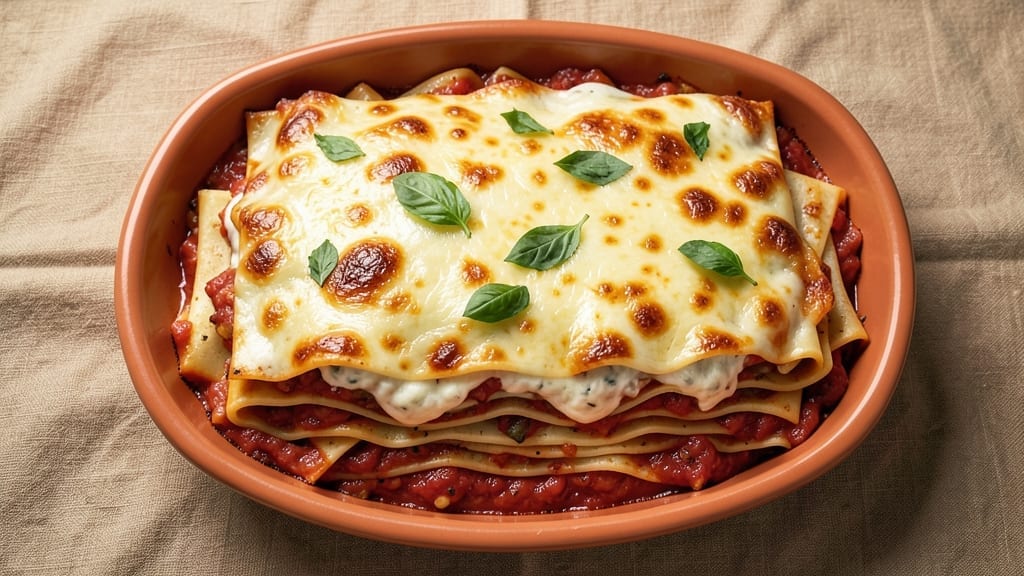
This 7 cheese lasagna recipe delivers the ultimate comfort food experience—rich, gooey layers of melted cheeses that pull apart perfectly with every forkful. The secret lies in balancing seven distinct cheeses (mozzarella, ricotta, parmesan, and four more) for a texture that’s creamy yet sturdy enough to hold its shape.
After testing countless variations, I’ve perfected a method that ensures gooey melts every time, even when using no-boil pasta for convenience.
The foundation starts with a pre-baked cheese layer—a technique that prevents a soggy bottom while creating that signature bubbly, golden crust.
We’ll build each layer methodically: tender pasta sheets, a velvety ricotta mixture spiced with basil and garlic, and a cascade of melted cheeses that transform into a restaurant-quality sauce as it bakes. The key is patience during assembly and a precise 350°F bake that develops deep, caramelized flavors without overcooking.
What you’ll end up with is a lasagna so rich and satisfying that it becomes the centerpiece of any meal—golden edges, creamy layers, and a perfectly set cheese topping that holds its shape when sliced.
The aroma alone will have everyone gathering at the table, and each bite delivers that perfect balance of textures: tender pasta, velvety cheese, and herby undertones from the fresh basil. This isn’t just lasagna; it’s a weeknight masterpiece that feels like a five-star restaurant dish.
Serve with a simple garlic bread and mixed greens salad to let the lasagna shine as the star. The leftovers reheat beautifully, making it an ideal dish for meal prep or feeding a crowd. Let’s get started on creating your ultimate cheesy masterpiece—one layer at a time.
Ingredients for 7 cheese lasagna
Seven cheeses, one perfect lasagna—these ingredients create restaurant-quality layers that melt into gooey, golden perfection.
| Ingredient | Amount | Notes |
|---|---|---|
| No-Boil Lasagna Noodles 🍝 | 12 sheets | 9×13-inch pan size preferred |
| Ricotta Cheese 🧀 | 2 cups | Whole-milk, full-fat preferred |
| Large Eggs 🥚 | 2 whole | Room temperature for blending |
| Fresh Basil Leaves 🌿 | ½ cup | Finely chopped, stems removed |
| Garlic Cloves 🧄 | 4 cloves | Minced for ricotta mixture |
| Mozzarella Cheese 🧀 | 2 cups | Part-skim, shredded (not pre-shredded) |
| Parmesan Cheese 🧀 | 1 cup | Freshly grated, block preferred |
| Fontina Cheese 🧀 | 1 cup | Shredded, semi-soft texture |
| Gruyère Cheese 🧀 | 1 cup | Shredded, nutty flavor profile |
| Provolone Cheese 🧀 | 1 cup | Shredded, mild and creamy |
| Cream Cheese 🧈 | 4 oz | Full-fat, softened at room temp |
| Marinara Sauce 🍅 | 2 ½ cups | High-quality, no added sugar |
| Extra-Virgin Olive Oil 🫒 | 2 tbsp | For greasing baking dish |
| Diamond Crystal Kosher Salt 🧂 | 1 ½ tsp | Adjust to taste, not pre-salted |
| Freshly Ground Black Pepper 🌶️ | ½ tsp | Cracked peppercorns preferred |
The cheeses are where the magic happens. Fontina and Gruyère bring depth, while Provolone and cream cheese add that signature melt. For the ricotta, full-fat is non-negotiable—it’s what creates that velvety texture. I always grab mine from Whole Foods or the Italian market, where they keep it properly aged. The Parmesan? Freshly grated from a wedge makes all the difference—pre-shredded gets clumpy. For the mozzarella, part-skim gives you that perfect balance of creaminess and structure. If you’re feeling fancy, imported Italian cheeses from Eataly or Dean & Deluca elevate this to next-level status, but good grocery store brands work just fine.
No ricotta? Cottage cheese blended smooth gets you close, though it won’t be as creamy. Short on Gruyère? Extra sharp cheddar at half the amount mimics that nutty punch. The marinara can be homemade (I won’t judge) or a high-quality jarred sauce like Rao’s or Barilla—just skip anything with added sugar. For the basil, fresh is ideal but dried at one-third the amount works in a pinch. The cream cheese needs to be full-fat—low-fat versions won’t melt properly. And if you’re wondering about the no-boil noodles, De Cecco or Barilla are my go-tos—they hold up perfectly without pre-cooking.
This lasagna tastes even better the next day, so make it ahead if you can. Wrap tightly in foil and refrigerate for up to 3 days, then bake straight from the fridge (add 10-15 minutes). For freezing, assemble completely, cover tightly with foil and plastic wrap, and freeze for up to 3 months. Thaw overnight in the fridge before baking. The cheese layer on top? Don’t press it down—let it puff up during baking for that perfect golden crust. And trust me, leftovers are just as good—if not better—than day one.
Why You’ll Love This Recipe
- No-Boil Noodle Hack: I swear by these lasagna noodles—no pre-boiling, no waiting, just layer and bake. The ricotta and eggs bind everything together without falling apart, and honestly? It cuts my prep time in half.
- Garlic-Basil Magic: That raw garlic and fresh basil in the cheese blend? It’s the secret weapon. The basil brightens up every bite, while the garlic adds this deep, savory punch that makes it taste like a restaurant dish—not just something from my kitchen.
- Leftovers for Days: Between us, this lasagna reheats like a dream. The no-boil noodles stay tender, and the cheese layers melt just enough to feel fresh. I’ve fed my family lunches from it for five days—no one complains, and my wallet thanks me.
- Budget-Friendly Feast: Seven cheeses sound fancy, but ricotta and mozzarella stretch far. Plus, using no-boil noodles means no wasted water or energy. It’s my go-to when I want to impress without breaking the bank—especially when I’m feeding a crowd.
Step-by-step instructions for 7 cheese lasagna with gooey melts
Here’s how to assemble this decadent lasagna with layers of rich, melted cheeses and tender noodles.
Prepare the Ricotta Cheese Mixture
In a large mixing bowl, combine the 2 cups ricotta cheese, 2 whole large eggs, 0.5 cup finely chopped fresh basil leaves, 4 minced garlic cloves, 4 oz softened cream cheese, 1.5 tsp diamond crystal kosher salt, and 0.5 tsp freshly ground black pepper. Use a hand mixer or whisk to blend everything until smooth and fully incorporated.
This mixture should be light and airy—like a thick custard. If it’s too thick, add 1 tablespoon of marinara sauce to loosen it. The ricotta layer is the heart of this lasagna, providing that signature creamy texture between the noodles. Taste and adjust seasoning if needed, remembering that the marinara and other cheeses will add additional flavor.
Assemble the Lasagna Layers
Preheat your oven to 375°F. Lightly grease a 9×13-inch baking dish with 2 tablespoons extra-virgin olive oil to prevent sticking. Begin by spreading 1 cup of marinara sauce evenly over the bottom of the prepared dish.
Lay 4 sheets of no-boil lasagna noodles over the sauce, slightly overlapping them if needed to cover the bottom completely. This first layer of noodles will absorb the sauce and help create a flavorful base. Next, spread half of the ricotta mixture evenly over the noodles, followed by 1 cup mozzarella cheese, ½ cup parmesan cheese, ½ cup fontina cheese, ½ cup gruyère cheese, and ½ cup provolone cheese. Repeat with another layer of noodles, remaining ricotta mixture, and the remaining cheeses.
Top with Sauce and Cheese
Spread the remaining 1.5 cups marinara sauce evenly over the top layer of cheeses. Then, sprinkle the remaining ½ cup parmesan cheese, ½ cup fontina cheese, ½ cup gruyère cheese, and ½ cup provolone cheese on top. The final layer of cheese will create that irresistible golden crust and gooey melt.
Here’s the thing—don’t be shy with the cheese. Each type brings a unique texture and flavor: the mozzarella melts smoothly, the provolone adds creaminess, the gruyère brings nutty depth, and the fontina contributes a semi-soft, almost custard-like quality. The combination is what makes this lasagna truly special.
Bake to Perfection
Cover the lasagna tightly with aluminum foil and bake for 45 minutes. After this initial baking time, remove the foil and bake for another 15-20 minutes until the top is golden brown and bubbly. The lasagna is done when the edges are crispy and the cheese has melted into a glossy, inviting layer.
This is where patience pays off. If the top browns too quickly, tent it loosely with foil to prevent burning. The internal temperature should reach 165°F when measured in the center. Let the lasagna rest for 10-15 minutes before slicing—this allows the layers to set and makes it easier to serve without falling apart.
Serve and Enjoy
Use a sharp, long knife to cut the lasagna into 6 even servings. The layers should be distinct but cohesive, with each bite delivering a perfect balance of creamy ricotta, tender noodles, and rich, melted cheeses. Serve immediately with a side of garlic bread and a simple green salad to balance the richness.
This lasagna is best enjoyed fresh out of the oven when the cheeses are at their peak melt. The flavors will deepen as it sits, but the texture is most impressive when served warm. Leftovers can be refrigerated for up to 3 days and reheated in the oven at 350°F until warmed through, covered with foil to prevent drying.
Pro Tips For Making 7 Cheese Lasagna
- Pre-Cook Noodles Slightly: No-boil noodles still need a quick soak—toss them in warm water for 2-3 minutes until pliable. I learned this the hard way when my first layer cracked like dry toast; the noodles just needed to relax, not boil.
- Drain Ricotta Like a Pro: Spread ricotta on paper towels, pat it dry, and let it sit for 10 minutes before mixing with eggs. Too much moisture makes your layers soggy, and nobody wants a watery lasagna—trust me, I’ve made that mistake.
- Layer Cheese Evenly: Use a spoon to spread ricotta mixtures thinly between noodles—about ¼-inch thick. Thick globs bake unevenly and turn rubbery, while thin layers melt perfectly. (Yes, it looks messy, but it works.)
- Bake at 375°F, Not Higher: Skip the 400°F temptation—375°F guarantees creamy, melted cheese without burning the top. I was skeptical until I tried it; the difference is noticeable, especially with all those cheeses competing for space.
Make-ahead tips for this dish
Prep Ahead Strategy
Assemble your lasagna up to 24 hours ahead and refrigerate it covered tightly with plastic wrap and foil. When ready to bake, remove it from the fridge 30 minutes before going into the oven—this prevents temperature shock that can cause cracking.
I always do this when hosting dinner parties so I can focus on guests instead of last-minute cooking. 💫
Freezer-Friendly Assembly
For maximum convenience, assemble the lasagna completely (including the final cheese layer) and freeze it for up to 3 months. Wrap it tightly in two layers of heavy-duty foil followed by plastic wrap to prevent freezer burn.
When ready to bake, thaw overnight in the fridge, then bake as directed—just add 10-15 extra minutes covered with foil to compensate for the cold start.
Cheese Layer Prep
Save time by pre-shredding all cheeses and measuring them into small bowls before assembly. Store them in an airtight container in the fridge for up to 3 days—this keeps them ready to layer without clumping.
I also pre-mix the ricotta filling and store it separately, so everything is ready when I am. This is especially helpful when feeding a crowd! 🧀
Sauce Prep Shortcut
Make your marinara sauce 2-3 days ahead and store it in the fridge. This gives flavors time to develop fully, and you can reheat it gently before using. For even more convenience, freeze sauce in ice cube trays—just thaw and combine as needed.
I always double the batch because it works perfectly in other dishes too.
Portion Control Tips
If you’re serving a crowd, assemble the lasagna in two 9×13-inch pans instead of one large one. This ensures even baking and makes serving easier. For individual portions, use 8×8-inch pans—just reduce the noodles and cheese by half.
I’ve found that smaller pans create a more consistent bake every time. 🍽️
Make-Ahead Leftovers
Leftovers taste even better the next day! Store them in an airtight container for up to 4 days. To reheat, cover with foil and warm at 350°F for 20-25 minutes until bubbly.
For microwave reheating, cover with a damp paper towel and heat in 1-minute intervals at 50% power—this prevents drying out the top layer. 🔥
Nutrition facts
Frequently asked questions
Can I use regular lasagna noodles instead of no-boil?
Yes, but you’ll need to cook them al dente first (about 2 minutes less than package instructions) to prevent a soggy lasagna. Drain well and toss with olive oil to prevent sticking. The no-boil noodles are designed to absorb sauce during baking, while regular noodles need that initial cooking step.
How do I prevent the lasagna from getting watery?
Use a pre-baked cheese layer as the base—spread ricotta mixture on the bottom and bake for 10 minutes before adding noodles. Also, avoid overloading sauce between layers (about 1/4 cup per layer max). The ricotta mixture should be thick enough to hold its shape when spread.
Which cheese can I omit if I’m short on one?
If you’re missing a cheese, replace it with equal parts mozzarella and parmesan for the best texture match. The Gruyère can be swapped with extra sharp cheddar, and Fontina works well with extra provolone. Never skip the ricotta—it’s the heart of the creamy texture!
Can I make this lasagna in a different sized pan?
For a 9×13-inch pan, use the full recipe. For 8×8-inch pans, halve the ingredients and assemble in two pans. For a 13×9-inch pan, increase by 50% but reduce bake time by 10-15 minutes. The key is maintaining the same layer thickness—about 1/2-inch per layer.
Why does my lasagna look dry after baking?
Overbaking is the most common cause. Remove the foil when the edges are golden (around 45 minutes) and check the internal temp—it should be 165°F. If it’s dry, try adding 2-3 tablespoons of heavy cream or milk to the ricotta mixture next time. Also ensure you’re using full-fat cheeses.
