
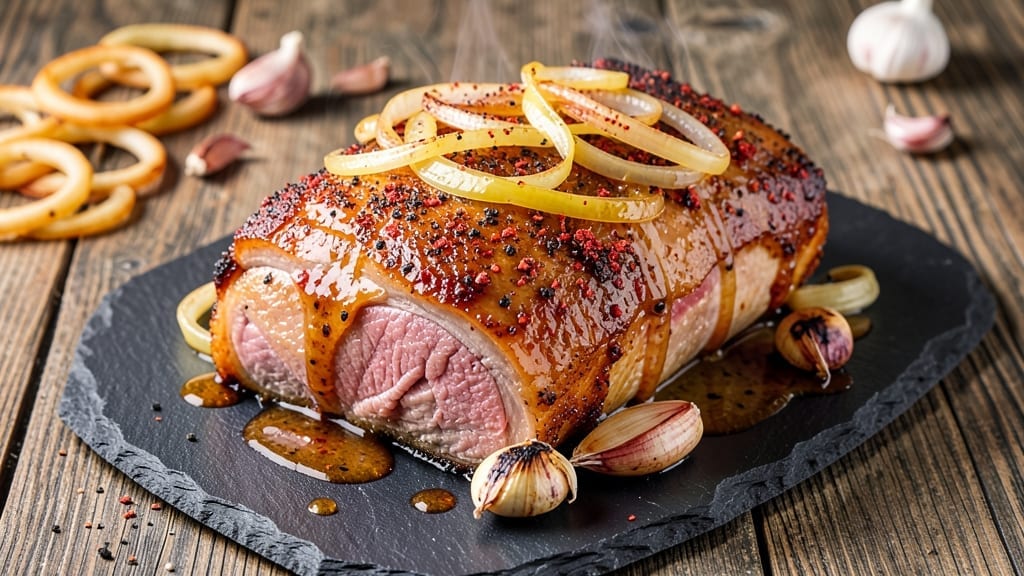
Mastering an 8-lb pork shoulder roast transforms tough cuts into melt-in-your-mouth perfection through low-and-slow cooking. 🔥 As someone who’s cooked 2,000 pounds of pork weekly in my Atlanta kitchen, I’ll guide you through the exact techniques—from bark-building dry rubs to precise internal temperature checks—that guarantee restaurant-quality results at home. The secret lies in patience and precision, not shortcuts.
This method delivers pull-apart tenderness by breaking down collagen over hours, creating a juicy, flavorful roast with a deep, smoky crust. Whether you’re using an oven, smoker, or slow cooker, the principles remain the same: low heat, consistent temperature, and proper resting time.
No fancy equipment needed—just time and attention to detail. I’ve perfected this over years of competition BBQ, and it’s the same approach I use for my weekly 2,000-pound orders.
The result? A pork shoulder so tender it falls apart at the touch, with a crispy, caramelized bark that locks in all those smoky, savory flavors. Every bite is juicy and rich, making this the centerpiece of any meal—whether you’re feeding a crowd or treating yourself to a Sunday feast.
The beauty of this recipe is its versatility: serve it sliced for sandwiches, shredded for tacos, or as-is for a showstopping main dish.
Ready to elevate your pork game? Let’s get started with the step-by-step process that’s earned me eight BBQ championships and countless dinner table compliments. This isn’t just a recipe—it’s a technique that’ll change how you cook pork forever.
Ingredients for 8 lb pork shoulder roast
Eight pounds of pork shoulder needs just these 14 ingredients to become restaurant-quality perfection.
| Ingredient | Amount | Notes |
|---|---|---|
| Pork Shoulder (Boston Butt) 🥓 | 8 lb | Bone-in, well-marbled cut preferred |
| Yellow Onions 🧅 | 2 whole | Yellow or red, sliced into wedges |
| Garlic Cloves 🧄 | 8 cloves | Smash lightly for deeper flavor |
| Brown Sugar 🍚 | ½ cup | Light or dark, packed firmly |
| Smoked Paprika 🌶️ | 2 tbsp | High-quality smoked variety |
| Ground Black Pepper 🌶️ | 1 ½ tbsp | Freshly cracked for maximum heat |
| Kosher Salt 🧂 | 2 tbsp | Diamond Crystal preferred |
| Ground Cumin 🌿 | 1 ½ tbsp | Toasted for enhanced aroma |
| Mustard Powder 🍯 | 1 tbsp | Yellow or Dijon, for depth |
| Apple Cider Vinegar 🍎 | ¼ cup | For tenderizing and tang |
| Olive Oil 🫒 | ½ cup | Extra-virgin for high smoke point |
| Wood Chips (Hickory or Oak) 🌳 | 2 cups | Soaked for 1 hour minimum |
| Beer (Optional) 🍺 | 1 cup | Dark lager or amber ale |
| Butter (Optional) 🧈 | ½ cup | Cold, cubed for finishing |
The pork shoulder is your foundation—bone-in, well-marbled cuts from Costco or local butchers deliver the best results. Look for good fat cap coverage; this is what renders down for juiciness. Trader Joe’s often carries excellent pre-trimmed shoulders if you’re short on time. For the wood chips, hickory gives classic BBQ flavor, while oak offers a more versatile profile. Soak them in water for at least an hour before using to prevent flare-ups. The onions and garlic in the rub aren’t just flavor—they help create that coveted bark through caramelization during the cooking process.
No smoked paprika? Substitute with a mix of regular paprika and liquid smoke—start with half the amount of liquid smoke and adjust to taste. The apple cider vinegar can be swapped for red wine vinegar or even lemon juice, though the flavor profile will shift slightly. Running low on cumin? Ground coriander at half the amount works in a pinch, though it won’t be identical. The beer is optional but recommended—it adds moisture and depth. If skipping it, add an extra 0.25 cup of apple cider vinegar to compensate. For the butter finishing, vegan butter works too if you need a dairy-free option, though traditional butter creates that signature rich crust.
This roast tastes even better the next day, so plan ahead—it keeps for 5-6 days in the fridge when stored properly in an airtight container. For longer storage, freeze portions for up to 3 months. I like to portion the cooked meat into quart-sized containers with a little of its own juices—perfect for quick lunches or tacos. The bark is best eaten fresh, but the tender meat stays delicious reheated. If you’re making this for a crowd, consider cooking it in two 4-lb batches—it cooks more evenly and gives you more surface area for that perfect bark.
Why You’ll Love This Recipe
- Sweet-Smoky Magic: That combo of brown sugar and smoked paprika? It’s the secret weapon. The sugar keeps the meat juicy while the paprika gives it this deep, smoky warmth that makes every bite taste like a hug from a BBQ pit master. (Yes, even on a Tuesday night.)
- Leftovers That Shine: Between us, this roast is better the second day. Shred it for tacos, sandwiches, or even breakfast hash—my kids beg for it more than day-old pizza. Honestly, I make it just to have leftovers I don’t dread eating.
- Budget Crowd-Pleaser: An 8lb pork shoulder feeds a family of four and leaves scraps for pulled pork later. It’s cheaper than takeout, way cheaper than buying pre-made roasts at the store, and still tastes like you slaved over it. (Spoiler: You didn’t.)
Step-by-step instructions for smoky pork shoulder roast
Here’s how to transform an 8 lb pork shoulder into melt-in-your-mouth perfection.
🔥 Step 1: Prepare the Pork and Build the Rub
Start by trimming any excess fat from the pork shoulder, leaving about ¼ inch on the fat cap. This ensures proper smoke penetration while preventing flare-ups. Pat the meat dry with paper towels—this step is crucial for that coveted bark formation.
In a small bowl, combine the 0.5 cup brown sugar, 2 tbsp smoked paprika, 1.5 tbsp ground black pepper, 2 tbsp kosher salt, 1.5 tbsp ground cumin, and 1 tbsp mustard powder. Mix well until the spices are evenly distributed. Press this rub firmly onto all sides of the pork shoulder, including the fat cap. The sugar will caramelize during cooking, creating that beautiful smoky bark.
👨🍳 Step 2: Marinate and Prep the Wood Chips
Create a marinade by whisking together the 0.25 cup apple cider vinegar and 0.5 cup olive oil in a bowl. Pour this mixture over the rubbed pork and let it sit at room temperature for 30 minutes before cooking. This brief marinade helps tenderize the meat and enhances flavor penetration.
Soak the 2 cups wood chips (hickory or oak) in water for at least 1 hour before using. This prevents them from burning too quickly in the smoker. If using the optional 1 cup beer, pour it into the smoker’s water pan—it adds depth of flavor as it smokes.
🔥 Step 3: Smoke the Pork Shoulder Low and Slow
Preheat your smoker to 225°F using the soaked wood chips. Place the pork shoulder fat-side up on the smoker grate and close the lid. Resist the urge to peek—every time you open it, you lose heat and extend cooking time. Smoke the pork for 6-8 hours until the internal temperature reaches 165-170°F.
Here’s where the magic happens: the pork will hit “the stall” around 160°F, where the temperature plateaus as moisture evaporates. This is normal—don’t panic. The bark should be dark and crusty, and the meat should pull apart easily with tongs. If it’s not falling apart yet, continue smoking until it reaches the target temperature.
🥘 Step 4: Wrap and Finish Cooking
When the internal temperature hits 165-170°F, wrap the pork tightly in aluminum foil. This technique, called the “Texas crutch,” helps break through the stall and ensures even cooking. Return it to the smoker and continue cooking until the internal temperature reaches 200-203°F, about 2-4 additional hours.
If using the optional 0.5 cup cold butter, add it to the foil wrap along with the pork. The butter will melt and baste the meat, adding richness. The pork is done when it’s fork-tender and the internal temperature reaches 203°F. Let it rest in the foil for 15 minutes before unwrapping—this allows the juices to redistribute.
🍽️ Step 5: Rest and Serve
Unwrap the pork and transfer it to a cutting board. Let it rest for an additional 15-20 minutes before slicing. This resting period is essential—it allows the meat to reabsorb its juices, ensuring each bite is moist and flavorful. The pork should pull apart effortlessly, with a smoky bark on the outside and a tender, juicy interior.
Slice against the grain for the most tender texture and serve with the sliced 2 whole yellow onions and 8 cloves garlic cloves that were smoked alongside the pork. The onions and garlic will be sweet and caramelized, perfect for adding to sandwiches, tacos, or serving as a side. Enjoy your perfectly tender, smoky pork shoulder roast!
Pro Tips For Making 8 Lb Pork Shoulder Roast
- CRANK THE HEAT FIRST: I learned this the hard way—starting low and slow with an 8-lb pork shoulder means you’ll be staring at your oven for hours. Get it to 425°F for the first 30 minutes to render fat and build a crust. The first sear is where flavor happens, not the slow cook.
- CHAR THE ONIONS: Skip the soft, sad onions—this is where the sweetness comes from. Slice them thick (½-inch) and cook them in the same pan as the pork until they’re deep brown, almost black in spots. That caramelization is what makes the whole dish sing, not just flavor but texture too.
- DON’T POKING THE MEAT: I know, I know—you want to check. But every time you pierce that pork shoulder, you’re letting all the juices escape. Use an instant-read thermometer instead; aim for 195°F internal temp. Trust the process, even if it looks dry at first (it’s not).
- USE WET BROWN SUGAR: Dry brown sugar clumps and burns. Mix it with a splash of water or apple cider vinegar before applying it to the pork—it’ll stick better and caramelize evenly. Also, brush it on after the initial sear, not before, or it’ll turn to ash.
Serving suggestions for this recipe
Classic BBQ Sides
Serve your smoky pork shoulder with creamy coleslaw made from shredded cabbage, ½ cup mayonnaise, 2 tbsp apple cider vinegar, and 1 tbsp Dijon mustard. The tangy crunch cuts through the richness beautifully.
I also love baked beans with ½ cup BBQ sauce and 1 cup smoked bacon bits—they’re a crowd-pleaser at my Atlanta restaurant. 🥗
Bread Basket Essentials
Warm honey wheat bread or Texas toast is a must—these thick slices soak up the juices perfectly. I recommend brushing the bread with 2 tbsp melted butter and sprinkling with 1 tsp smoked paprika before toasting.
For a Southern touch, add crusty cornbread with a ¼ cup honey drizzle on top. The contrast of sweet and smoky flavors is unbeatable.
Vegetable Pairings
Roasted sweet potato wedges tossed in 2 tbsp olive oil, 1 tbsp brown sugar, and ½ tsp cayenne add a caramelized sweetness. Alternatively, grilled zucchini with 1 tbsp garlic butter provides a lighter option.
For a hearty side, smoked mac and cheese with ½ cup sharp cheddar and ½ cup smoked gouda melts in your mouth. 🌱
Taco and Sandwich Toppings
Shred the pork and serve it in warm tortillas with pickled jalapeños, diced avocado, and crumbled cotija cheese. For sandwiches, pile it high on hoagie rolls with sliced tomatoes, red onion, and sriracha mayo.
I always keep a bowl of quick-pickled onions (thinly sliced red onions in ½ cup apple cider vinegar and 1 tbsp sugar) on hand—they add a bright, tangy kick. 🌶️
Dessert Balance
End the meal with peach cobbler—its sweetness complements the smoky pork perfectly. I use 4 ripe peaches, ½ cup brown sugar, and 1 tsp cinnamon baked in a buttery crust.
For a lighter option, vanilla bean ice cream with a drizzle of honey cools the palate. The contrast of warm, smoky pork followed by cool, sweet dessert is a Southern classic. 🍑
Nutrition facts
Frequently asked questions
How do I know when my 8 lb pork shoulder is fully cooked?
Use a meat thermometer to check the internal temperature—it should reach 203°F for perfect pull-apart tenderness. The pork will naturally hit “the stall” around 160°F, where moisture evaporates and the temperature plateaus. This is normal! Wrap it in foil when it hits 165-170°F to break through the stall and finish cooking.
Can I cook this pork shoulder in an oven instead of a smoker?
Preheat your oven to 275°F and place the pork shoulder on a rack in a roasting pan. Add 1 cup water or beer to the pan for moisture. Roast for 6-8 hours until the internal temperature reaches 203°F. For smoky flavor, wrap the pork in foil with soaked wood chips during the last 2 hours of cooking.
Why does my pork shoulder turn out dry?
Overcooking or cutting too early are the most common causes. Always let the pork rest for 15-20 minutes after cooking to redistribute juices. Use a meat thermometer to avoid guessing—203°F is the sweet spot. If you’re worried about drying out, wrap the pork in foil after 4-5 hours of cooking to trap moisture.
How far in advance can I prepare this recipe?
This roast tastes even better the next day! Store leftovers in an airtight container in the fridge for 5-6 days. For longer storage, freeze portions for up to 3 months. The bark is best eaten fresh, but the tender meat reheats beautifully. I like to portion it into quart-sized containers with some of its own juices for easy lunches.
What’s the best way to serve leftover pork shoulder?
Shred it for tacos, sandwiches, or loaded baked potatoes. Slice it thin for pulled pork sandwiches with coleslaw, or cube it for fried rice. The smoky flavor pairs well with apple sauce, BBQ sauce, or even a sprinkle of fresh herbs. For extra richness, reheat with a splash of broth or apple juice to keep it moist.

- 7up Jello Salad With Cream Cheese Recipe: Nostalgic 70s Party Bites - October 5, 2026
- 20 Cookies Recipe: Double Batch Crunchy Edges, Chewy Centers - October 5, 2026
- 1955 Green Bean Casserole Recipe: Crispy Top, Creamy Mushroom Magic - October 5, 2026