
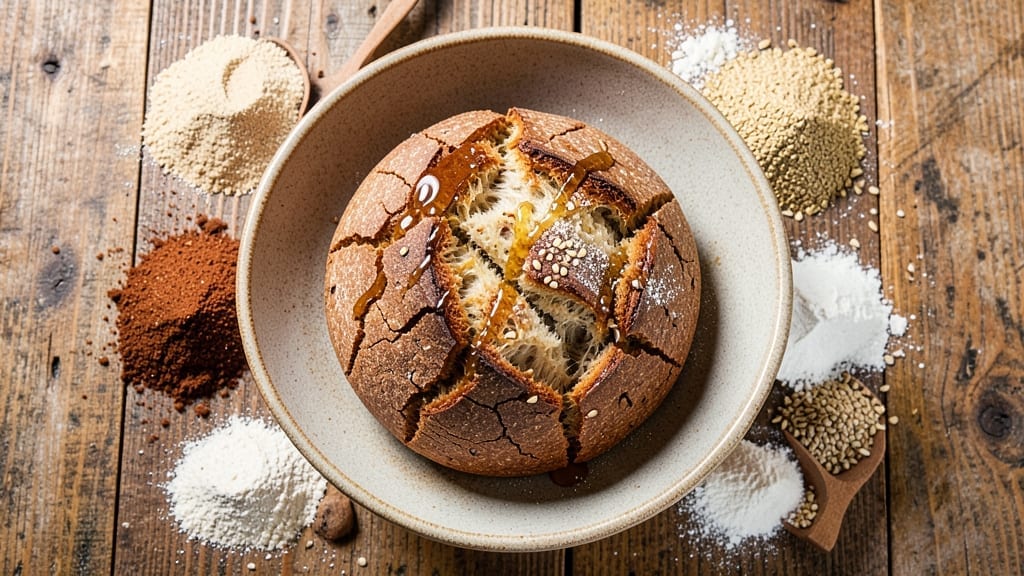
This 9-grain flour bread recipe delivers a nutty, seeded crust packed with wholesome depth—perfect for sandwiches, toast, or serving alongside soups. The blend of grains creates a complex flavor profile that’s both hearty and subtly sweet, with a satisfying crunch from toasted seeds.
I developed this recipe after years of experimenting with whole-grain breads, and it’s become a staple in my kitchen for its versatility and rich texture.
The secret lies in the 9-grain flour blend, which includes wheat, rye, barley, and more, creating a balanced, earthy flavor without overpowering bitterness. Unlike commercial breads, this recipe relies on natural fermentation for a light, airy crumb and a crisp, golden-brown crust that’s impossible to resist.
The dough requires a longer fermentation (overnight in the fridge), which deepens the flavor and improves digestibility.
By the time you pull it from the oven, you’ll have a loaf with a sturdy, seeded crust and a soft, slightly chewy interior—ideal for slicing thick or toasting until crispy.
The nutty aroma alone makes it worth baking, but the versatile texture ensures it works for everything from grilled cheese to French toast. This bread keeps well for days, making it perfect for meal prep.
For an extra boost, try adding seeds or herbs to the dough before shaping, or brush the crust with garlic butter after baking for added richness. The recipe scales easily, so you can bake multiple loaves for sharing. Let’s get started on your wholesome, nutrient-packed bread**!
Ingredients for 9 grain flour bread
Nine distinct flours and seeds create this wholesome, nutty bread with a sturdy crust and airy crumb.
| Ingredient | Amount | Notes |
|---|---|---|
| All-Purpose Flour 🌾 | 2 cups | For structural balance in blend |
| Whole Wheat Flour 🌾 | 1 cup | Adds hearty texture and depth |
| Rye Flour 🌾 | ½ cup | Earthy, slightly bitter notes |
| Barley Flour 🌾 | ⅓ cup | Nutty, malty flavor profile |
| Spelt Flour 🌾 | ⅓ cup | Light, slightly sweet undertones |
| Oat Flour 🌾 | ⅓ cup | Creamy texture and mild sweetness |
| Buckwheat Flour 🌾 | ¼ cup | Rich, toasty flavor |
| Millet Flour 🌾 | ¼ cup | Subtle nutty taste |
| Cornmeal 🌽 | ¼ cup | Adds crunchy texture |
| Active Dry Yeast 🍞 | 2 ¼ tsp | Ensure freshness for fermentation |
| Granulated Sugar 🍚 | 1 tbsp | Feeds yeast for rise |
| Salt 🧂 | 1 ½ tsp | Diamond Crystal preferred |
| Sunflower Seeds 🥜 | ½ cup | Toasted for extra crunch |
| Sesame Seeds 🌿 | ¼ cup | Toasted for nutty aroma |
| Flaxseeds 🌾 | ¼ cup | Ground for omega-3 boost |
| Warm Water 💧 | 1 ½ cups | 105°F for ideal yeast activation |
| Extra-Virgin Olive Oil 🫒 | 2 tbsp | For dough elasticity |
The flour blend is everything here. King Arthur or Bob’s Red Mill are my go-tos for pre-milled flours—saves time and ensures consistency. If you’re grinding your own, toast the whole grains first (350°F for 10 minutes) to deepen the flavors. The buckwheat and barley flours can be tricky to find, so check the bulk section at Whole Foods or Trader Joe’s. For the seeds, toast them separately in a dry pan until golden—that extra step makes all the difference in texture and aroma. The yeast needs to be fresh, so check the date on the package; if it’s been sitting in your pantry for months, grab a new packet.
No buckwheat flour? Swap in extra rye or whole wheat—it’ll still taste hearty. Running low on sesame seeds? Pumpkin or poppy seeds work beautifully for a different nutty profile. The olive oil can be swapped for avocado or melted coconut oil, but stick with extra-virgin for that fruity depth. For a quicker rise, use instant yeast at half the amount—just skip the sugar since instant yeast doesn’t need it. And if you’re making this in a high-altitude area, reduce the yeast by 25% to avoid an overly fast rise.
This dough is best made the night before—overnight cold fermentation in the fridge develops the most complex flavors. Store the shaped loaf in a flour-dusted linen towel in the fridge for up to 5 days, or freeze for 3 months by wrapping tightly in plastic. To revive stale bread, warm slices in a toaster or oven at 350°F for 5 minutes. The seeds keep best in the freezer once toasted, so portion them out before storing. And if you’re making multiple loaves, pre-shape them and refrigerate overnight—they’ll be ready to bake whenever you are.
Why You’ll Love This Recipe
- No-Fuss Mixing: I swear by this blend—just toss the dry ingredients in a bowl, add water and yeast, and knead for five minutes. That’s it. No measuring cups out for every single flour; the ratios are already balanced for maximum rise and texture.
- Earthy Depth: Between the rye’s tang, spelt’s nutty warmth, and barley’s chewy bite, this bread tastes like a whole-grain symphony. Honestly, it’s the kind of flavor that makes you slow down and actually enjoy a slice of toast.
- Meal Prep MVP: I bake two loaves on Sundays—one for sandwiches, one for toast—and they last a full week. The rye and barley stay fresh longer than white bread, and the whole wheat keeps things satisfying without getting stale.
- Budget Booster: I buy these flours in bulk, and they stretch farther than all-purpose alone. A single batch costs me pennies compared to store-bought artisan loaves, yet it’s heartier and way more interesting. (Yes, even on a Tuesday night.)
Step-by-step instructions for 9 grain flour bread
Here’s how to craft a rustic loaf with complex textures and nutty depth—every step ensures that crusty exterior and tender crumb.
Activate the Yeast and Mix the Dough
In a large mixing bowl, whisk together the 1.5 cups warm water (about 105°F), 1 tbsp granulated sugar, and 2.25 tsp active dry yeast. Let this sit for 10-15 minutes until frothy—you’ll see bubbles forming and the mixture smell slightly sweet and yeasty. If it doesn’t bubble, your yeast may be stale, and you’ll need to start over.
Next, add the 2 cups all-purpose flour, 1 cup whole wheat flour, 0.5 cup rye flour, 0.33 cup barley flour, 0.33 cup spelt flour, 0.33 cup oat flour, 0.25 cup buckwheat flour, 0.25 cup millet flour, and 0.25 cup cornmeal. Stir with a wooden spoon until combined, then add the 1.5 tsp salt and 2 tbsp extra-virgin olive oil. Mix until a shaggy dough forms—this blend of flours will be denser than standard bread dough, so don’t worry if it’s sticky.
Knead Until Elastic and Smooth
Turn the dough onto a lightly floured surface and knead for 8-10 minutes by hand, or use a stand mixer with a dough hook for 5-6 minutes on medium speed. You’re aiming for a smooth, slightly tacky dough that springs back when pressed. The multiple flours make this dough denser, so it won’t rise as dramatically as white bread dough—this is normal and actually enhances the texture.
Real talk: If the dough feels too dry, add 1 tbsp warm water at a time until it’s pliable. If it’s too sticky, sprinkle in 1 tbsp flour and knead again. The goal is a dough that holds its shape but still feels soft to the touch—this ensures a tender crumb without being gummy.
First Rise and Seed Toasting
Place the dough in a lightly oiled bowl, cover with a damp towel, and let it rise in a warm spot for 1.5-2 hours, or until it has nearly doubled in size. While the dough rises, toast the 0.5 cup sunflower seeds, 0.25 cup sesame seeds, and 0.25 cup flaxseeds in a dry skillet over medium heat for 3-4 minutes, stirring constantly. They should turn golden and fragrant—this enhances their nutty flavors and adds crunch to the crust.
Here’s the thing—don’t rush this rise. The yeast needs time to ferment properly in this dense flour blend. If your kitchen is cold, place the bowl near a warm oven (turned off) with the light on to create a cozy environment. Poke the dough gently; if it springs back slowly, it’s ready.
Shape and Final Rise
Punch down the risen dough to release air, then transfer it to a floured surface. Gently shape it into a 9-inch round loaf (or a 9×5-inch loaf if you prefer). Place it seam-side up in a greased pullman pan or round cake pan. Cover loosely with plastic wrap and let it rise for another 45-60 minutes until it’s puffy and just about fills the pan.
This second rise is crucial—it develops the bread’s structure and ensures a light texture despite the dense flours. If the dough doesn’t rise much, it’s okay; this bread won’t be as airy as white bread, but it’ll still be tender and flavorful. The seeds you toasted earlier can be sprinkled on top now for extra crunch.
Bake to Golden Perfection
Preheat your oven to 375°F with a baking stone or inverted baking sheet inside for 20 minutes. This creates steam, which helps the bread develop a crisp crust. Brush the dough with a little extra-virgin olive oil, then bake for 35-40 minutes until the top is deep golden brown and the internal temperature reaches 190°F.
Here’s where it gets fun—the bread should sound hollow when tapped on the bottom. If the top browns too quickly, tent it with foil after 20 minutes to prevent over-browning. Let it cool in the pan for 10 minutes, then transfer to a wire rack. The crust will firm up as it cools, giving you that perfect contrast between crispy exterior and tender interior.
Pro Tips For Making 9 Grain Flour Bread
- Mix Flours in Stages: Mix the rye and barley flours separately first—those two can get gummy if overmixed. Combine them with the spelt and whole wheat after the all-purpose flour is already hydrated, or you’ll end up with a stiff, unworkable dough that fights you every step.
- Use Cold Water for Hydration: The rye and spelt flours soak up water like sponges. Start with 60% of the water called for, let the dough rest 20 minutes, then add the rest—this prevents a dense, heavy crumb. (Yes, even if you’re impatient like me.)
- Skip the Overproofing: This isn’t sourdough—don’t let it rise past double. The barley and rye flours ferment faster, and the dough will collapse if you overdo it. Aim for just under double, then bake immediately. Your future self will thank you.
- Toast the Flours First: Lightly toast the rye, barley, and spelt flours in a dry pan for 3–4 minutes until fragrant. This deepens their nutty flavors and cuts the bitterness that can sneak into the final bread. (Does it look weird? Yes. Does it work? Every single time.)
Flavor customization for this dish
Sweet & Spiced Twist
Add 1 tsp cinnamon and ½ tsp nutmeg to the dough for a subtle warmth that pairs beautifully with the nutty grains. For extra depth, swap ½ cup of the sunflower seeds with pumpkin seeds and sprinkle the top with a mix of brown sugar and cinnamon before baking.
This version works amazingly with chai tea or as a base for cinnamon rolls. 🌟
Herb-Infused Crust
Incorporate 1 tbsp fresh rosemary or thyme leaves (finely chopped) into the dough for an aromatic twist. Toast the herbs with the seeds in the same skillet for 1-2 minutes** before mixing into the dough.
The herbs add a bright, earthy note that cuts through the richness of the grains. Brush the baked loaf with garlic-infused olive oil for extra flavor.
Cheesy & Hearty
Fold ½ cup shredded sharp cheddar or Parmesan cheese into the dough after the first rise for a savory depth. The cheese melts slightly during baking, creating pockets of gooey goodness.
For a stronger flavor, use pecorino Romano and add ½ tsp smoked paprika to the dough. This version is perfect for grilled cheese or as a side for hearty stews. 🧀
Dairy-Free Option
Replace the cheese with ½ cup nutritional yeast for a dairy-free alternative that still adds a rich, umami flavor. Add 1 tbsp ground flaxseed to the dough for extra binding and omega-3s. This version works well with plant-based butter or hummus as a spread.
The texture remains sturdy, and the flavor stays complex without dairy. 🌱
Extra Seed Crunch
Double the seed quantity to 1 cup total for a seed-heavy crust that’s packed with texture. Mix sunflower, sesame, flax, and pumpkin seeds for variety, and toast them extra crispy.
Sprinkle them generously on top before baking for a crunchy, nutritious exterior. This version is ideal for those who love texture in every bite. 🥜
Savory Garlic & Onion
Add 2 tbsp minced garlic and 1 tbsp finely chopped red onion to the dough for a savory kick. The garlic mellows as it bakes, leaving behind a subtle, aromatic depth.
Finish with a sprinkle of flaky sea salt and black pepper on top before baking. This version pairs perfectly with soups, roasted vegetables, or as a base for savory toast. 🧄
Nutrition facts
Frequently asked questions
Why does this 9-grain bread dough feel denser than regular bread?
The combination of whole grains, seeds, and alternative flours like buckwheat and rye creates a heavier dough that won’t rise as dramatically as all-purpose flour bread. This density is actually what gives it that satisfying nutty depth and sturdy texture—perfect for hearty sandwiches! The longer fermentation helps lighten the crumb while maintaining structure.
Can I substitute any of the specialty flours if I can’t find them?
For a 1:1 swap, replace buckwheat with extra rye or whole wheat, and millet with oat flour. The flavor will shift slightly but remain balanced. If you’re missing spelt flour, all-purpose flour works in a pinch—just reduce by 1 tbsp per ¼ cup to account for its lighter texture. The key is maintaining the flour-to-liquid ratio for proper dough consistency.
How do I know when the dough is fully risen?
Gently press two fingers into the dough—if it springs back slowly (not immediately) and leaves a slight indentation, it’s ready. For this recipe, the dough should nearly double in size during the 1.5-2 hour first rise. Since the grains are denser, don’t expect dramatic volume like white bread. The second rise (45-60 minutes) should show just a 20-30% increase in size.
Why is overnight cold fermentation important?
Cold fermentation (8-12 hours in the fridge) develops complex flavors by slowing yeast activity and encouraging natural enzymes to break down gluten and starches. This creates a lighter crumb and deeper nutty taste. The dough will rise more slowly but develop better texture. Skip this step, and you’ll miss that restaurant-quality depth—plus, the bread will keep longer!
What’s the best way to store this bread to prevent drying out?
Wrap the cooled loaf tightly in plastic wrap or place it in an airtight container with a slice of apple or lemon to retain moisture. Store at room temperature for 3-4 days, or freeze for up to 3 months by wrapping individual slices in parchment. To revive stale slices, warm in a 350°F oven for 5 minutes** with a splash of water. The seeds help preserve freshness!

- 12 Bean Chili Recipe: Hearty Slow-Cooked Depth With 12 Legumes - October 17, 2026
- 5 Seed Bread Recipe: Nutty Crunch and Artisan Flavor in One Loaf - October 17, 2026
- 1 Lb Macaroni Salad Recipe: Bold, Crunchy, and Crowd-Pleasing - October 17, 2026