
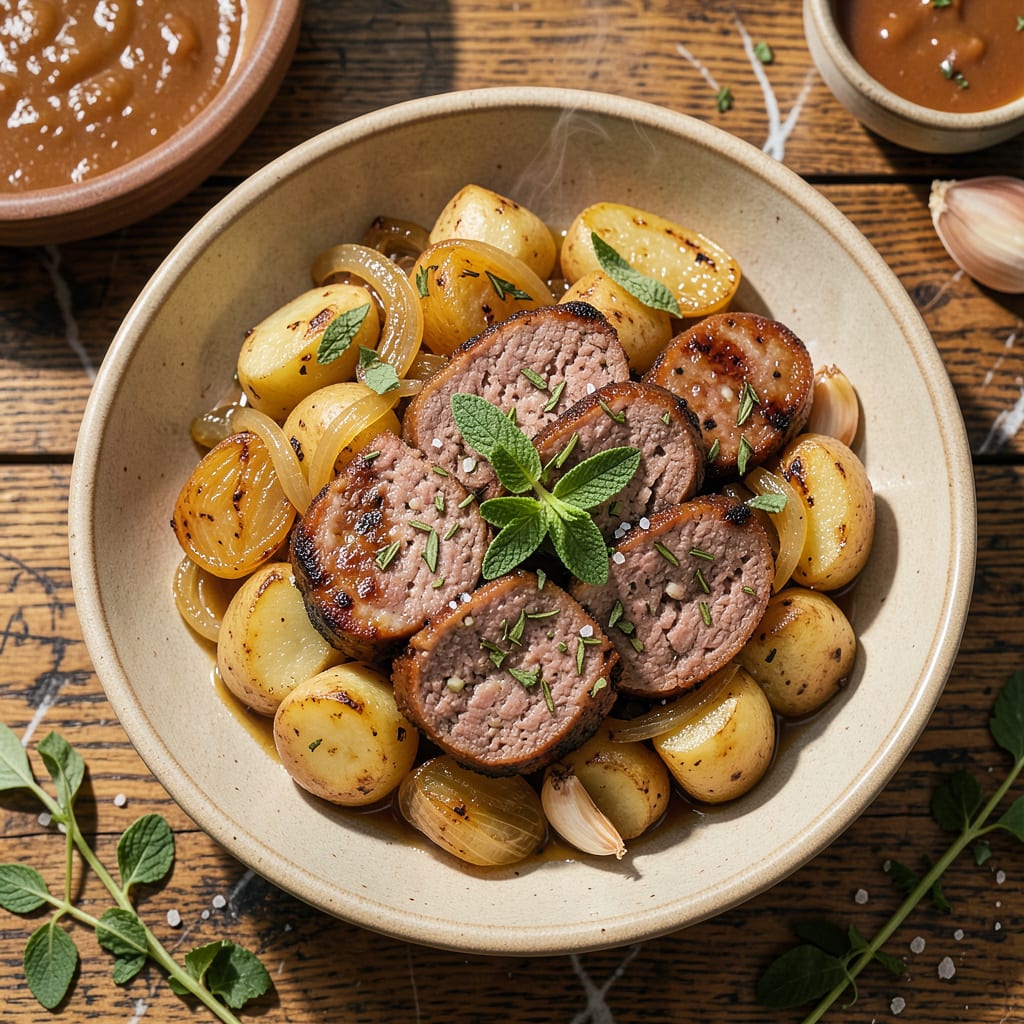
There’s something deeply satisfying about a well-made Minnesota potato sausage—where hearty pork meets tender potatoes in every bite. This recipe delivers the comfort of a Midwestern classic, combining simple ingredients with traditional techniques for a dish that’s both nostalgic and nourishing.
The secret lies in the balance: finely ground pork shoulder blended with diced potatoes, then seasoned with just the right amount of sage and black pepper. Whether pan-fried for a crispy exterior or baked for a tender finish, this sausage brings warmth to any meal. Perfect for breakfast alongside eggs or as the centerpiece of a rustic dinner.
Ingredients for Minnesota Potato Sausage
This Midwestern classic combines finely ground pork shoulder with tender potatoes, balanced by aromatic sage and traditional seasonings for authentic comfort.
| Ingredient | Amount | Notes |
|---|---|---|
| Pork Shoulder 🥩 | 1 ½ lb | Finely ground, 80/20 fat ratio preferred |
| Russet Potatoes 🥔 | 1 lb | Peeled, finely diced (¼-inch cubes) |
| Yellow Onion 🧅 | 1 whole | Finely minced for even distribution |
| Fresh Sage Leaves 🌿 | 2 tbsp | Finely chopped, stems discarded |
| Garlic Cloves 🧄 | 3 cloves | Minced to fine paste consistency |
| Diamond Crystal Kosher Salt 🧂 | 1 ½ tsp | Precise measurement for seasoning balance |
| Freshly Ground Black Pepper 🌶️ | 1 tsp | Coarse grind preferred for texture |
| Ground Nutmeg 🌰 | ¼ tsp | Freshly grated for optimal aroma |
| Dry White Wine 🍷 | ¼ cup | Sauvignon Blanc or Pinot Grigio recommended |
| Ice Water 💧 | ½ cup | For binding mixture without overworking |
| Pork Sausage Casings 🌭 | 4 pieces | Natural hog casings, 32-35mm diameter |
| Neutral Oil 🫒 | 2 tbsp | For pan-frying, high smoke point required |
The pork shoulder is fundamental to authentic texture and flavor. Opt for 80/20 fat ratio from a trusted butcher or Whole Foods—this ensures proper juiciness without excessive grease. Russet potatoes are non-negotiable; their high starch content creates the signature tender bite. For casings, natural hog casings (32-35mm) from specialty butchers or online suppliers like Butcher & Packer yield professional results. The sage must be fresh—dried loses the vibrant aroma that defines this regional specialty.
Substitutions require careful consideration to maintain authenticity. Ground pork loin can replace shoulder but risks dryness; add 1 tbsp rendered pork fat to compensate. Yukon Gold potatoes work in a pinch, though texture will be waxier. For alcohol-free preparation, substitute apple cider vinegar at half the quantity for the wine. Nutmeg is essential—freshly grated from whole nut provides superior depth. If casings prove challenging, form patties for a rustic presentation.
Prepare the sausage mixture immediately before stuffing to prevent potato oxidation. Uncooked sausage keeps refrigerated for 24 hours; freeze stuffed links on parchment-lined trays before transferring to bags for 3-month storage. Cooked sausage maintains quality for 4 days refrigerated or 2 months frozen. Always thaw overnight in the refrigerator before reheating to preserve texture and food safety.
Why You’ll Love This Recipe
- One-Pan Magic: Honestly, I love recipes where cleanup is nonexistent. Toss the pork shoulder, potatoes, and onions on a sheet pan, let the oven do the work, and you’re left with one spatula to wash. That’s my kind of cooking.
- That Sage-Garlic Punch: Here’s what sold me—the way fresh sage and garlic transform the pork into something crave-worthy. The potatoes soak up all those juices, so every bite is packed with flavor. No bland meatloaf vibes here.
- Breakfast or Dinner? Yes.: I’ve served this for Sunday brunch with eggs and again as a weeknight dinner with roasted veggies. It’s the kind of dish that doesn’t care what time it is—just that it’s on the table.
- Stretches Like a Pro: Between us, this recipe feeds a crowd or my family for two meals. Russet potatoes bulk it up, pork shoulder keeps it budget-friendly, and leftovers reheat beautifully. My kind of practical.
Step-by-Step Instructions for Minnesota Potato Sausage
This method ensures perfectly balanced texture and flavor in every bite, delivering the hearty comfort you expect from this regional specialty.
Step 1: Prepare the Pork and Potato Base
Begin by grinding the 1.5 lb Pork Shoulder through a ¼-inch die on your meat grinder, keeping it chilled until ready to use. The 80/20 fat ratio is ideal here—it provides enough fat for moisture without making the sausage greasy. Immediately transfer the ground pork to a large mixing bowl and place it in the refrigerator while you prepare the remaining ingredients.
Peel and finely dice the 1 lb Russet Potatoes into consistent ¼-inch cubes. Uniform size ensures even cooking and proper texture in the final sausage. Parboil the diced potatoes in salted water for 3-4 minutes until just tender but still holding their shape. Drain thoroughly and spread on a baking sheet to cool completely—residual heat could prematurely cook the pork fat when combined.
Step 2: Develop the Flavor Profile
In a large skillet over medium heat, add the 2 tbsp Neutral Oil and sauté the finely minced Yellow Onion for 5-6 minutes until translucent and just beginning to caramelize. Add the 3 cloves Garlic Cloves (minced to a fine paste) and 2 tbsp Fresh Sage Leaves (finely chopped), cooking for an additional 1-2 minutes until fragrant. Deglaze the pan with the 0.25 cup Dry White Wine, scraping up any browned bits, and reduce until nearly evaporated.
Transfer this aromatic mixture to the bowl with the ground pork, then add the cooled potatoes. Sprinkle evenly with the 1.5 tsp Diamond Crystal Kosher Salt, 1 tsp Freshly Ground Black Pepper, and 0.25 tsp Ground Nutmeg. The nutmeg adds warmth that complements the sage beautifully. Using your hands, gently but thoroughly mix all ingredients until uniformly combined—avoid overworking, which can create a dense texture.
Step 3: Bind and Stuff the Sausages
Gradually incorporate the 0.5 cup Ice Water into the mixture, 1-2 tablespoons at a time, while continuing to mix. The water should be added just until the mixture holds together when pressed—it will appear slightly sticky but not wet. This hydration step is critical for proper binding without requiring excessive handling that could melt the pork fat.
Prepare the 4 pieces Pork Sausage Casings by rinsing them under cool water and soaking in warm water for 10 minutes to make them pliable. Load the mixture into a sausage stuffer, avoiding air pockets. Stuff the casings firmly but not tightly—they should feel substantial but still yield slightly when pressed. Twist into 4 equal links, each about 6-7 inches long, and prick any air bubbles with a sterilized needle.
Step 4: Cook to Perfect Doneness
Heat a large skillet over medium-low heat and add the sausages. Cook them slowly for 12-15 minutes, turning occasionally, until the internal temperature reaches 160°F on an instant-read thermometer. The low heat renders the fat gently while ensuring the potatoes become tender without disintegrating. Look for a golden-brown crust to develop on all sides—the Maillard reaction here creates depth of flavor.
If the sausages brown too quickly, reduce the heat slightly and add a splash of water to the pan, covering briefly to steam-finish. This technique prevents drying while ensuring thorough cooking. Once done, transfer to a paper towel-lined plate and let rest for 5 minutes before serving—the resting period allows the juices to redistribute for optimal moisture in every bite.
Perfect Pairings for This Recipe
Breakfast Classics
These sausages shine alongside fluffy scrambled eggs and buttery toast. I love serving them with over-medium eggs—the runny yolk creates a perfect sauce for the sausage. Add a side of sourdough toast from Great Harvest Bread Co. for that ideal crunch contrast. A sprinkle of fresh chives on top brightens the whole plate. 🍳
Midwest Comfort Sides
For a true Minnesota meal, pair with creamy mashed potatoes and buttery corn on the cob. The starch-on-starch combo might seem unusual, but it’s pure comfort food. I make my mashed potatoes with Yukon Golds and a splash of whole milk for extra richness. The sweetness of summer corn balances the savory sausage beautifully.
Beer Pairings
Local Minnesota brews are ideal with this dish. I recommend a crisp Surly Furious IPA—its citrusy hops cut through the sausage’s richness. For something lighter, Summit EPA offers balanced maltiness. The carbonation helps cleanse your palate between bites. Always serve beer slightly chilled (45-50°F) for optimal flavor. 🍺
Wine Options
Surprisingly, a medium-bodied red works wonderfully here. Try a Pinot Noir from Oregon—its earthy notes complement the sage. For white wine lovers, an off-dry Riesling from Washington state provides nice contrast. Both should be served at 55-60°F to highlight their fruit characteristics without overpowering the sausage.
Vegetable Balancers
A simple kale salad with apple cider vinaigrette cuts through the richness. I toss 2 cups chopped kale with 1 tbsp apple cider vinegar and 2 tsp olive oil. The acidity brightens each bite. Alternatively, roasted Brussels sprouts with a balsamic glaze add caramelized sweetness that pairs perfectly with the savory sausage.
Condiment Essentials
No Minnesota potato sausage is complete without whole-grain mustard and honey for dipping. I mix 1 tbsp mustard with 1 tsp local honey for the perfect sweet-tangy balance. For heat lovers, add ¼ tsp cayenne to the mix. The contrast of flavors makes each bite more exciting than the last. 💛
Nutrition Facts
Frequently Asked Questions
Can I use ground pork from the grocery store instead of grinding my own?
While store-bought ground pork works in a pinch, freshly ground pork shoulder (80/20 fat ratio) delivers superior texture and flavor. Pre-ground pork often contains leaner cuts, which can make your sausage dry. If using store-bought, add 1 tbsp rendered pork fat to compensate for moisture loss.
Why do I need to parboil the potatoes before mixing?
Parboiling ensures the potatoes become tender during cooking without falling apart. Raw potatoes would remain hard, while overcooked ones turn mushy. The 3-4 minute boil in salted water gives them a head start so they finish perfectly when the sausage reaches 160°F internally.
What if I don’t have sausage casings?
No casings? No problem! Shape the mixture into ½-inch thick patties instead. Pan-fry them over medium heat for 4-5 minutes per side until golden brown and cooked through. You’ll lose the traditional link shape but keep all the flavor—great for breakfast hash or sandwiches!
How do I prevent the sausage from splitting while cooking?
Splitting usually happens from cooking too fast or uneven heat. Use medium-low heat and turn links gently every 2-3 minutes. Prick any air bubbles in casings before cooking with a sterilized needle. If grilling, keep the lid closed and maintain 325-350°F for even cooking.

- 6 Bean Chili Recipe: Hearty, Smoky Depth That Gets Richer Over Time - September 26, 2026
- 2 Gallon Red Sangria Recipe: Bold Spice and Fruit Fusion for Crowds - September 26, 2026
- 5 Star Apple Bread Recipe: Spiced Apple Swirl With Buttery Crust - September 26, 2026