
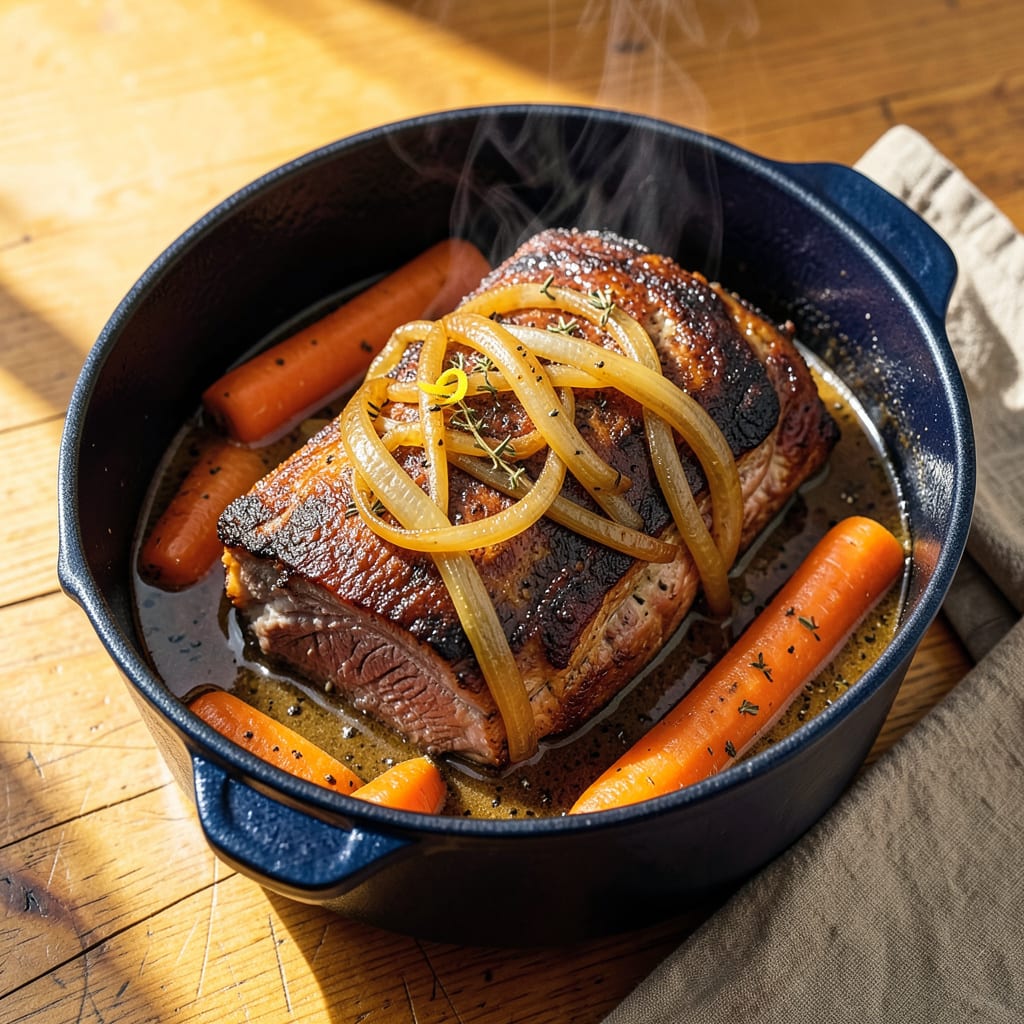
There’s something deeply satisfying about a perfectly cooked pot roast—tender enough to fall apart at the touch of a fork, with rich flavors that develop slowly over time. This stove-top method delivers restaurant-quality results without needing an oven or special equipment. The key is patience: low heat and a long simmer transform tough cuts of beef into melt-in-your-mouth perfection.
The process begins with a proper sear to develop deep, caramelized flavors, followed by a slow braise with aromatics and liquid. By the time it’s done, you’ll have succulent beef, perfectly cooked vegetables, and a gravy so rich it practically begs for crusty bread. This is the kind of meal that brings everyone to the table and leaves them asking for seconds.
Ingredients for Pot Roast Recipe on Stove Top
This is where melt-in-your-mouth magic starts—simple ingredients, one pot, and patience.
| Ingredient | Amount | Notes |
|---|---|---|
| Chuck Roast 🥩 | 3 ½ lb | Well-marbled for best texture |
| Kosher Salt 🧂 | 1 ½ tbsp | Diamond Crystal preferred for even seasoning |
| Freshly Ground Black Pepper 🌶️ | 1 tbsp | Coarse grind for better adhesion |
| Olive Oil 🫒 | 2 tbsp | Divided for searing and sautéing |
| Yellow Onions 🧅 | 2 whole | Large dice for even cooking |
| Carrots 🥕 | 4 whole | Cut into 2-inch chunks |
| Celery Stalks 🌿 | 3 whole | Cut into 1-inch pieces |
| Garlic Cloves 🧄 | 6 cloves | Smashed for deeper flavor |
| Tomato Paste 🍅 | 2 tbsp | Double-concentrated for richness |
| Dry Red Wine 🍷 | 1 ½ cups | Cabernet or Merlot recommended |
| Low-Sodium Beef Broth 🥩 | 3 cups | Homemade or high-quality store-bought |
| Fresh Thyme Sprigs 🌿 | 4 sprigs | Tied with kitchen twine |
| Fresh Rosemary Sprigs 🌿 | 2 sprigs | Left whole for easy removal |
| Bay Leaves 🍃 | 2 whole | Dried, for aromatic depth |
| Worcestershire Sauce 💧 | 1 tbsp | Anchovy-free version if preferred |
[recipeingredientscaler]
The beef is everything here. Chuck roast with good marbling (look for those white fat streaks) breaks down beautifully during the long cook. I grab mine from Costco for consistency, but any butcher can point you to the right cut. The salt matters too—Diamond Crystal kosher salt is my go-to because it distributes evenly without overpowering. Don’t skip the fresh herbs; thyme and rosemary add layers of flavor that dried just can’t match (though dried works in a pinch).
No red wine? Extra beef broth with a splash of balsamic vinegar mimics the acidity. Out of fresh herbs? Dried at half the quantity, but add them earlier so they rehydrate. The tomato paste is non-negotiable—it’s your umami bomb. Trader Joe’s sells it in convenient tubes so you don’t waste half a can. For the broth, Better Than Bouillon paste makes a rich base if you’re not using homemade. Carrots and celery can be swapped for parsnips or mushrooms if that’s what you’ve got.
This actually tastes better the next day after the flavors meld. Store leftovers in the fridge for up to 5 days or freeze for 3 months (portion it first—trust me). The gravy thickens as it cools, so thin with broth when reheating. I always make extra to freeze for quick weeknight meals. Pro tip: skim the fat after chilling if you prefer a leaner gravy.
Why You’ll Love This Recipe
- I’ll be real: this isn’t just for special occasions. It’s my “forgot to meal prep” backup, my “company’s coming” showstopper, and the thing my picky nephew actually finishes. Leftovers? Even better in tacos or over mashed potatoes.
- One Pot Magic: Honestly, this is my lazy-day hero. Brown the chuck roast in olive oil, toss in halved onions, add liquid, and let the stove do the work—no oven, no fancy equipment, just a heavy pot and patience.
- That Fall-Apart Tender Bite: Here’s what sold me—the way kosher salt and black pepper crust the meat before it slow-cooks into submission. The onions melt into a sweet, caramelized sauce that clings to every shred. (Yes, I’ve eaten it straight from the pot with a fork.)
- Sunday or Wednesday: I’ll be real: this isn’t just for special occasions. It’s my “forgot to meal prep” backup, my “company’s coming” showstopper, and the thing my picky nephew actually finishes. Leftovers? Even better in tacos or over mashed potatoes.
Step-by-Step Instructions for Stove Top Pot Roast
Here’s how to turn that tough chuck roast into fork-tender perfection—all in one pot.
Step 1: Season and Sear the Chuck Roast
Pat the 3.5 lb chuck roast completely dry with paper towels. This is crucial—wet meat won’t sear properly. Season aggressively with all of the 1.5 tbsp kosher salt and 1 tbsp freshly ground black pepper, pressing the seasoning into every surface so it adheres well.
Heat 1 tbsp olive oil in a large Dutch oven over medium-high heat until shimmering. Add the roast and sear undisturbed for 4-5 minutes per side until you develop a deep, mahogany-brown crust. You’ll know it’s ready to flip when it releases easily from the pot. Transfer the seared roast to a plate and set aside.
Real talk: don’t rush this step. That crust isn’t just for color—it’s packed with flavor that’ll infuse the entire dish as it braises. If your smoke alarm goes off, you’re doing it right (but maybe crack a window).
Step 2: Build the Aromatic Base
Reduce heat to medium and add the remaining 1 tbsp olive oil to the pot. Toss in the yellow onions, carrots, and celery stalks. Cook for 8-10 minutes, stirring occasionally, until the onions soften and start to caramelize around the edges. You want some color here—not just steamed veggies.
Add the garlic cloves and cook for 1 minute until fragrant. Stir in the 2 tbsp tomato paste and cook for another 2 minutes—this deepens its flavor and eliminates any raw taste. The mixture should turn a rich, brick-red color and smell intensely savory.
Here’s the thing—this step is where most of your flavor develops. Those browned bits from searing the meat? They’re dissolving into this vegetable mixture, creating the foundation of your sauce. Don’t skip the tomato paste cook time; it’s transformative.
Step 3: Deglaze and Begin the Braise
Pour in the 1.5 cups dry red wine and scrape up all those browned bits from the bottom of the pot with a wooden spoon. Let it simmer for 3-4 minutes until reduced by about half. You’ll see the liquid darken and become more syrupy—that’s the alcohol cooking off and the flavors concentrating.
Return the seared chuck roast to the pot along with any accumulated juices. Add the 3 cups low-sodium beef broth, worcestershire sauce, fresh thyme sprigs, fresh rosemary sprigs, and bay leaves. The liquid should come about two-thirds up the side of the roast—add a splash of water if needed.
Bring everything to a gentle simmer, then reduce heat to low. Cover the pot and let it cook undisturbed. This is where the magic happens—the slow, moist heat breaks down the connective tissue in that tough cut of meat, transforming it into something buttery and tender.
Step 4: Slow Cook to Fall-Apart Tenderness
Maintain a very gentle simmer and cook for 2.5 to 3 hours, turning the roast every 45 minutes or so. You want just the occasional bubble breaking the surface—too vigorous and the meat will toughen. The roast is done when it’s fork-tender—you should be able to insert a fork and twist it with zero resistance, and the meat should easily pull apart.
About 30 minutes before it’s done, uncover the pot to let the liquid reduce slightly. This concentrates the flavors and gives you a sauce with body rather than a thin broth. The vegetables should be completely softened by now, practically melting into the sauce.
I know it’s tempting to peek, but every time you lift that lid, you’re adding 10-15 minutes to your cooking time. Trust the process—the low and slow method is what makes this pot roast so incredibly tender that it nearly falls apart when you try to serve it.
Step 5: Rest and Serve
Carefully transfer the chuck roast to a cutting board and tent loosely with foil. Let it rest for 15-20 minutes—this allows the juices to redistribute throughout the meat instead of pouring out when you slice it. The internal temperature will actually rise a few degrees during this time, which is exactly what you want.
While the meat rests, skim any excess fat from the surface of the sauce. You can leave the vegetables whole for a rustic presentation, or mash them slightly with a wooden spoon to thicken the sauce naturally. Taste and adjust seasoning if needed—remember that the flavors will have concentrated as the liquid reduced.
Slice the roast against the grain into thick pieces, or use two forks to pull it into large chunks. Serve it directly from the pot with plenty of that rich, velvety sauce spooned over the top. The meat should be so tender that it nearly dissolves on your tongue, with just enough resistance to remind you it’s actually beef and not butter.
Creative Variations of These Flavors
Italian Herb Infusion
Swap the thyme and rosemary for 6 fresh basil leaves and 1 tsp dried oregano. Add ½ cup sun-dried tomatoes with the broth, and stir in 1 tbsp balsamic vinegar at the end. The acidity brightens the rich beef flavor. I love this with polenta instead of potatoes. 🌿
Spicy Southwest Twist
Add 2 tbsp chili powder and 1 tbsp ground cumin when searing the meat. Replace the wine with 1 cup beef broth + ¼ cup lime juice, and add 1 chopped chipotle pepper in adobo. Top with fresh cilantro and serve with warm tortillas.
French Bistro Style
Deglaze with ½ cup brandy instead of wine, then add 1 cup dry white wine. Stir in 1 tbsp Dijon mustard and 8 oz mushrooms with the vegetables. Finish with 2 tbsp crème fraîche for a velvety sauce. This reminds me of Parisian bistros.
Asian-Inspired Fusion
Replace the wine with 1 cup beef broth + ¼ cup soy sauce. Add 2 star anise pods, 1 cinnamon stick, and 1 tbsp grated ginger. Swap carrots for daikon radish and serve over steamed rice. The anise gives it that pho-like depth. ⚡
Beer-Braised Version
Use 12 oz dark beer (like Guinness) instead of wine, and add 1 tbsp brown sugar to balance bitterness. I love this with rutabaga instead of potatoes—it holds up better to the long cook time. The beer adds malty complexity.
Mediterranean Brightness
Add 1 tsp ground coriander and ½ tsp cinnamon when searing. Stir in ½ cup pitted Kalamata olives and 1 preserved lemon (chopped) with the broth. Garnish with fresh parsley and serve with couscous. The olives add briny contrast. 💫
Nutrition Facts
Frequently Asked Questions
Why does my pot roast come out tough?
This usually happens when the heat is too high or the cooking time too short. The connective tissue in chuck roast needs 2.5-3 hours of gentle simmering to break down properly. If it bubbles vigorously, reduce heat to low and check liquid levels—adding ½ cup broth if needed.
Can I use a different cut of beef?
Yes, but choose cuts with good marbling and connective tissue. Brisket or short ribs work well, though cooking times may vary. Avoid lean cuts like sirloin—they’ll dry out. For best results, stick with 3-4 lb pieces for even cooking.
How do I thicken the sauce without flour?
Remove the meat and vegetables, then simmer the liquid uncovered for 10-15 minutes to reduce. For extra body, mash some cooked carrots or potatoes into the sauce. A splash of balsamic vinegar at the end adds richness without thickening.
Can I make this in advance?
The flavors deepen overnight. Store in the fridge for up to 5 days or freeze for 3 months. Reheat gently on the stove with ¼ cup broth to prevent drying. The meat will be even more tender the next day.

- 6 Bean Chili Recipe: Hearty, Smoky Depth That Gets Richer Over Time - September 26, 2026
- 2 Gallon Red Sangria Recipe: Bold Spice and Fruit Fusion for Crowds - September 26, 2026
- 5 Star Apple Bread Recipe: Spiced Apple Swirl With Buttery Crust - September 26, 2026