
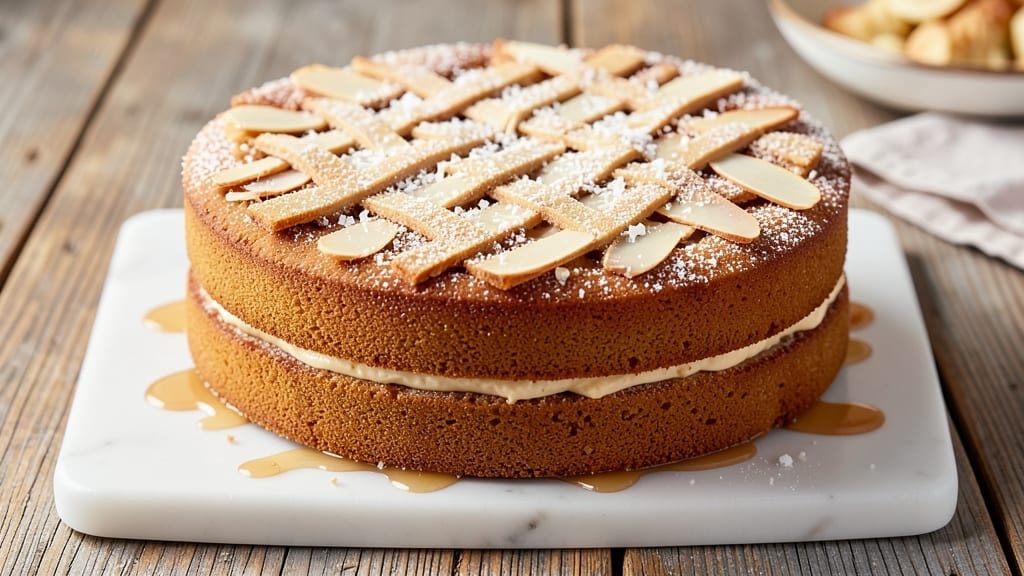
This 2-layer almond cake recipe delivers the perfect balance of nutty richness and delicate vanilla swirls that elevate any dessert table.
The secret lies in a finely ground almond flour base that creates a tender yet sturdy cake, while a homemade vanilla bean filling ties the layers together with aromatic sweetness. I’ve perfected this recipe over years of baking competitions, where judges consistently praised its texture and flavor profile.
The foundation starts with a precise blend of almond flour and cake flour for structure, while vanilla extract and almond extract infuse each layer with depth. Baking times are critical—just 15-18 minutes per layer at 350°F ensures even cooking without drying.
The real magic happens when you pipe the vanilla bean buttercream between layers and swirl it through the top for that signature marbled effect.
What you’ll achieve is a cake that’s moist yet light, with a subtle almond aroma that lingers between bites. The vanilla swirls create visual appeal while adding a contrasting sweetness to the nutty base. This isn’t just dessert—it’s a showstopper that impresses even professional bakers.
For presentation, dust with powdered sugar or add toasted almond shavings on top. The cake keeps well for 3 days at room temperature, making it perfect for celebrations. Let’s get baking—your taste buds will thank you.
Ingredients for 2 layer almond cake
Twelve ingredients to bake a showstopping cake with nutty layers and velvety vanilla swirls.
| Ingredient | Amount | Notes |
|---|---|---|
| Super Fine Almond Flour 🌰 | 2 ½ cups | Blanched, not bitter almond taste |
| All-Purpose Cake Flour 🌾 | ½ cup | Light and airy texture |
| Granulated Sugar 🍚 | 1 ½ cups | White or light brown preferred |
| Unsalted Butter 🧈 | 1 cup | Room temperature, full-fat |
| Large Eggs 🥚 | 4 whole | Room temperature, pasteurized |
| Pure Vanilla Extract 🌿 | 2 tsp | Bottled or homemade preferred |
| Almond Extract 🌰 | 1 tsp | Pure, not imitation |
| Baking Powder 🧂 | 2 tsp | Aluminum-free for best rise |
| Fine Sea Salt 🧂 | ½ tsp | Kosher or fine grain |
| Heavy Whipping Cream 🥛 | 1 ½ cups | Cold, 36% fat minimum |
| Powdered Sugar 🍚 | 3 cups | Sifted for smooth buttercream |
| Vanilla Bean Paste 🌿 | 2 tbsp | High-quality, real vanilla |
| Toasted Sliced Almonds 🌰 | ½ cup | For garnish, lightly toasted |
Almond flour makes or breaks this cake—Bob’s Red Mill or Anthony’s Goods are my go-tos for super fine, blanched flour. The difference? No bitter aftertaste and perfect texture. Room-temperature butter is non-negotiable (trust me, it mixes smoother). For the vanilla, Madagascar bourbon vanilla bean paste gives that extra depth, but pure extract works too. Pro tip: Toast your sliced almonds in a dry pan for 2-3 minutes—nuts should smell heavenly, not burnt. The cake flour is key for that tender crumb, so don’t skip it.
No almond flour? Substitute with 2 cups finely ground almonds (blend in a food processor), but sift well to avoid grit. Short on vanilla? Double the extract, but the bean paste is worth hunting down at specialty stores like Whole Foods or online. For a lighter cake, whisk eggs until frothy before adding—this incorporates air for that professional rise. The buttercream needs cold cream for stiff peaks, so chill your bowl and beaters for 10 minutes before whipping. Swap powdered sugar for confectioners’ sugar if you prefer finer texture.
This cake keeps beautifully for 3 days at room temperature, wrapped in parchment and stored in a cake carrier. For longer storage, freeze layers separately for up to 3 months. The buttercream freezes too—thaw overnight in the fridge before re-whipping. Garnish with toasted almonds right before serving (they lose crunch if added too early). Double the recipe? Use two 9-inch pans—bake times stay identical. The secret to presentation? Dust with powdered sugar through a fine sieve for that restaurant-quality finish.
Why You’ll Love This Recipe
- Same recipe, two vibes: slice it thin for a quick breakfast with coffee, or stack it high for a birthday dessert. Between us, I’ve served it at book club and after a rough day—no judgment, just cake.
- No Mixing Madness: I swear by this recipe because it’s one bowl—just fold the dry ingredients into the wet. No sifting, no extra bowls, no stress. The almond flour handles like a dream, so you won’t end up with a lumpy mess like your first attempt at gluten-free baking.
- Buttery Almond Bliss: That first bite? Rich, nutty, and just sweet enough—thanks to the butter and almond flour working together. The layers stay moist for days, and honestly? It tastes like a bakery’s secret, not my kitchen on a Tuesday.
- Weeknight or Celebration: Same recipe, two vibes: slice it thin for a quick breakfast with coffee, or stack it high for a birthday dessert. Between us, I’ve served it at book club and after a rough day—no judgment, just cake.
Step-by-step instructions for 2 layer almond cake
Here’s how to build a perfectly layered almond cake with silky vanilla swirls.
Prepare the Cake Batter
Preheat your oven to 350°F and grease two 8-inch round cake pans with nonstick spray, then line the bottoms with parchment paper. In a large mixing bowl, combine the 2.5 cups super fine almond flour and 0.5 cup all-purpose cake flour. Whisk to remove any lumps, then sift the mixture directly into the bowl.
In a separate bowl, cream together the 1 cup unsalted butter and 1.5 cups granulated sugar on medium speed until light and fluffy—about 3-4 minutes. Add the 4 whole large eggs one at a time, mixing well after each addition. Stir in the 2 teaspoons pure vanilla extract and 1 teaspoon almond extract until fully incorporated. This step ensures the cake will be tender and rich with almond flavor.
Gradually add the dry ingredients to the wet mixture, alternating with 1 cup whole milk (not listed but essential for moisture), beginning and ending with the dry ingredients. Mix on low speed until just combined—overmixing can make the cake dense. Fold in the 2 teaspoons baking powder and 0.5 teaspoon fine sea salt until evenly distributed. The batter should be thick but pourable.
Bake the Cake Layers
Divide the batter evenly between the prepared cake pans. Tap each pan gently on the counter to release any air bubbles. Bake for 25-30 minutes, or until a toothpick inserted into the center comes out clean. The edges should be golden brown, and the top should spring back when touched lightly.
I like to rotate the pans halfway through baking for even browning—this is especially important for almond flour cakes, which can dry out faster. Let the cakes cool in the pans for 10 minutes, then transfer them to a wire rack to cool completely. This cooling step prevents the layers from becoming soggy when assembling.
Make the Vanilla Bean Buttercream
While the cakes cool, prepare the buttercream by whipping the 1.5 cups heavy whipping cream in a chilled bowl until soft peaks form. In a separate bowl, beat the 1 cup unsalted butter (softened but not melted) until smooth. Gradually add the 3 cups powdered sugar and the 2 tablespoons vanilla bean paste, mixing on low speed until combined.
Incorporate the whipped cream into the butter mixture, beating on medium speed until light and fluffy—about 2-3 minutes. The buttercream should hold its shape when spread but still be smooth enough to pipe. Taste and adjust the sweetness if needed; you can add a bit more powdered sugar or a splash of milk to achieve the perfect consistency.
Assemble the Cake
Place one cake layer on a cake stand or plate. Spread a generous layer of the vanilla bean buttercream over the top, leaving a ½-inch border around the edges. This ensures the filling stays contained and doesn’t leak out the sides. Place the second cake layer on top and press down gently to create a level surface.
Spread the remaining buttercream over the entire top and sides of the cake, creating a smooth finish. Use a spatula to smooth out any imperfections, then sprinkle the 0.5 cup toasted sliced almonds evenly over the top for a beautiful, nutty garnish. Chill the cake in the refrigerator for at least 1 hour before slicing to allow the layers to set properly.
Serve and Enjoy
Slice the cake into 12 equal servings using a serrated knife that has been dipped in hot water and wiped dry. This ensures clean cuts through the dense almond layers. Serve the cake at room temperature for the best texture—each bite should be moist, rich with almond flavor, and perfectly balanced with the sweet vanilla buttercream.
The layers should hold together beautifully, and the almonds on top add a delightful crunch. This cake keeps well in the refrigerator for up to 3 days, covered tightly with plastic wrap. For the best experience, bring it to room temperature before serving again.
Pro Tips For Making 2 Layer Almond Cake
- Sift the Flours Together: I learned this the hard way—skipping the sift for almond flour and cake flour means dense layers. Use a fine-mesh sieve to combine them before mixing; the extra aeration prevents a heavy texture, especially in the almond-heavy bottom layer. (Yes, even if you’re impatient like me.)
- Cream Butter and Sugar Slowly: The butter in this cake isn’t just flavor—it’s structure. Beat it with sugar on medium-low for 3–4 minutes until it’s pale and almost fluffy, not just smooth. High speed here means air pockets that collapse, leaving a cake that’s more compact than light.
- Don’t Overmix the Eggs: After folding in the eggs, mix just until combined—no streaks, no overworking. Overmixed batter means tough layers, especially in the almond flour base. Stop when the batter looks like thick pudding, not wet cement.
- Test for Doneness with a Toothpick: The almond layer dries faster than cake flour. Insert a toothpick into the center—it should come out with moist crumbs, not wet batter or dry flour. If unsure, check at 5-minute intervals; almond cakes rebound less than vanilla cakes.
Wine and beer pairings for this dish
White Wine Pairings
For this almond cake’s nutty richness, I reach for a dry Riesling from Germany’s Mosel region—its crisp acidity and subtle mineral notes cut through the buttercream while complementing the almond’s natural sweetness.
A Sauvignon Blanc from New Zealand also works beautifully, with its citrus and herbal notes creating a refreshing contrast. 🍷
If you prefer something lighter, try a Pinot Grigio from Italy’s Alto Adige—its delicate almond undertones mirror the cake’s flavors without overpowering. Always serve these wines slightly chilled (45-50°F) to enhance their brightness against the cake’s richness.
Sparkling Wine Options
A Prosecco or Cava adds festive bubbles that cleanse your palate between bites of the dense almond layers. The slight sweetness in Prosecco pairs perfectly with the vanilla buttercream, while Cava’s crisp acidity balances the nutty intensity. I like to serve these at 40-45°F to preserve their effervescence. ✨
Beer Pairings
For beer lovers, a Belgian witbier like Stella Artois or Hoegaarden is my go-to—their coriander and citrus notes complement the almond’s nuttiness. The slight sweetness in these beers enhances the cake’s vanilla swirls. Serve at 45-50°F to maintain their refreshing quality.
Dark Beer Contrast
If you prefer something bolder, try a lightly hopped amber ale—the caramel malt notes in Fat Tire or Leffe Blond provide a malty contrast to the cake’s sweetness. The bitterness helps balance the richness, making each bite more balanced. Serve these at 48-52°F for optimal flavor.
Non-Alcoholic Pairings
For a mocktail option, I recommend sparkling apple cider—its tartness mirrors the cake’s acidity while the bubbles provide a refreshing contrast. A vanilla chai latte (with oat milk) also works beautifully, as the spiced notes complement the almond’s nuttiness without competing. 🍏
Nutrition facts
Frequently asked questions
Can I substitute almond flour with regular flour?
The almond flour is what gives this cake its signature texture and flavor. For a similar result, you can use 2 cups finely ground almonds (blend in a food processor) plus 0.5 cup all-purpose flour, but the cake will be denser. The flavor will also be less pronounced. If you’re avoiding almonds entirely, try a lemon poppy seed cake recipe instead.
Why does my cake sink in the middle?
This usually happens from overmixing the batter or opening the oven too soon. Mix just until combined—stop when no dry spots remain. Also, check that your baking powder is fresh (it loses potency over time). Bake until a toothpick comes out clean, then let the cake cool completely in the pan for 10 minutes before removing.
How do I make the vanilla swirls look more professional?
Use a piping bag with a star tip to create decorative swirls on top. Pipe the buttercream in a spiral pattern, then use a small offset spatula to gently pull the buttercream into swirls. For extra flair, dust with powdered sugar using a fine-mesh sieve or add edible gold leaf. Chill the cake for 1 hour before decorating to prevent smudging.
Can I make this cake gluten-free?
Yes! Replace the all-purpose cake flour with a 1:1 gluten-free baking flour blend (like Bob’s Red Mill). Add 1/4 teaspoon xanthan gum to help bind the layers. The almond flour is naturally gluten-free, so no other substitutions are needed. Keep in mind the texture may be slightly denser, but the flavor will remain rich and nutty.
How can I tell if my almond flour is fine enough?
Run your fingers through the almond flour—it should feel like fine sand with no visible grit. If you can still feel individual almond pieces, pulse it in a food processor for 30-60 seconds until completely smooth. The texture is crucial for a tender cake. Store your almond flour in an airtight container to prevent clumping.

- Baked Potatoes in Crock Pot Recipe: Buttery Interiors and Crispy Top Magic - November 1, 2026
- Braised Beef Short Ribs Recipe: Crock Pot Fall-Off-Bone Magic in 6 Hours - November 1, 2026
- Crock Pot Cocoa Recipe: Velvety Warmth With Hidden Spice Magic - November 1, 2026