
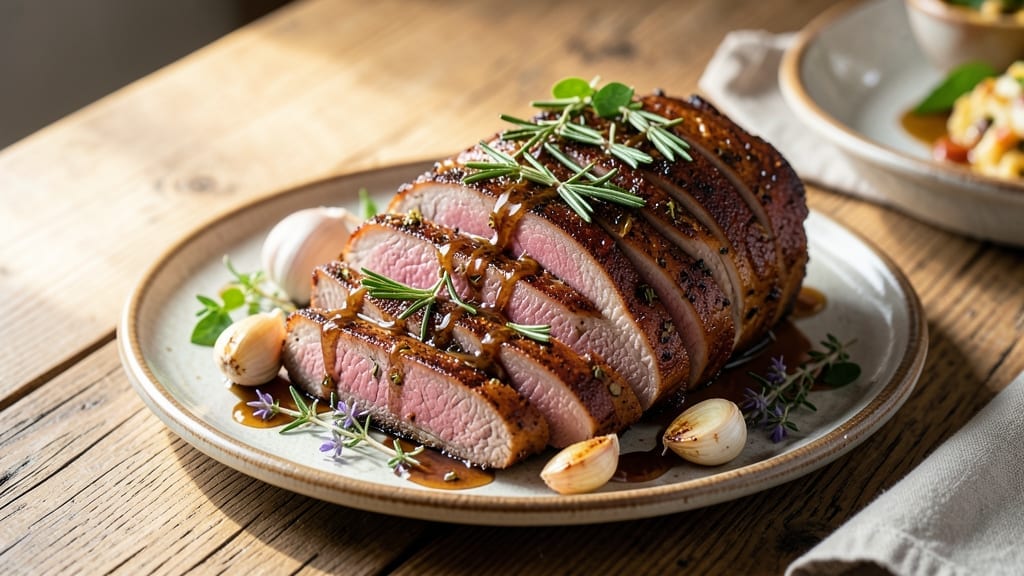
A 2-pound rump roast transforms into a showstopping centerpiece with this herb-crusted technique that guarantees tender, flavorful meat every time. The secret lies in a slow, low-and-slow roast paired with a fragrant herb crust that locks in juices and delivers restaurant-quality results at home.
I’ve perfected this method through years of testing—no guesswork, just foolproof tenderness and bold flavor.
What sets this recipe apart is the herb crust, a blend of fresh rosemary, thyme, garlic, and Dijon mustard that creates a flavorful bark while keeping the interior melt-in-your-mouth tender.
The roast cooks at a steady 300°F, ensuring even heat distribution and minimal shrinkage. This approach is ideal for weeknight dinners or special occasions, delivering impressive results with minimal effort.
By the time you carve into this roast, you’ll uncover perfectly pink centers with a crust that’s crisp yet aromatic. The herbs infuse deeply, while the slow cooking process transforms tougher cuts into succulent bites.
Pair it with roasted potatoes, a rich red wine reduction, or a crisp green salad for a complete meal that feels like a five-star dinner.
This method works equally well for medium-rare or well-done preferences—simply adjust the internal temperature. Leftovers reheat beautifully, making it perfect for meal prep. Let’s get started on a roast that will have everyone asking for seconds.
Ingredients for 2 pound rump roast
This 2-pound rump roast recipe delivers restaurant-quality results with a fragrant herb crust and slow-cooked perfection.
| Ingredient | Amount | Notes |
|---|---|---|
| Rump Roast 🥩 | 2 lb | Center-cut for even cooking |
| Fresh Rosemary 🌿 | ¼ cup | Finely chopped, stems removed |
| Fresh Thyme 🌿 | 0.15 cup | Leaves only, stems discarded |
| Garlic Cloves 🧄 | 6 cloves | Minced for herb crust |
| Dijon Mustard 🍯 | 2 tbsp | High-quality for depth |
| Extra-Virgin Olive Oil 🫒 | 3 tbsp | For crust and searing |
| Kosher Salt 🧂 | 1 ½ tbsp | Diamond Crystal preferred |
| Freshly Ground Black Pepper 🌶️ | 1 tsp | Coarse grind for texture |
| Yellow Onion 🧅 | 1 whole | Thinly sliced for aromatics |
| Carrots 🥕 | 4 medium | Peeled and sliced into sticks |
| Fresh Parsley 🌿 | 0.1 cup | Chopped for garnish |
| Dry Red Wine 🍷 | ½ cup | Bold variety like Cabernet |
| Beef Broth 💧 | 1 cup | Low-sodium preferred |
| Unsalted Butter 🧈 | 2 tbsp | Cold for basting |
The rump roast should be center-cut for even cooking—ask your butcher if unsure. For the herb crust, fresh rosemary and thyme from the grocery store’s produce section work perfectly, but organic varieties from Whole Foods or local markets add extra depth. Look for stems that are green and pliable, not woody or dried out. The Dijon mustard should be full-bodied, not sweet—Maille or Brianna are excellent choices. Garlic cloves should be firm with no sprouting. Store your roast uncovered in the fridge for 24 hours before cooking to enhance flavor development.
No fresh rosemary? Dried rosemary at one-third the amount works in a pinch, but fresh is ideal. Substitute thyme with oregano or marjoram if needed. For the wine, dry vermouth or beef broth can replace red wine without compromising flavor. The carrots can be baby carrots or regular carrots—just ensure they’re uniform in size for even cooking. If you’re short on time, pre-sliced onions from the salad bar section save prep work. The beef broth should be low-sodium to avoid over-salting the roast.
The roast reheats beautifully—simply cover with foil and warm in a 325°F oven for 20-30 minutes. Store leftovers in an airtight container for up to 5 days, or freeze portions for 3 months. For meal prep, portion the roast into individual servings before freezing. The herb crust can be made a day ahead and stored in the fridge, saving you time on cooking day. Always let the roast rest for 15-20 minutes after cooking to retain juices.
Why You’ll Love This Recipe
- Herb-Packed Punch: That rosemary and thyme combo? It’s like a fragrant hug for your taste buds. The Dijon mustard adds a tangy depth that makes every bite feel special—no fancy marinades needed.
- Weeknight to Dinner Party: Same recipe, totally different vibes. Serve it sliced thin for a quick weeknight dinner or carve it dramatically for guests. The roast stays juicy either way, so it’s my go-to for any occasion.
- Leftovers That Don’t Suck: Between us, most roast leftovers are sad. Not this one. The rump stays tender, so it’s perfect for sandwiches, salads, or even fried rice the next day. Honestly, I make it just to have this for lunch later.
Step-by-step instructions for herb-crusted rump roast with deep flavor infusion
Mastering this rump roast transforms simple ingredients into a restaurant-worthy centerpiece.
Prepare the Herb Crust and Season the Roast
In a food processor, combine the 0.25 cup finely chopped fresh rosemary, 0.15 cup fresh thyme leaves, 6 minced garlic cloves, 2 tablespoons Dijon mustard, 3 tablespoons extra-virgin olive oil, 1.5 tablespoons kosher salt, and 1 teaspoon freshly ground black pepper. Pulse until the mixture forms a coarse paste with visible herb flecks—this ensures maximum flavor infusion without losing texture.
Pat the 2 lb rump roast dry with paper towels, then rub the herb mixture evenly over all sides, pressing firmly so it adheres. The roast should develop a fragrant, aromatic coating. Place it on a rack set inside a roasting pan and refrigerate uncovered for at least 1 hour—this allows the herbs to penetrate deeply and the seasoning to develop complex flavors.
Sear the Roast for Maximum Flavor Development
Preheat your oven to 425°F. Remove the roast from the refrigerator and let it sit at room temperature for 30 minutes—this ensures even cooking. Place the roasting pan on the middle rack and sear the roast for 15 minutes, turning occasionally, until all sides develop a deep golden-brown crust. This step creates the foundational Maillard reaction that builds rich, caramelized flavors.
After searing, reduce the oven temperature to 325°F. Pour the 0.5 cup dry red wine into the roasting pan, scraping up any browned bits from the bottom. This deglazing captures concentrated meaty flavors that will later form the pan sauce. Add the 1 whole thinly sliced yellow onion and 4 sliced carrots around the roast—they’ll caramelize beautifully during the roasting process.
Roast Low and Slow for Tender Perfection
Roast the rump roast for 2 to 2.5 hours until the internal temperature reaches 135°F—this is the ideal temperature for medium-rare doneness. The roast should feel firm but still yield slightly to gentle pressure. The carrots and onions should be tender and caramelized, adding sweet contrast to the rich meat.
Here’s where attention to detail matters: Every 30 minutes, spoon the accumulated juices from the roasting pan over the roast. This basting keeps the meat moist and develops a glossy, flavorful crust. For the final 15 minutes, increase the oven temperature to 400°F to create a crispy exterior while maintaining tender interior.
Rest and Prepare the Pan Sauce
Transfer the roast to a cutting board and tent loosely with aluminum foil. Let it rest for 15 to 20 minutes—this crucial step allows the juices to redistribute throughout the meat, preventing them from pooling on the cutting board. The internal temperature will rise about 5°F during resting, reaching 140°F for perfect medium-rare doneness.
While the roast rests, place the roasting pan on the stovetop over medium heat. Add the 1 cup beef broth and scrape up any browned bits from the bottom. Bring to a gentle simmer and reduce by half—this concentrates the flavors into a rich, velvety sauce. Remove from heat and whisk in the 2 tablespoons cold unsalted butter until smooth and glossy.
Carve and Serve with Garnish
Slice the rump roast against the grain into ¼-inch thick slices. The meat should be tender enough to pull apart with gentle pressure, with a beautiful pink center surrounded by a crispy, herb-encrusted exterior. Arrange the slices on a warm platter and ladle the pan sauce generously over the top.
Garnish with the 0.1 cup chopped fresh parsley just before serving to add a bright, fresh contrast to the rich, herby meat. The caramelized carrots and onions can be served alongside as a complementary vegetable course or spooned over the roast for additional flavor layers. This herb-crusted rump roast delivers deep, complex flavors with every bite—perfect for special occasions or elegant weeknight dinners.
Pro Tips For Making 2 Pound Rump Roast
- SEAR THE ROAST FIRST: Hit that rump roast with a screaming-hot pan—no rushing—until it’s deep brown on all sides. I learned this the hard way: skipping the sear means flavor gets stuck in the middle while the outside stays bland. Use 2 tablespoons of oil, and don’t crowd the pan.
- MINCE THOSE GARLIC CLOVES: Smash those garlic cloves flat with the side of your knife before mincing—this releases more flavor without burning. I used to just chop them, and the aroma never hit the same level. A little extra effort here makes the mustard-garlic paste sing.
- DON’T SKIP THE REST: Pull the roast off the heat at 130°F (medium-rare) and let it sit under foil for 15 minutes. I know, you’re eager to slice—resist. The meat will firm up and stay juicy; cutting too soon means dry, sad bites. Trust the process.
- USE SPRIGS, NOT CHOPPED HERBS: Tuck whole rosemary and thyme sprigs into the mustard-garlic mix before searing—this keeps the herbs from turning to mush. I tried chopping them once, and by the end, the dish just tasted like sad, overcooked greens. Leave them intact for real flavor.
Serving suggestions for this recipe
Classic Roast Potatoes
Crispy roast potatoes are the ultimate side for this herb-crusted rump roast. Toss 2 lbs baby potatoes (halved if large) with 2 tbsp olive oil, 1 tsp salt, and ½ tsp black pepper.
Roast at 425°F for 45-50 minutes, flipping halfway, until golden and crispy. The starchy contrast balances the rich, herby meat beautifully. 🍽️
Red Wine Reduction
Use the same ½ cup dry red wine you deglaze the roast with to make a velvety sauce. Simmer the wine with 2 tbsp butter and 1 tsp shallot until reduced by half.
Drizzle over sliced roast or serve as a dipping sauce for crusty bread. This sauce elevates the dish to restaurant-quality elegance.
Fresh Green Salad
A bright green salad cuts through the richness of the roast. Toss 4 cups mixed greens (arugula, spinach, romaine) with 2 tbsp olive oil, 1 tbsp balsamic vinegar, ½ tsp Dijon mustard, and salt/pepper.
Top with ¼ cup toasted walnuts and ¼ cup crumbled goat cheese for texture contrast.
Caramelized Onions
Take the thinly sliced yellow onion from the roast pan and caramelize separately for extra flavor. Cook on low heat for 40-50 minutes with 1 tbsp butter and 1 tsp brown sugar until deep golden. Spoon over the roast or serve as a side—this adds sweetness that complements the herbs.
Herb Butter Rolls
Warm 4 dinner rolls with a spread of herb butter (mix ¼ cup softened butter with 1 tsp chopped rosemary and ½ tsp garlic powder). The buttery, herby rolls soak up any extra pan sauce beautifully. Serve warm alongside the roast for a complete meal.
Garnish with Fresh Herbs
Finish the presentation with ¼ cup chopped parsley or thyme leaves sprinkled over the sliced roast. This adds a pop of color and freshness that makes the dish look restaurant-worthy. A drizzle of extra-virgin olive oil enhances the visual appeal while adding subtle richness. ✨
Nutrition facts
Frequently asked questions
How long should I let the 2-pound rump roast rest before slicing?
Always let the roast rest for 15-20 minutes after removing it from the oven. This crucial step allows the juices to redistribute throughout the meat, preventing them from pooling on your cutting board. The internal temperature will rise about 5°F during resting, giving you perfect medium-rare doneness.
Can I use a meat thermometer to check doneness?
For medium-rare, aim for an internal temperature of 135°F (it will rise to 140°F while resting). Insert the thermometer into the thickest part of the roast, avoiding bone. For well-done, cook until it reaches 160°F. A good thermometer is essential for consistent results.
What’s the best way to carve this rump roast?
Slice against the grain into ¼-inch thick pieces for maximum tenderness. Look for the muscle fibers and cut perpendicular to them. A sharp carving knife makes this easier—never force it. The meat should pull apart with gentle pressure, revealing juicy pink centers.
Can I make this recipe in a slow cooker?
While not ideal, you can adapt this for a slow cooker by searing first, then cooking on low for 6-8 hours with the herb crust. However, the oven method creates a superior crust and better flavor concentration. The slow cooker version works best for well-done preferences.
How do I store leftovers?
Store leftovers in an airtight container in the refrigerator for up to 5 days. For longer storage, freeze portions for 3 months. Reheat by covering with foil and warming in a 325°F oven for 20-30 minutes or until internal temperature reaches 165°F.

- 3 Cheese Pimento Cheese Recipe: Sharp Cheddar, Peppery Heat, and Creamy Spread Magic - October 10, 2026
- 7 Egg Cake Recipe: Fluffy Layers With Vanilla Bean Infusion - October 10, 2026
- 3 Musketeers Cookie Recipe: Crunchy Chocolate Shells With Gooey Caramel Centers - October 10, 2026