
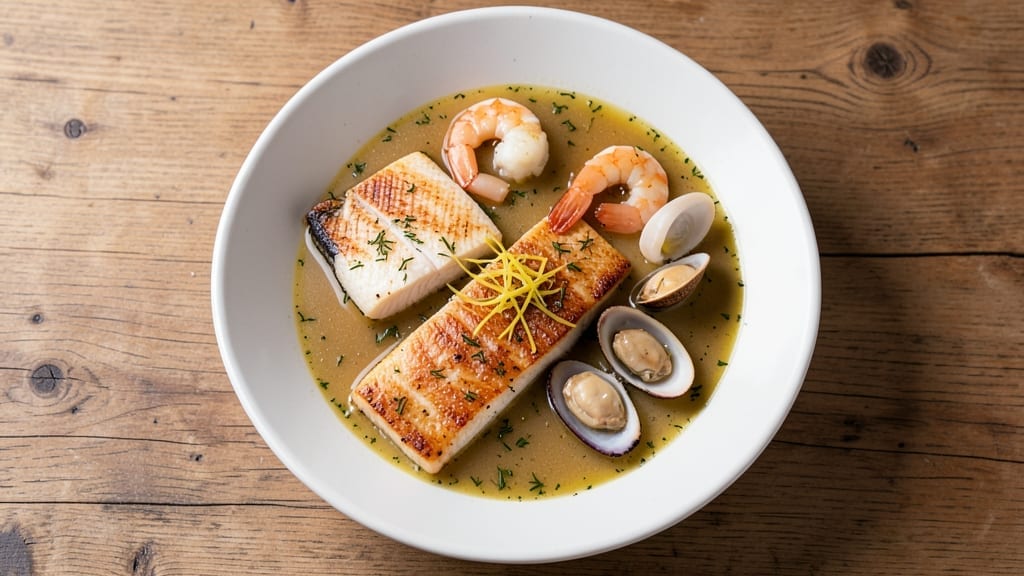
This 7-fish soup recipe delivers a symphony of textures and flavors—silky broth, delicate seafood, and aromatic herbs that transform a simple meal into a restaurant-worthy experience. 💛 The secret lies in layering the fish strategically: firm varieties like cod and halibut first, followed by tender shrimp and squid that cook in minutes.
Each bite reveals a perfect balance of umami from the broth, briny seafood, and bright herbs that elevate every spoonful.
The foundation begins with a rich, slow-simmered broth infused with ginger, star anise, and fish stock, creating depth without overpowering the delicate seafood. I’ve perfected a two-stage cooking method—first reducing the broth to concentrate flavors, then gently adding the fish in stages to maintain their natural textures.
This approach ensures cod stays tender while shrimp and squid achieve just the right doneness.
What you’ll end up with is a bowl of luxurious yet approachable soup—golden, fragrant, and packed with silky fish that melt in your mouth. The broth is rich enough to stand alone but bright enough to complement the seafood perfectly.
Garnish with fresh cilantro, lime wedges, and a drizzle of chili oil for that final touch of sophistication.
This recipe works beautifully for weeknight dinners or special occasions, scaling easily from a single serving to a crowd. The technique is foolproof once you master the timing, and the flavors only deepen as it sits.
Serve with steamed jasmine rice or crusty bread to soak up every last drop of that umami-packed broth.
Ingredients for 7 fish soup
Seven delicate seafood varieties meet aromatic broth for a luxurious yet approachable soup experience.
| Ingredient | Amount | Notes |
|---|---|---|
| Cod Fillets 🐟 | 8 oz | Skinless, cut into 1-inch pieces |
| Halibut Fillets 🐟 | 8 oz | Skinless, cut into 1-inch pieces |
| Shrimp (Peeled & Deveined) 🦐 | 6 oz | Medium size, tails on or off |
| Squid (Cleaned) 🐙 | 6 oz | Tubing cut into rings |
| Scallops 🦪 | 6 oz | Fresh, dry-packed preferred |
| Clams (Littlenecks) 🦪 | 6 oz | Steamed open, cleaned |
| Mussels 🦪 | 6 oz | Debearded, cleaned |
| White Fish Stock 💧 | 4 cups | Homemade or high-quality store-bought |
| Fresh Ginger 🌿 | 1 tbsp | Grated, peeled |
| Star Anise 🌶️ | 2 whole | Lightly crushed |
| Garlic Cloves 🧄 | 4 cloves | Minced |
| Green Onions 🧅 | 2 whole | Sliced, white and green parts |
| Fresh Cilantro 🌿 | ¼ cup | Chopped, stems removed |
| Lime Juice 🍋 | 2 tbsp | Freshly squeezed |
| Chili Oil 🌶️ | 1 tbsp | For garnish (optional) |
| Salt 🧂 | 1 ½ tsp | Kosher or sea salt |
| White Pepper 🌶️ | ½ tsp | Freshly ground |
| Fish Sauce 🍶 | 1 tbsp | Red Boat preferred |
The seafood selection is key here—each variety brings its own texture and flavor. Cod and halibut provide the firm foundation, while shrimp and squid add tender, quick-cooking elements. For the best results, visit a seafood market like Whole Foods or Trader Joe’s for fresh, traceable fish. Look for cod and halibut with bright, translucent flesh and a clean ocean scent. Shrimp should be firm and slightly curved, while squid tubing should snap when bent. Prep all seafood the same day to maintain freshness—store in the coldest part of your fridge until ready to use. The Red Boat fish sauce adds authentic umami depth without overpowering the delicate seafood.
No cod? Mahi-mahi or snapper work beautifully as substitutes—they hold up well to the broth’s simmer. Short on scallops? Extra shrimp or mussels keep the texture balance. For a vegetarian-friendly version, swap seafood for king oyster mushrooms or hearts of palm, though the flavor will differ. Fresh ginger and star anise are non-negotiable—they build the aromatic base. If you can’t find star anise, a pinch of ground cinnamon plus 1/4 tsp cloves mimics the effect. The fish stock can be homemade (simmer fish bones with veggies for 4 hours) or store-bought—just avoid brands with added MSG. For extra richness, add 1 tbsp of coconut milk at the end, but keep it optional to maintain clarity.
This soup tastes even better the next day as flavors meld. Store in an airtight container in the fridge for up to 3 days, though the broth may need reheating gently to preserve texture. For longer storage, freeze portions in glass containers—leave 1-inch headspace as liquid expands. Reheat only until warmed through (about 2 minutes in microwave) to avoid overcooking the seafood. Garnish with fresh cilantro, lime wedges, and chili oil right before serving—these bright elements elevate the dish. The broth can be made ahead and stored separately for 4 days, then assembled with seafood just before serving to keep it silky.
Why You’ll Love This Recipe
- No Prep Nightmares: I swear by this soup because the fish is prepped in stages—cod and halibut go in first, then shrimp and squid join later, scallops last. No one ingredient waits too long, so nothing turns rubbery or overcooks. It’s the kind of recipe where you can sip wine while stirring.
- Umami Bomb: That combo of halibut’s buttery richness, squid’s briny snap, and scallops melting into the broth? Chef’s kiss. The shrimp add a sweet pop, and the cod soaks up all the flavors like a sponge. It’s the kind of taste that makes you forget to check your phone.
- Weeknight to Dinner Party: Same soup, two vibes. Serve it in mugs with crusty bread for a lazy Tuesday, or plate it with lemon wedges and herbs for company. The fish variety means you can tweak what’s in season—swap halibut for mahi if you’re feeling bold.
- Leftovers That Don’t Suck: Honestly, this soup improves the next day. The flavors meld even deeper, and the fish stays tender. I’ve reheated portions for lunch, frozen batches for busy nights, and even turned extra into fish cakes. No sad, dry leftovers here—just pure, reliable comfort.
Step-by-step instructions for 7 fish soup
This method delivers a balanced broth with delicate seafood textures and layered flavors.
🍳 Step 1: Build the Umami Base
Heat a large pot over medium-low heat and add the 4 cups white fish stock. Bring to a gentle simmer, then add the lightly crushed star anise, 1 tbsp grated fresh ginger, and 4 minced garlic cloves. Let it steep for 5 minutes—you’ll notice the broth developing deeper aroma and subtle spice notes.
Add the 1 tbsp fish sauce and 1.5 tsp salt, stirring to dissolve completely. The broth should now have a rich, savory foundation. Keep the heat at medium-low to maintain a gentle simmer—this prevents the delicate flavors from overcooking.
🍳 Step 2: Prepare the Hearty Shellfish
While the broth simmers, prepare the 6 oz clams and 6 oz mussels by discarding any that don’t close when tapped. Scrub them under cold water to remove debris. In a separate bowl, combine the 6 oz squid rings and 6 oz scallops with 1 tbsp lime juice and 0.5 tsp white pepper, tossing gently to coat.
Real talk: don’t overmix the seafood—this keeps the scallops and squid tender. The lime juice adds brightness that cuts through the richness of the broth. Keep these mixtures separate until you’re ready to add them to the pot.
🍳 Step 3: Cook the Fish and Shellfish in Stages
Add the 8 oz cod fillets and 8 oz halibut fillets (cut into 1-inch pieces) to the simmering broth. Cook for 3-4 minutes until the fish turns opaque and just begins to flake at the edges. Remove the fish with a slotted spoon and set aside—it’s crucial to remove it before it becomes rubbery.
Next, add the prepared squid rings and scallops to the broth. Cook for 1-2 minutes until the scallops turn opaque and the squid becomes slightly translucent. Remove these as well and set aside. The timing here is critical—overcooking turns scallops tough and squid chewy.
🍳 Step 4: Finish with Shellfish and Garnish
Add the clams and mussels to the broth. Cover the pot and cook for 3-4 minutes until they open completely. Discard any that don’t open. The broth should now be fragrant with the briny aroma of fresh seafood—this is your signal that the shellfish are perfectly cooked.
Return all the seafood to the pot and stir gently. Add the 2 sliced green onions and 0.25 cup chopped fresh cilantro, letting them wilt slightly in the warm broth. Taste and adjust seasoning with additional salt or lime juice if needed. The soup should be perfectly balanced—umami from the broth, sweetness from the seafood, and acidity from the lime.
🍽️ Step 5: Serve with Fresh Garnishes
Ladle the soup into bowls, dividing the seafood evenly. Drizzle each serving with 1 tbsp chili oil (if using) for a subtle kick. Garnish with additional cilantro and a sprinkle of white pepper for visual appeal and extra flavor.
Serve immediately with steamed jasmine rice or crusty bread to soak up the rich broth. The contrast between the delicate seafood textures and the robust broth creates a truly memorable dining experience. Each spoonful should deliver a perfect harmony of flavors and textures.
Pro Tips For Making 7 Fish Soup
- Cook Fish in Order: Start with the toughest fish first—halibut and cod—then add shrimp, squid, and finally scallops. The halibut needs 3-4 minutes to cook through at a simmer, while scallops will turn rubbery if they sit in hot broth too long. I used to toss everything in at once, and the soup always ended up with some fish overcooked and others underdone.
- Pat Scallops Dry: Scallops release water like nobody’s business, and that water dilutes your broth. Hit them with a paper towel before they hit the pot—this guarantees a clean, bright finish instead of a watery mess. I learned this the hard way after serving a soup where the scallops just disappeared into the liquid.
- Simmer, Don’t Boil: A rolling boil will turn your cod and halibut into sad, opaque chunks. Keep the broth at a gentle simmer—tiny bubbles, occasional swirls—so the fish stays tender and the flavors meld instead of scattering. I used to crank the heat, and the soup would taste like overcooked fish in a sad broth.
- Sear Squid First: Toss cleaned squid in a hot pan with a splash of oil for 30 seconds per side before adding them to the broth. This locks in flavor and prevents them from turning mushy. I skipped this once and ended up with squid that looked like overcooked spaghetti—no thanks.
Common mistakes when making perfect results
Overcooking Shellfish
Clams and mussels are the most delicate components—cook them for more than 4-5 minutes and they turn rubbery. I’ve ruined this soup by letting them sit too long in the broth, which is why I always set a timer.
The moment they open, remove them immediately. Discard any that don’t open after 5 minutes—they’re unsafe to eat. 🦪
Skipping the Staging Process
Adding all the fish at once is a rookie mistake. Cod and halibut need 3-4 minutes to cook, while shrimp and squid only need 1-2 minutes.
Cooking them together means the faster fish turns mushy while waiting for the slower fish. I learned this the hard way—now I stage them carefully. 🔥
Using Old or Frozen Seafood
Frozen seafood loses texture and absorbs odd flavors from ice crystals. Always use fresh, day-of-purchase seafood for the best results. If you must thaw frozen fish, do it in the fridge overnight—never under running water, which can make it waterlogged.
The aromatic base of the broth can’t compensate for poor-quality seafood. 🐟
Ignoring the Broth’s Simmer
A rolling boil destroys the delicate flavors you’ve built. Keep the broth at a gentle simmer—tiny bubbles breaking the surface, but not a full boil. I use a thermometer to check: the ideal temp is 185°F.
Too hot, and your broth loses its depth. Too cool, and the seafood won’t cook properly. ⏰
Overcrowding the Pot
Stuffing too much seafood into the pot steams it instead of simmering, leading to uneven cooking. Use a large enough pot—I recommend a 6-quart Dutch oven—to give everything room to cook properly.
If the pot is too small, the broth won’t circulate, and the seafood will cook unevenly. 💡
Neglecting the Aromatics
Skipping the 5-minute steep of ginger, garlic, and star anise means your broth will lack depth. These ingredients infuse the broth with layers of flavor—without them, the soup tastes flat. I always let the aromatics steep before adding the fish sauce and salt, so the flavors meld completely. 🌶️
Nutrition facts
Frequently asked questions
Can I substitute any of the fish in this recipe?
For the cod and halibut, try mahi-mahi or snapper—they hold up well in broth. Replace scallops with extra shrimp or mussels (use 12 oz total). For squid, cuttlefish works perfectly. Just adjust cooking times: shrimp needs 1 minute, while cuttlefish takes 2 minutes. Always use fresh seafood for best texture.
How do I make this soup vegetarian?
Swap seafood for king oyster mushrooms or hearts of palm (use 12 oz total). For umami depth, add 1 tbsp soy sauce and 1 tsp seaweed flakes to the broth. Cook mushrooms in stages like the fish: 3 minutes for firm varieties, 1 minute for softer ones. Garnish with sesame oil instead of chili oil. The texture won’t be identical, but it’s still flavorful!
Can I prepare the broth ahead of time?
Yes! Make the broth 1-2 days ahead and store it in an airtight container in the fridge. The flavors deepen over time. When ready to assemble, reheat gently (don’t boil) and add the seafood fresh. For longer storage, freeze broth for up to 3 months. Thaw overnight in the fridge before using. This shortcut saves 30 minutes of active prep time.
What if I don’t have star anise?
No problem! Mix ¼ tsp ground cinnamon + ¼ tsp ground cloves for a similar effect. Alternatively, use 1 bay leaf + ½ tsp black peppercorns. These combinations mimic star anise’s warm, slightly sweet notes. Just remember to remove bay leaves before serving. The soup will still taste amazing—just with a slightly different aromatic profile.
How can I make this soup spicier?
Add 1 tsp chili flakes to the broth while simmering, or increase chili oil to 2 tbsp per serving. For heat lovers, stir in 1 tbsp sambal oelek with the lime juice. Garnish with sliced Thai chilies or a dash of cayenne pepper. Start with small amounts—you can always add more, but you can’t remove heat!

- 3 Cheese Pimento Cheese Recipe: Sharp Cheddar, Peppery Heat, and Creamy Spread Magic - October 10, 2026
- 7 Egg Cake Recipe: Fluffy Layers With Vanilla Bean Infusion - October 10, 2026
- 3 Musketeers Cookie Recipe: Crunchy Chocolate Shells With Gooey Caramel Centers - October 10, 2026