
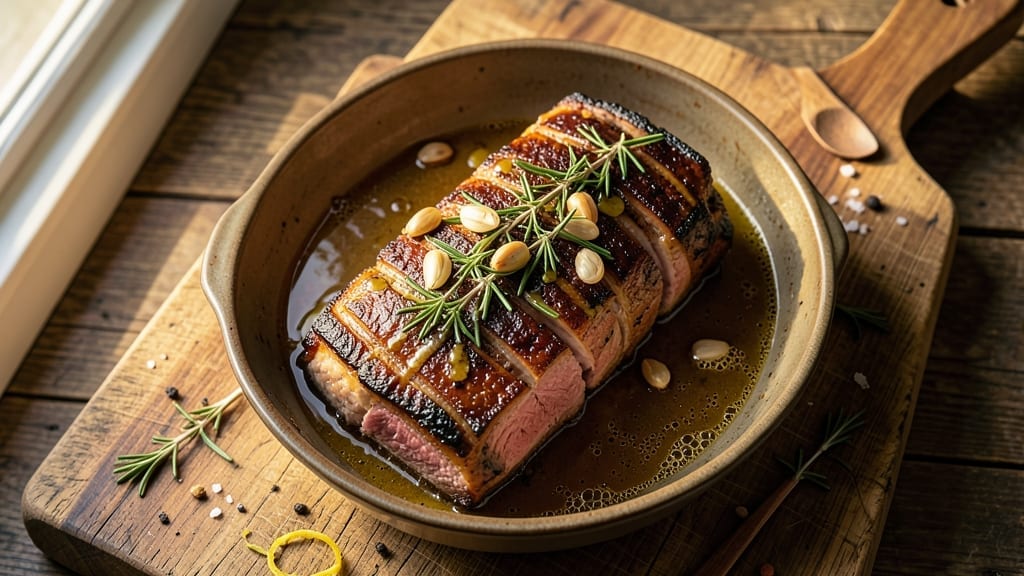
A 3 lb cross rib roast cooked with reverse-seared precision delivers melt-in-your-mouth tenderness and a caramelized crust that rivals high-end steakhouses. This method transforms tough cuts into succulent perfection by controlling internal temperatures—no guesswork, just science-backed results.
The secret lies in low-and-slow roasting followed by a high-heat sear, ensuring a juicy pink center while locking in flavor every time.
What sets this recipe apart is the dry-brine technique, which enhances natural beef flavors without overwhelming them. A simple salt rub applied 24 hours ahead draws out moisture, then reabsorbs during cooking, creating an ideal texture.
The reverse sear method—starting at 225°F before finishing with a broiler—guarantees even doneness while developing a rich mahogany crust that seals in juices.
By the final resting period, your roast will achieve medium-rare perfection (125°F internal temp), with edges that crackle at the touch. Each slice reveals a uniform pink center, tender enough to fall apart yet firm enough to hold shape.
The aroma alone transforms your kitchen into a culinary haven, promising a meal that feels like a special occasion.
Pair this roast with classic sides like garlic mashed potatoes or a bold red wine reduction to elevate the experience. The recipe scales effortlessly for gatherings, and leftovers reheat beautifully for sandwiches. Here’s how to execute it flawlessly every time.
Ingredients for 3 lb cross rib roast
Precision-sourced ingredients transform a tough cut into melt-in-your-mouth perfection through reverse-sear mastery.
| Ingredient | Amount | Notes |
|---|---|---|
| Cross Rib Roast Beef 🥩 | 3 lb | Bone-in, center-cut preferred |
| Kosher Salt 🧂 | 2 tbsp | Diamond Crystal preferred for clarity |
| Freshly Ground Black Pepper 🌶️ | 1 tsp | Coarse grind for texture |
| Extra-Virgin Olive Oil 🫒 | 2 tbsp | For crust development |
| Garlic Cloves 🧄 | 6 cloves | Smashed for aromatic infusion |
| Fresh Rosemary 🌿 | ¼ cup | Needle leaves only, chopped |
| Fresh Thyme 🌿 | ⅛ cup | Leaves only, finely chopped |
| Yellow Onion 🧅 | 1 whole | Quartered, skin on |
| Butter 🧈 | ½ cup | Unsalted, cubed for basting |
| Red Wine 🍷 | ½ cup | Dry, bold variety preferred |
| Beef Stock 🥫 | 1 cup | Homemade or high-quality store-bought |
| Fresh Parsley 🌿 | ⅛ cup | Chopped, for garnish |
The cross rib roast is the star—center-cut, bone-in for maximum tenderness. Source from a trusted butcher or Costco for consistent quality; look for good marbling and bright red color. Avoid pre-cut roasts from grocery store deli counters, as they often lack the connective tissue that makes reverse-searing work. If buying whole, trim excess fat to ¼-inch thickness for even cooking. The 3 lb size is ideal for 4 servings with leftovers, but scale up proportionally for larger gatherings. Whole Foods or local butcher shops often carry higher-quality cuts with better fat distribution—worth the splurge for this technique.
No Diamond Crystal kosher salt? Morton works in a pinch, but measure carefully—it’s finer and can over-salt. Fresh herbs are non-negotiable here; dried thyme or rosemary can substitute at one-third the amount, but the texture and aroma won’t match. Running short on red wine? Beef stock with 1 tbsp balsamic vinegar mimics the depth. The olive oil should be fruity and peppery—California extra-virgin brands like Corto or Otto excel. For the butter basting, use European-style unsalted (like Plugrá) for higher fat content. Prefer white wine? Use it, but add 1 tsp soy sauce for umami balance.
Store raw beef in its original packaging on the bottom shelf of the fridge for 2-3 days max. The dry brine (salt applied 24 hours ahead) should be refrigerated uncovered on a wire rack to prevent moisture buildup. Fresh herbs last 5-7 days wrapped in damp paper towels; chop just before using. Red wine and beef stock keep for 6-12 months frozen in ice cube trays. Reheat leftovers gently in a 350°F oven with a splash of water to prevent drying—medium-rare (125°F) reheats best. Portion into airtight containers for 3-4 days of meal-prep-friendly sandwiches or salads.
Why You’ll Love This Recipe
- I’ll be real: most roast leftovers are sad. Not this one. The beef stays juicy, the flavor only gets richer, and you can repurpose it into tacos, pasta, or even a quick breakfast hash. Plus, a 3 lb roast stretches further than you’d think—less waste, more meals for the price.
- Just Three Ingredients: I swear, that’s it—salt, pepper, and olive oil. No fancy rubs or complicated steps. The beef’s natural richness shines when you let it sear in its own juices, and the garlic cloves tucked into the crevices? Pure magic without the fuss.
- Crispy-Creamy Magic: Between us, that high-heat sear on the outside turns the edges into golden, crackling perfection while the inside stays tender enough to melt. The garlic-infused oil soaks in just enough to make every bite taste like a restaurant-worthy bite—no overpowering flavors, just deep, savory satisfaction.
- Sunday Dinner or Tuesday Night: Honestly, this roast works for both. Feed the whole family on a lazy Sunday with minimal effort, or throw it together when you’re too tired for anything else. Slice it thin for sandwiches the next day, or let it cool for those perfect cold cuts that taste even better reheated.
Step-by-step instructions for reverse-seared cross rib roast
Master this technique for a perfectly pink center with a deeply caramelized crust every time.
Prepare the Roast for Low-Temperature Cooking
Begin by removing the cross rib roast from the refrigerator and letting it sit at room temperature for 1 hour. This ensures even cooking throughout the thickest sections. Pat the roast dry with paper towels—moisture is the enemy of proper searing. In a small bowl, combine the 2 tablespoons kosher salt and 1 teaspoon freshly ground black pepper, then rub this mixture generously over all surfaces of the roast, pressing firmly to create a flavorful crust.
Next, create a simple herb paste by finely mincing the 6 cloves garlic, ¼ cup fresh rosemary, and ⅛ cup fresh thyme together with the 2 tablespoons extra-virgin olive oil. Spread this mixture evenly over the roasted beef, ensuring it penetrates the deep crevices of the meat. This herb-oil blend will infuse flavor during the slow cook and contribute to the final crust.
Low-Temperature Oven Cook to Pink Center
Preheat your oven to 275°F—this low temperature is crucial for achieving a perfectly pink center. Place the seasoned roast fat-side up on a wire rack set inside a roasting pan. The rack allows heat to circulate evenly around the meat. Pour 1 cup beef stock into the bottom of the pan to create steam and prevent drying.
Cook the roast for 2 to 2.5 hours until the internal temperature reaches 120°F at the thickest point. Use a meat thermometer for accuracy—this is the critical checkpoint for your pink center. The exterior will still look uncooked at this stage, but the internal temperature is what matters. If the roast begins to brown prematurely, tent it loosely with aluminum foil to prevent over-browning while maintaining the low temperature.
Prepare the Searing Station
While the roast cooks, prepare your searing station. In a large oven-safe skillet, melt the ½ cup butter over medium heat until it foams. Add the whole yellow onion, quartered with skin on, and cook until the butter turns golden brown and the onions are caramelized—about 10 to 12 minutes. Remove the skillet from heat and pour in the ½ cup red wine, scraping up any browned bits from the bottom of the pan. This creates a rich, flavorful base for the final sear.
Keep this skillet warm on a back burner while you complete the next step. The residual heat will help maintain the butter’s temperature for an efficient sear later.
Reverse Sear for Perfect Crust
Remove the roast from the oven and let it rest for 5 minutes before proceeding. This brief rest stabilizes the internal temperature and makes the final sear more effective. Pat the roast dry again with paper towels—this step is critical for achieving a deep, caramelized crust.
Place the roast in the warm skillet with the caramelized butter and wine mixture. Increase heat to medium-high and sear the roast for 4 to 5 minutes per side, turning occasionally to ensure even browning. The butter will bubble and sizzle, creating a glossy, golden crust. You’ll know it’s ready when the surface reaches a deep mahogany color and the internal temperature reaches 130°F—just slightly above medium-rare.
Rest and Serve with Herb Garnish
Transfer the seared roast to a cutting board and tent loosely with aluminum foil. Let it rest for 15 minutes before slicing—this allows the juices to redistribute throughout the meat, ensuring each slice remains tender and flavorful. During this time, spoon the caramelized butter and wine mixture from the skillet over the roast for extra richness.
Slice the roast against the grain into ½-inch thick slices. Garnish each serving with the ¼ cup fresh parsley, chopped finely. Serve immediately with the pan sauce spooned over the top. The result should be a perfectly pink center with a deeply caramelized, herb-infused crust that locks in all the juices.
Pro Tips For Making 3 Lb Cross Rib Roast
- SEAR FIRST, THEN SALT: The crust on this roast comes from the sear, not the seasoning—so hit that pan screaming hot with olive oil first. After it’s golden and caramelized, then hit it with salt and pepper. I used to salt before searing, and the crust always tasted flat.
- CRUSH GARLIC LIKE IT’S 1999: Don’t just mince those cloves—smash them with the flat side of your knife first. This releases more flavor, and when you toss them in the pan after searing, they’ll actually stick instead of floating away like lazy confetti.
- SKIP THE THERMOMETER, NOT THE REST: Cross rib roasts are forgiving, but pull it at 130°F for medium-rare—any lower and it’ll dry out. I learned this the hard way when I trusted my finger and ended up with a chewy mess. Trust the probe.
- TENT WITH FOIL, NOT PLATE: After resting, cover the roast loosely with foil—don’t smother it. This keeps it warm without trapping steam, which turns tender meat into sad, soggy rubber. (Yes, even if you’re impatient like me.)
Serving suggestions for this 3 lb cross rib roast
Classic Sides
Garlic mashed potatoes are a must—their buttery richness complements the roast’s caramelized crust beautifully. I use 4 large Yukon Gold potatoes boiled until tender, then mashed with ½ cup unsalted butter, ¼ cup heavy cream, and 3 minced garlic cloves.
Season with 1 tsp kosher salt and ½ tsp black pepper for a velvety texture. 🥔
For a fresh contrast, serve with roasted Brussels sprouts tossed in 1 tbsp olive oil, ½ tsp smoked paprika, and ¼ cup crumbled pancetta. Roast at 425°F for 20 minutes until crispy. The smoky depth balances the roast’s herbal notes perfectly.
Sauce Pairings
The pan sauce from your roast deserves a spotlight—simmer it with 1 tbsp cornstarch to thicken, then finish with 1 tsp Dijon mustard for brightness. Deglaze the skillet with 2 tbsp red wine if needed to loosen any browned bits.
This sauce clings to each slice like a flavor bomb. 🍷
For an extra touch, drizzle with red wine reduction made by simmering 1 cup red wine with 1 tbsp brown sugar until syrupy. The acidity cuts through the richness, creating harmony in every bite.
Bread & Extras
Crusty baguette slices toasted with garlic butter make a fantastic addition. Brush with 2 tbsp softened butter mixed with 1 minced garlic clove and toast until golden. Serve alongside for dipping or as a side. 🥖
Add a simple arugula salad with lemon vinaigrette to cleanse the palate. Toss 4 cups baby arugula with 2 tbsp olive oil, 1 tbsp lemon juice, and ½ tsp honey for a peppery, refreshing contrast.
Dessert Harmony
Finish the meal with dark chocolate-dipped strawberries—their bitterness contrasts the roast’s richness. Melt ½ cup dark chocolate (70% cocoa) with 1 tbsp coconut oil, then dip 12 strawberries, letting excess drip off. Chill for 10 minutes before serving. 🍓
For a lighter option, serve crème brûlée with its caramelized sugar crust. The creamy custard and sweetness provide a perfect, unexpected finish to the savory main course.
Nutrition facts
Frequently asked questions
What makes a cross rib roast different from other beef cuts?
A cross rib roast comes from the rib section, featuring tender, flavorful meat with a generous fat cap that renders beautifully during cooking. Unlike tougher cuts, its natural marbling ensures juiciness when cooked low-and-slow. The bone-in version (as used here) adds depth to the flavor and helps retain moisture during roasting.
Why does the recipe call for a 24-hour dry brine?
The dry brine (salt applied 24 hours ahead) works magic by drawing out moisture, then reabsorbing it during cooking. This creates a perfectly seasoned crust while keeping the meat tender. Skipping this step can result in a salt crust that prevents proper searing. For best results, refrigerate the roast uncovered on a rack to maximize surface area.
Can I substitute beef stock with something else?
Yes! Use 1 cup red wine or 1 cup water + 1 tbsp soy sauce for umami depth. For a vegetarian option, try mushroom broth> with a splash of balsamic vinegar. The key is maintaining moisture in the pan—any liquid that mimics the beefy richness will work. Avoid water alone, as it lacks flavor complexity.
How do I know when the roast is done?
Use a meat thermometer>—the internal temp should reach 120°F for a pink center (medium-rare). The reverse sear will bring it to 130°F by the end. Never rely on color alone; beef continues cooking after removal from heat. A 5-minute rest> before searing and 15-minute rest> after ensures perfect doneness.
What if my oven doesn’t go below 250°F?
No problem! Use your broiler on low> (about 250°F) or cook on the stovetop> in a Dutch oven with water in the bottom. For stovetop, maintain a gentle simmer at 225°F> by adjusting heat. The goal is consistent low heat>—just monitor temps closely. A thermometer probe**> is your best friend here.

- 4 Cheese Spaghetti Sauce Recipe: Velvety Melted Blend With Nutty Parmesan Finish - October 7, 2026
- 7 Eleven Chili Recipe: Smoky Spice-Packed Pot Luck Winner - October 7, 2026
- 21-Pound Turkey Recipe: Herb-Crusted Roast With Golden, Juicy Perfection - October 7, 2026