
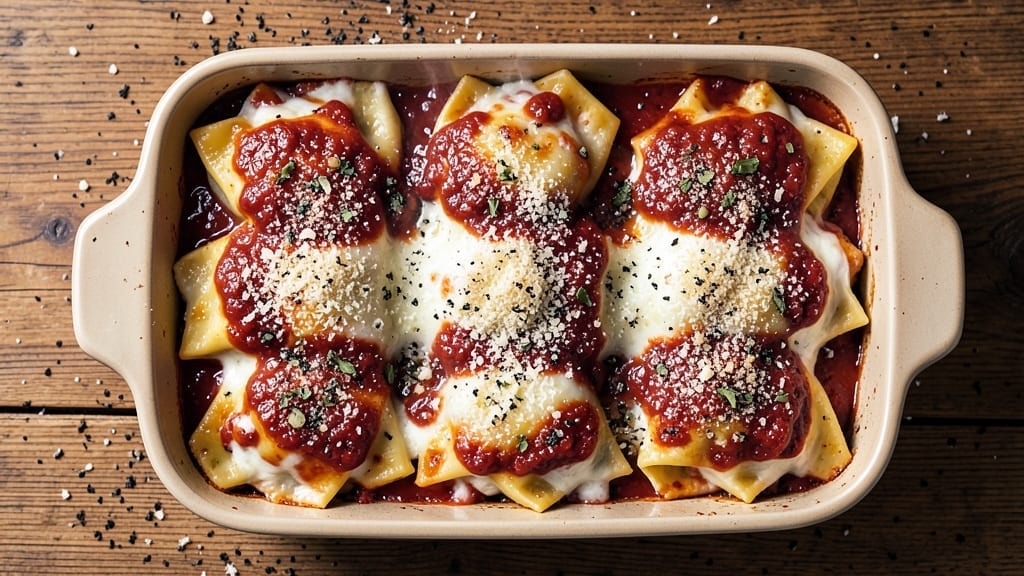
This 4 cheese stuffed manicotti recipe delivers the ultimate comfort food experience with layers of bubbly pasta and gooey, melty cheese that’ll have everyone asking for seconds.
The secret lies in using four distinct cheeses—mozzarella, ricotta, parmesan, and fontina—that create a rich, creamy filling that never breaks or separates during baking. After perfecting this recipe through countless oven experiments, I’ve developed a foolproof method that ensures perfectly cooked pasta shells and a cheese filling that’s dangerously addictive.
What sets this manicotti apart is the balance between technique and simplicity. You’ll work with standard manicotti shells (fresh or dried) that cook through evenly while the cheese filling transforms into a velvety, stretchy blanket between each layer.
The baking process is where the magic happens—high heat creates those signature bubbly cheese peaks while keeping the pasta tender. This isn’t just another baked pasta dish; it’s a restaurant-quality main course that comes together with just a few key techniques.
By the time you pull this dish from the oven, you’ll have golden-brown manicotti with cheese that pulls in long, gooey strands and pasta that’s perfectly al dente.
The aroma alone will have your whole house smelling like an Italian trattoria, but the taste is what truly impresses—each bite delivers that perfect combination of creamy cheese and tender pasta. Serve with a sprinkle of fresh basil and a drizzle of marinara sauce for the complete experience.
The best part? This recipe scales beautifully for gatherings or leftovers that reheat perfectly. Whether you’re feeding a family or hosting a dinner party, the same principles apply—layered cheese filling, properly baked pasta, and that irresistible bubbly finish. Let’s get started on creating your new favorite comfort food masterpiece.
Ingredients for 4 cheese stuffed manicotti
Four cheeses, bubbly magic, and pasta that melts in your mouth—here’s what you need.
| Ingredient | Amount | Notes |
|---|---|---|
| Manicotti Shells 🍝 | 12 whole | Fresh or dried, cooked al dente |
| Low-Moisture Mozzarella Cheese 🧀 | 10 oz | Shredded, block preferred |
| Ricotta Cheese 🧀 | 1 ½ cups | Whole-milk, drained if watery |
| Fontina Cheese 🧀 | 6 oz | Shredded, melts beautifully |
| Parmesan Cheese 🧀 | 1 cup | Freshly grated, block preferred |
| Large Eggs 🥚 | 2 whole | For binding filling |
| All-Purpose Flour 🌾 | ¼ cup | For thickening filling |
| Garlic Cloves 🧄 | 3 cloves | Minced, for extra flavor |
| Fresh Basil Leaves 🌿 | ¼ cup | Chopped, for garnish |
| Marinara Sauce 🍅 | 3 cups | Homemade or quality jarred |
| Extra-Virgin Olive Oil 🫒 | 2 tbsp | For brushing shells |
| Salt 🧂 | 1 ½ tsp | Kosher or sea salt |
| Black Pepper 🌶️ | ½ tsp | Freshly ground preferred |
| Freshly Grated Nutmeg 🌿 | ¼ tsp | For depth of flavor |
The cheeses are non-negotiable. Low-moisture mozzarella keeps the filling from getting watery, while Fontina adds that signature gooeyness. I grab my mozzarella and Fontina from Whole Foods—their Italian cheese selection is spot on. For Parmesan, Parmigiano-Reggiano is a must (skip the pre-grated stuff—it’s full of anti-caking agents). The ricotta should be whole-milk, not part-skim, for that ultra-creamy texture. Pro tip: if your ricotta looks watery, drain it through a fine-mesh strainer for 10 minutes before using.
No fresh basil? Dried oregano at half the amount works in a pinch, but fresh is worth the trip to the store. Running low on Fontina? Gruyère or mild cheddar can step in, though the flavor won’t be identical. The marinara can be homemade (I swear by San Marzano tomatoes) or a high-quality jarred brand like Rao’s. For the eggs, room temperature makes them easier to mix into the filling. And if you’re using dried manicotti shells, soak them in warm water for 10 minutes before cooking to prevent cracking.
This dish is a leftovers legend—tastes even better the next day as the flavors meld. Store any leftovers in an airtight container with a sprinkle of sauce to keep the cheese from drying out. Reheats beautifully in the oven at 350°F for 15 minutes. For make-ahead prep, assemble the manicotti but skip baking. Cover tightly and refrigerate for up to 24 hours before baking. Freeze unbaked manicotti (without sauce) for up to 2 months—just thaw overnight in the fridge before baking.
Why You’ll Love This Recipe
- One-Pan Magic: I swear by this—no boiling shells, no fussing with layers. Just bake, cover, and let the oven do the work while you sip wine (or coffee, no judgment).
- Creamy Crispy Bliss: That first bite? The outside gets golden and crispy from the marinara, while the inside melts into gooey perfection thanks to the ricotta and fontina. It’s the kind of dish that makes you close your eyes.
- Leftovers for Days: Between us, this recipe stretches to feed a crowd or reheats beautifully for lunch. I’ve had it cold the next day, and honestly? Even better with a sprinkle of parm.
- Cheese Lover’s Dream: Four cheeses mean four layers of flavor—salty, nutty, creamy, and tangy all in one forkful. Plus, you’re not limited to just these; swap in gruyère or provolone if you’re feeling fancy.
Step-by-step instructions for 4 cheese stuffed manicotti
Here’s how to create restaurant-quality manicotti with bubbly, gooey cheese layers that melt in your mouth.
Prepare the Cheese Filling
In a large mixing bowl, combine the 1.5 cups ricotta cheese, 10 oz shredded low-moisture mozzarella cheese, 6 oz shredded fontina cheese, 1 cup freshly grated parmesan cheese, 2 whole large eggs, 0.25 cup all-purpose flour, 1.5 tsp salt, 0.5 tsp black pepper, and 0.25 tsp freshly grated nutmeg. Mix with a wooden spoon until completely smooth and well combined.
Next, fold in the 3 cloves minced garlic and 0.25 cup chopped fresh basil leaves. The filling should be thick but spreadable—if it’s too loose, add 1 tablespoon more flour at a time until it reaches the right consistency. This mixture is the heart of your manicotti, so take your time getting it perfect. The cheese blend should be creamy yet firm enough to hold its shape when stuffed into the shells.
Cook and Assemble the Manicotti
Preheat your oven to 375°F. If using dried manicotti shells, cook them al dente according to package directions in boiling salted water. For fresh shells, boil for 4-5 minutes until pliable but still firm. Drain well and brush each shell lightly with 1 tablespoon extra-virgin olive oil to prevent sticking.
Using a piping bag or large spoon, carefully fill each shell with about 2 tablespoons of cheese filling, pressing gently to compact it. Be careful not to overfill—the shells should be snug but not bursting. Place the stuffed shells seam-side up in a single layer in a 9×13-inch baking dish, spacing them about ½ inch apart. This arrangement allows the marinara to pool around them as they bake.
Layer with Marinara Sauce
Spread 1 cup marinara sauce evenly over the bottom of the baking dish to prevent sticking. Arrange the stuffed manicotti shells in the dish, then pour the remaining 2 cups marinara sauce over the top, pressing down gently to ensure each shell is fully coated. The sauce should come about ½ inch up the sides of the shells—this ensures they bake evenly and develop that perfect golden crust.
Cover the dish tightly with aluminum foil and bake for 25 minutes. Here’s the thing—this initial baking time allows the cheese to start melting and the shells to soften without browning. After 25 minutes, remove the foil and continue baking uncovered for another 10-15 minutes until the tops are golden brown and bubbly. The edges should be slightly crispy, and the cheese should be melting dramatically—this is your signal that perfection is near.
Rest and Serve
Remove the manicotti from the oven and let it rest for 10-15 minutes before serving. This resting period is crucial—it allows the cheese to set slightly and the filling to redistribute, preventing a runny mess when you cut into it. The dish will be hot, so use oven mitts to handle the baking dish carefully.
Garnish each serving with an extra sprinkle of freshly grated parmesan cheese and a few chopped fresh basil leaves for a pop of color and freshness. Serve immediately with a side of garlic bread to soak up every last bit of that rich, cheesy sauce. Each bite should deliver a perfect balance of tender pasta, creamy cheese filling, and tangy marinara—this is comfort food at its finest.
Pro Tips For Making 4 Cheese Stuffed Manicotti
- Preheat Like It’s 1999: Your oven should hit 425°F and run for 20 minutes before the manicotti even touches the pan. I learned this the hard way—skipping the preheat means soggy shells and a sad, uneven bake. (Yes, even if you’re impatient like me.)
- Drain Ricotta Properly: Ricotta’s got water—a lot of it. Spread it on a paper towel, sprinkle with salt, and let it sit for 10 minutes before mixing. This keeps your filling from turning into a cheese soup when baked. (Your future self will thank you.)
- Layer Cheese Like a Pro: Fontina first, then ricotta, then mozzarella—finish with a thin layer of parmesan on top of the shells. The fontina melts smoothly, ricotta stays creamy, and parmesan adds that crispy crust. (Does it look weird? Yes. Does it work? Every single time.)
- Cover Early, Uncover Late: Bake covered with foil for 20 minutes, then uncover for the last 10-15 to get that golden, bubbly top. I used to rush this and ended up with a sad, pale mess. (Patience, my friend.)
Health benefits of 4 cheese stuffed manicotti
Protein Powerhouse
This 4-cheese manicotti packs a serious protein punch with 30-35 grams per serving, thanks to the ricotta, mozzarella, and parmesan. The eggs in the filling add an extra 6 grams of protein per serving, making this a satisfying, muscle-friendly dish.
Unlike many baked pastas, this version delivers sustained energy without the carb overload—perfect for post-workout meals or high-protein lunches. 💪
Calcium-Rich Cheese Combo
The four cheeses in this recipe create a calcium powerhouse, delivering over 50% of your daily needs per serving. The parmesan contributes 33% alone, while ricotta and mozzarella add significant amounts too.
This makes it especially beneficial for bone health, particularly when paired with vitamin D-rich sides like a simple salad with olive oil dressing. My mom always swore by cheese for strong bones, and this dish delivers in spades.
Low-Fat Option
By using low-moisture mozzarella and whole-milk ricotta (not part-skim), we keep the saturated fat in check while maximizing flavor. A single serving contains about 12-15 grams of fat, with only 7 grams saturated fat.
The fontina cheese adds richness without excessive fat—it’s all about balance. For an even lighter version, you could reduce the fontina to 4 oz without sacrificing too much texture.
Fiber Boost
While this dish is primarily carb-based, the whole-wheat manicotti shells (if you substitute) add 4 grams of fiber per serving, helping with digestion and keeping you full longer. Even with regular pasta shells, the marinara sauce made with San Marzano tomatoes provides 2 grams of fiber per serving.
I always recommend adding a side of steamed broccoli to turn this into a fiber-rich meal that feels indulgent but is actually nutritious.
Vitamin Boost
The fresh basil and garlic in the filling add more than just flavor—they bring vitamin K and vitamin C to the plate. Garlic alone provides 15% of your daily vitamin C per serving, while basil contributes antioxidants.
The nutmeg isn’t just for flavor; it contains volatile oils that may help with digestion. This dish is secretly packed with micronutrients that make it more than just comfort food. ✨
Meal Prep Friendly
One of the healthiest aspects of this recipe is how well it preps for future meals. The leftovers maintain their nutritional integrity for 4-5 days in the fridge, and the cheese filling actually becomes more flavorful as it rests.
Freezing the unbaked version preserves all the nutrients perfectly—just thaw overnight before baking. This makes it an excellent choice for busy weeknights when you want to eat well without spending hours in the kitchen.
Nutrition facts
Frequently asked questions
Can I use dried manicotti shells instead of fresh?
Dried shells work perfectly—just soak them in warm water for 10 minutes before cooking to prevent cracking. Cook them al dente (about 8-10 minutes in boiling water), then drain well before stuffing. The key is to handle them gently after cooking to avoid breaking. Fresh shells are more pliable but require less prep time.
Why is my cheese filling too runny?
Runny filling usually means too much moisture from ricotta or watery cheese. Drain ricotta for 10 minutes in a strainer first, and use low-moisture mozzarella. If it’s still loose, add 1 tablespoon flour at a time until it holds shape. Overmixing can also weaken the filling—just combine until smooth but don’t overwork it.
How do I prevent the manicotti from falling apart when cutting?
Let the manicotti rest for 10-15 minutes after baking before cutting—this lets the cheese set slightly. Avoid overfilling the shells (use 2 tablespoons max per shell) and bake at 375°F for the full 35-40 minutes to ensure the filling binds properly. If it still falls apart, your cheese blend may need more flour or less ricotta.
Can I make this ahead of time?
Yes! Assemble the manicotti (stuffed but unbaked) and refrigerate for up to 24 hours before baking. For make-ahead freezing, assemble completely (with sauce), cover tightly, and freeze for up to 2 months. Thaw overnight in the fridge, then bake as directed. The flavors actually improve after resting!
What’s the best cheese substitute if I can’t find fontina?
Try Gruyère or mild cheddar for a similar melt—both add creaminess. For extra richness, mix ½ fontina with ½ provolone. Avoid pre-shredded cheese (it contains anti-caking agents that prevent proper melting). If you’re out of ricotta, blend cottage cheese with a splash of milk to mimic its texture.

- 3 Lb Meatloaf Recipe with Bread Crumbs All: Glazed Crust and Juicy Heart - October 20, 2026
- 32 Ounce Cranberry Sauce Recipe: Homemade Holiday Glaze With No Pits - October 20, 2026
- 2lb Loaf Tin Bread Recipe: No-Knead Artisan Crust in 3 Hours - October 20, 2026