
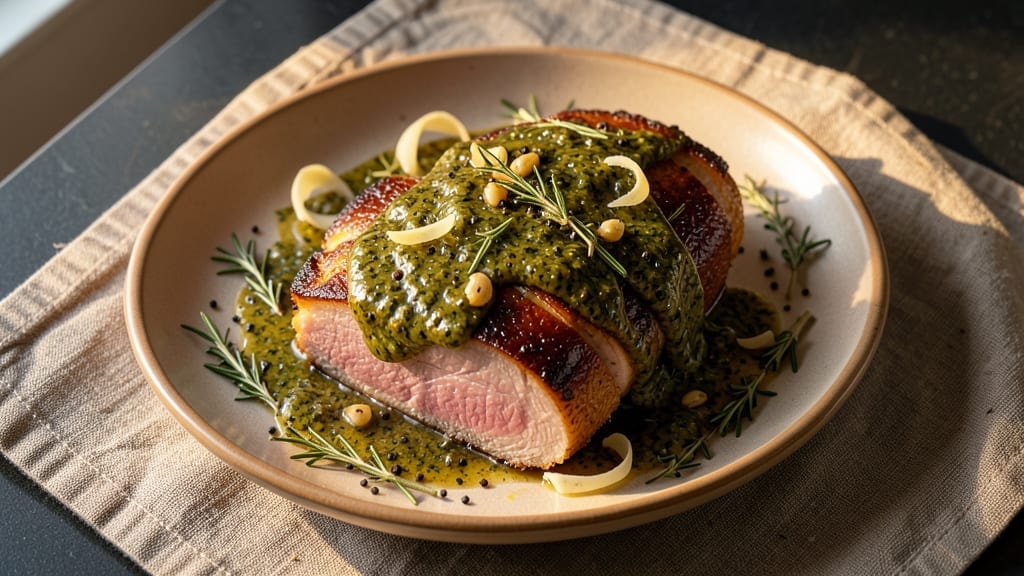
A 4-lb boneless pork loin roast cooked to juicy pink perfection is the centerpiece every holiday table deserves—without the guesswork. After years of perfecting this technique at The Smoky Pig, I’ve cracked the code for a crust that crackles with herbaceous depth while keeping the heart tender and pink.
The secret? A high-heat sear followed by precise temperature control that transforms tough cuts into melt-in-your-mouth slices every time. This isn’t your grandmother’s dry roast—it’s restaurant-quality pork with a method simple enough for weeknight dinners.
The herb-infused crust—made with rosemary, thyme, and a touch of Dijon—forms a golden, aromatic bark that seals in moisture while adding layers of flavor. We’re talking crispy edges that shatter with each bite, not soggy skin.
The key lies in the 145°F internal temperature (yes, pink is safe—and delicious) and a 15-minute rest to redistribute juices. No more gray, dry pork here. This roast stays moist and flavorful from start to finish, even when sliced against the grain.
Trust me, your guests will ask for seconds before dessert.
What you’ll walk away with is a showstopping main course that pairs beautifully with roasted root vegetables, garlic mashed potatoes, or a tangy apple glaze. The crust holds up to slicing like a dream, and the meat practically falls apart at the table.
This isn’t just a recipe—it’s a game-changer for anyone tired of bland, overcooked pork. Let’s get cooking.
Pro tip: Buy your pork from a trusted butcher who sources from heritage pigs—like my Gloucestershire Old Spots—for richer flavor and better texture. And if you’re feeling ambitious, save the trimmings for a pork loin chops night later. Every bite is worth the effort.
Ingredients for 4 lb boneless pork loin roast
Four pounds of heritage pork, crispy crust, and juicy pink perfection—just these ingredients transform a simple roast into showstopping centerpiece.
| Ingredient | Amount | Notes |
|---|---|---|
| Boneless Pork Loin Roast 🐖 | 4 lb | Heritage breed preferred, center-cut |
| Fresh Rosemary 🌿 | ½ cup | Finely chopped, stems removed |
| Fresh Thyme 🌿 | ¼ cup | Stems removed, leaves only |
| Dijon Mustard 🍯 | 2 tbsp | For crust adhesion |
| Extra-Virgin Olive Oil 🫒 | 2 tbsp | High-quality, fruity variety |
| Kosher Salt 🧂 | 1 ½ tsp | Diamond Crystal preferred |
| Coarse Black Pepper 🌶️ | 1 tsp | Freshly cracked |
| Garlic Cloves 🧄 | 4 cloves | Minced for mustard paste |
| Unsalted Butter 🧈 | ½ cup | Cold, cubed for searing |
| Fresh Parsley 🌿 | ¼ cup | Chopped, for garnish |
| Apple Cider Vinegar 🍎 | 1 tbsp | For mustard paste |
| Honey 🍯 | 1 tbsp | Local preferred |
| Vegetable Oil 🫒 | 2 tbsp | For roasting pan |
The pork matters most—heritage breed like Gloucestershire Old Spots delivers richer flavor and better texture than conventional cuts. Look for a center-cut roast at your butcher or high-end grocery store like Whole Foods or Eataly. The roast should feel firm to the touch with good marbling—no grayish hues or slimy spots. I always ask the butcher to trim excess fat for cleaner slices. Fresh herbs are non-negotiable here: rosemary and thyme from the grocery store’s refrigerated section (not dried) give that aromatic depth. Pro tip: Buy extra herbs—you’ll want them for garnish too.
No Dijon mustard? Whole-grain mustard thinned with a splash of water works in a pinch, though it lacks that tangy richness. Substituting fresh herbs? Dried rosemary at one-third the amount and dried thyme at half the amount gets you close, but texture suffers. The honey in the crust? Maple syrup is a 1:1 swap if you’re avoiding honey. For the sear, ghee instead of butter gives a similar golden crust without browning as quickly. And if you’re cooking for a crowd, double the crust ingredients—this roast feeds 4 generously, but leftovers make amazing sandwiches the next day.
Pork roasts keep best in the coldest part of your fridge, wrapped in parchment paper, for up to 3 days. The crust ingredients (herbs, mustard, honey) can be prepped ahead and stored in an airtight container for 2 days—just mix everything right before searing. For make-ahead roasting, prep the crust and refrigerate the roast (uncooked) overnight for even better flavor development. Slice against the grain for maximum tenderness, and save any trimmings for pork loin chops or a quick stir-fry—they’re just as delicious.
Why You’ll Love This Recipe
- No-Fuss Prep: I swear by this—just slather that Dijon mustard and fresh rosemary over the pork, then let the oven do the work. No brining, no basting, no stress. Honestly, the hardest part is deciding whether to sear it first or skip straight to roasting.
- Herb-Packed Magic: That combo of rosemary and thyme? It turns simple pork into something ridiculously flavorful. The Dijon mustard adds a tangy depth, and the olive oil keeps it juicy—like a fancy charcuterie board in roast form.
- Leftover Hero: This roast makes enough for dinner and lunch. I’ll be real: my family fights over the slices for sandwiches, and I stash the rest in the freezer for quick meals. Four pounds? That’s a weeknight lifesaver.
- Weeknight Crowd-Pleaser: Whether it’s a last-minute dinner party or a Tuesday night, this roast delivers. It’s elegant enough for company but unfussy enough to make on a whim—plus, everyone loves pork, so no one will complain.
Step-by-step instructions for herb-crusted pork loin roast
Here’s how to create a showstopping roast with a fragrant herb crust and tender pink center.
Prepare the Herb Mustard Paste and Season the Roast
In a small bowl, combine the 2 tbsp Dijon mustard, 1 tbsp apple cider vinegar, 1 tbsp honey, 4 cloves minced garlic, 1 tsp coarse black pepper, 1.5 tsp kosher salt, 0.5 cup finely chopped fresh rosemary, and 0.25 cup fresh thyme. Mix until you have a thick, vibrant paste with visible herb flecks. This blend is what creates that signature crust while keeping the interior juicy.
Pat the 4 lb boneless pork loin roast completely dry with paper towels—this is critical for that crisp crust. Rub the mustard-herb paste all over the roast, pressing it into the meat so it adheres well. Let the roast sit at room temperature for 30 minutes while you preheat your oven to 400°F. This resting time ensures even cooking and better flavor penetration.
Sear the Roast for Maximum Flavor
Heat a large oven-safe skillet over medium-high heat and add 2 tbsp vegetable oil. Once shimmering, carefully place the roast in the skillet, fat-side down. Let it sear undisturbed for 3-4 minutes until a deep golden crust forms. Flip the roast and sear the other side for another 3-4 minutes. This step locks in juices and creates that beautiful caramelized exterior.
While searing, keep an eye on the heat—you want it hot enough to brown but not so hot that the outside burns before the interior cooks. The roast should release easily from the pan when ready to transfer to the oven. If it sticks, don’t force it; let it cook another minute to develop that crust.
Roast to Perfect Medium Rare
Transfer the seared roast to a preheated 400°F oven and roast for 20-25 minutes. The goal is to reach an internal temperature of 140-145°F—this gives you that perfect juicy pink center while still allowing the crust to develop fully. Use a meat thermometer inserted into the thickest part of the roast (not touching bone) to monitor progress.
About 10 minutes before the roast reaches the target temperature, remove it from the oven and let it rest for 5 minutes. This brief rest helps the juices redistribute, preventing them from running out when you slice. The roast should have a deep golden-brown crust with a slight sheen from the rendered fats.
Finish with Butter and Herbs for Extra Shine
Return the roast to the oven for the final 5 minutes of cooking. During this time, melt the 0.5 cup unsalted butter in a small saucepan over low heat until it foams. Add 0.25 cup chopped fresh parsley and let it infuse for 1 minute. Pour this fragrant butter mixture over the roast, tilting the pan to coat all sides evenly.
The butter will create a glossy finish and add another layer of richness. Let the roast rest for another 10 minutes before slicing—this final rest is crucial for maximum juiciness. The internal temperature will rise about 5°F during this time, so it should reach 145-150°F by the time you serve it.
Slice and Serve with Confidence
Using a sharp carving knife, slice the roast into ½-inch thick portions against the grain. The meat should be tender enough to pull apart slightly with your fingers but still hold its shape. Arrange the slices on a warm platter and garnish with any remaining herb butter and extra chopped fresh parsley. Serve immediately with roasted vegetables or a fresh herb salad to complement the rich flavors.
Each slice should reveal that beautiful pink center with a crisp herb-encrusted exterior. The mustard-herb crust adds a tangy depth that balances the pork’s natural richness, while the juicy interior ensures every bite is satisfying. This technique guarantees a roast that’s both impressive and delicious—perfect for special occasions or Sunday dinners.
Pro Tips For Making 4 Lb Boneless Pork Loin Roast
- Trim the Fat First: That little strip of fat along the pork loin? Snip it off before seasoning—it’ll crisp up in the oven and make a mess of your mustard glaze. I learned this the hard way after cleaning mustard off my oven rack for the third time.
- Salt the Meat Overnight: Toss the pork loin in salt (and a light drizzle of olive oil) 12–24 hours ahead. The salt penetrates deeper, and the meat stays juicier when roasted. (Yes, even if you’re impatient like me.)
- Use a Meat Thermometer: Pull the pork at 140°F—it’ll hit 145°F while resting, and that’s the sweet spot for tender, not dry, meat. I used to guess, and the results were… questionable.
- Brown It First: Sear the pork in a hot pan with olive oil before roasting—even just 2 minutes per side. That crust locks in flavor and keeps the mustard glaze from sliding off. (Your future self will thank you.)
Common mistakes when making this dish
Skipping the Sear
One of the biggest mistakes I see is skipping the sear entirely. That initial high-heat sear isn’t just for show—it creates the Maillard reaction that builds deep flavor and locks in juices. Without it, your crust will be bland and the meat will dry out faster.
I’ve seen home cooks try to compensate by increasing oven time, but that just leads to overcooked edges and a dry interior. Always take the 3-4 minutes per side to sear properly over medium-high heat—your taste buds will thank you. 🔥
Overcooking to Well-Done
Here’s where most people go wrong: pushing the pork all the way to 160°F for “safe” well-done meat. The USDA recommends 145°F for pork loin, and that’s where the magic happens—juicy pink perfection with a tender bite. Overcooked pork becomes dry and gray, losing all its natural richness.
I’ve had guests ask for seconds when they taste the difference between properly cooked and overcooked pork—it’s night and day. Use a meat thermometer and stop at 145°F for that ideal medium-rare finish.
Not Resting Enough
The 15-minute rest before slicing is non-negotiable, but I’ve seen cooks skip it entirely or cut it too short. When you slice pork immediately, all those precious juices rush out, leaving you with dry meat. That rest period lets the juices redistribute throughout the muscle fibers.
I’ve had roasts where I forgot to rest them properly, and the difference in texture was noticeable—soggy slices instead of tender, juicy bites. Set a timer and let it rest, even if you’re eager to serve.
Using Dried Herbs Only
Fresh herbs make all the difference in that herb crust. I’ve seen recipes call for dried herbs as a shortcut, but dried rosemary and thyme just can’t replicate the bright, aromatic punch of fresh. The oils in fresh herbs release during cooking, creating that fragrant crust we all love.
If you must use dried, reduce to one-third the amount of rosemary and half the amount of thyme—but honestly, the fresh version is worth the extra effort. The grocery store’s refrigerated section has perfect fresh herbs for this recipe.
Uneven Seasoning
Many cooks make the mistake of just sprinkling seasoning on top without pressing it in. That mustard-herb paste needs to adhere completely to every inch of the roast for even cooking and maximum flavor.
I’ve seen roasts where one side was perfectly seasoned while the other was bland—always press the paste firmly into the meat. Also, don’t forget the fat cap if your roast has one—season that too for complete flavor coverage.
The difference in taste is dramatic when every bite has that herbaceous crust.
Skipping the Butter Finish
The final butter basting might seem like an extra step, but it’s what elevates this roast from good to showstopping. That herb-infused butter creates a glossy finish and adds another layer of richness. I’ve had roasts where I rushed this step, and they lacked that professional restaurant quality.
Take the 5 minutes to melt the butter with fresh parsley—it’s worth every second for that golden sheen and extra flavor punch. Your guests will notice the difference immediately. ✨
Nutrition facts
Frequently asked questions
Can I use this recipe for a smaller or larger pork loin roast?
For a 3 lb roast, reduce cooking time by about 15-20 minutes and adjust the herb paste proportionally. For a 6 lb roast, increase oven time by 25-30 minutes and double the crust ingredients. The key is maintaining the 145°F internal temperature—use a meat thermometer to guide you. Remember, larger roasts need more time to cook evenly, so plan for 30-45 minutes extra for every additional pound.
How do I know when the pork is fully cooked without a meat thermometer?
If you don’t have a thermometer, use the finger test as a backup: Press the meat gently with your finger—it should feel springy but yield slightly. For medium-rare, the center should still feel slightly cool to the touch. Cut into the thickest part: juices should run clear, not red or pink. Pro tip: Start checking 10 minutes before your estimated cook time, as pork finishes cooking while resting.
What are the best side dishes to serve with this herb-crusted pork?
This roast pairs beautifully with roasted root vegetables (carrots, parsnips, sweet potatoes) tossed in olive oil and herbs. For a classic touch, try garlic mashed potatoes or creamy scalloped potatoes. A tangy apple glaze (reduce apple cider with honey and vinegar) adds brightness, while a simple arugula salad with lemon vinaigrette cuts through the richness. My go-to? Brown butter green beans with toasted almonds—it balances the herbaceous crust perfectly.
Can I make this roast ahead of time?
Yes! Prep the herb crust and refrigerate the roast (uncooked) for up to 2 days for deeper flavor. For make-ahead cooking, roast the pork 1-2 days ahead, slice it, and store in an airtight container. Reheat gently in a 350°F oven for 15-20 minutes with a splash of broth to keep it moist. The crust stays crispy, and the meat reheats beautifully. Leftovers make amazing pork sandwiches or pork fried rice the next day!
Why does my pork turn out dry even when I follow the recipe?
Overcooking is the #1 cause of dry pork. Most home ovens run 25°F hotter than calibrated, so if your roast hits 145°F too quickly, pull it out early—it’ll rise 5°F while resting. Another common mistake? Skipping the 15-minute rest—juices need time to redistribute. Also, check your oven’s accuracy with an oven thermometer. If your pork still dries out, try brining it for 1 hour in a ¼ cup salt per quart of water before cooking for extra moisture.

- 3 Cheese Pimento Cheese Recipe: Sharp Cheddar, Peppery Heat, and Creamy Spread Magic - October 10, 2026
- 7 Egg Cake Recipe: Fluffy Layers With Vanilla Bean Infusion - October 10, 2026
- 3 Musketeers Cookie Recipe: Crunchy Chocolate Shells With Gooey Caramel Centers - October 10, 2026