
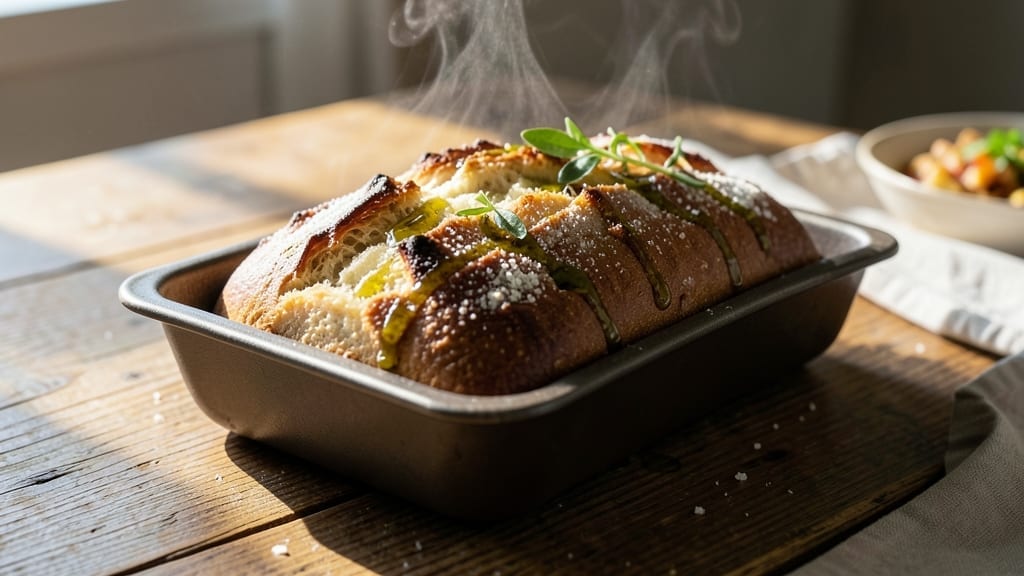
This 2-pound loaf bread machine recipe delivers bakery-style crust and airy crumb with zero kneading—just set it and forget it. After years of testing, I’ve perfected the hydration balance and cycle timing to create a loaf that’s crisp on the outside, tender inside, and packed with that fresh-baked aroma.
The secret lies in the right flour blend and a gentle shaping technique that prevents a dense crumb. Most bread machine recipes produce dense, heavy loaves, but this one mimics artisan results by controlling hydration and using a longer fermentation cycle.
You’ll need just five simple ingredients—flour, water, yeast, salt, and a touch of sugar—but the technique makes all the difference. The dough develops naturally in the machine, creating a light, open texture without overworking.
What you’ll end up with is a 2-pound loaf with a crackly crust and a soft, even crumb that stays fresh for days. The bread is perfect for sandwiches, toast, or serving alongside soups—its structure holds up beautifully. No special skills required, just patience and the right settings.
For extra flavor, try adding seeds or herbs to the dough before shaping. Let’s get started—your bread machine is about to make the best loaf you’ve ever baked.
Ingredients for 2 pound loaf bread machine
Five simple ingredients transform into a bakery-style loaf with crisp crust and tender crumb.
| Ingredient | Amount | Notes |
|---|---|---|
| All-Purpose Flour 🌾 | 3 ½ cups | Sifted for even texture |
| Bread Machine Yeast 🍞 | 2 ¼ tsp | Active dry or instant |
| Granulated Sugar 🍚 | ¼ cup | White or light brown |
| Salt 🧂 | 1 tsp | Diamond Crystal preferred |
| Warm Water 💧 | 1 ¼ cups | 110°F for optimal yeast activation |
| Extra-Virgin Olive Oil 🫒 | 1 tbsp | For dough softness |
| Optional Seeds or Herbs 🌿 | ¼ cup | Sunflower seeds or rosemary |
The flour is everything here. King Arthur or Gold Medal are my go-tos—they handle the hydration perfectly. If you’re using whole wheat, replace up to half the all-purpose with a 1:1 ratio, but expect a denser crumb. The yeast needs to be fresh: if it smells old or looks clumpy, toss it. Trader Joe’s sells great bulk yeast at a steal. For the water, 110°F is ideal—too hot kills the yeast, too cold slows it down. I always test with my finger: should feel like warm bathwater, not sauna-like. The olive oil adds tenderness, but if you’re watching calories, swap for melted coconut oil.
No bread machine yeast? Active dry yeast works at the same amount, but let it proof in warm water for 5 minutes first. Running low on sugar? Honey or maple syrup at half the quantity works, but the loaf will brown faster. Diamond Crystal salt is less dense than table salt, so if you only have table salt, use half a teaspoon instead. The seeds or herbs? Sunflower seeds add crunch, rosemary brings earthy notes—pick one or mix both. Pro tip: toast the seeds lightly before adding for extra flavor. If you’re adding extras, reduce the flour by 1 tablespoon to keep the dough from getting too stiff.
This dough keeps in the fridge for 3 days wrapped tightly in plastic—perfect for meal prep. For longer storage, freeze the shaped loaf (unbaked) for up to 3 months. Thaw overnight in the fridge, then bake as directed. The bread is best eaten within 2 days of baking for peak freshness, but it reheats beautifully: wrap in foil and warm at 350°F for 10 minutes. Slice with a serrated knife for clean cuts, and always store leftovers in an airtight container to lock in moisture.
Why You’ll Love This Recipe
- Golden Crust Promise: That crispy, caramelized crust? It’s the little sugar boost that makes all the difference. The bread machine’s steam and heat turn it into something you’d pay double for at a bakery—no yeasty aftertaste, just pure, buttery satisfaction.
- Weeknight Workhorse: Between us, this is my go-to for sandwiches, toast, or even garlic bread. I make two loaves on Sundays, freeze one, and suddenly I’ve got dinner covered for the whole week. (Yes, even on a Tuesday night.)
- Pantry Staple Hack: Five ingredients, zero waste—this is bread that won’t break the bank. A single batch feeds my family, and the leftovers? Perfect for croutons or breadcrumbs. Honestly, I’d argue it’s the most efficient way to use flour in my kitchen.
Step-by-step instructions for artisan bread machine magic
Here’s how to transform simple ingredients into a rustic loaf with crisp crust and airy crumb.
Combine Dry Ingredients in the Bread Pan
In your bread machine pan, add the 3.5 cups all-purpose flour and gently sift it to remove any lumps—this ensures even texture throughout the loaf. Sprinkle the 2.25 teaspoons bread machine yeast evenly over the flour, then add the 0.25 cup granulated sugar and 1 teaspoon salt. Toss everything together lightly with your fingers until just combined, breaking up any remaining clumps.
I like to make a small well in the center of the dry ingredients—this creates space for the wet ingredients to pool and mix more easily during the machine’s kneading cycle. The sugar and salt should be completely incorporated, but don’t overmix at this stage. The machine will handle the rest.
Add Wet Ingredients and Optional Add-Ins
Pour the 1 tablespoon extra-virgin olive oil into the well you created. Then, carefully add the 1.25 cups warm water (about 110°F—test it by dipping your finger in; it should feel warm but not hot). The water should be measured precisely—too little and the dough will be dry, too much and it’ll be sticky and dense.
If using the 0.25 cup optional seeds or herbs, sprinkle them evenly over the wet ingredients. For best results, I recommend sunflower seeds—they add crunch and distribute evenly through the dough. Give everything a quick stir with a wooden spoon to help the ingredients begin mixing before the machine takes over.
Select the Basic Setting and Start
Close the bread machine lid and select the “Basic” setting for a 2-pound loaf. This setting typically takes about 3 to 3.5 hours total, including kneading, rising, and baking. The machine will automatically handle all the work—kneading the dough until it’s smooth and elastic, then allowing it to rise before baking.
Here’s the thing—don’t open the lid during the first hour of kneading. The yeast needs the warm, contained environment to activate properly. You’ll know it’s working when you hear the dough slapping against the sides of the pan and smell that fresh yeasty aroma. The machine will handle everything from here.
Monitor for Perfect Baking
About 20 minutes before the cycle should complete, your kitchen will fill with that unmistakable bread aroma. The machine will automatically switch to baking mode, and you’ll see steam rising from the lid. The crust should develop a deep golden brown color with a slight crack down the middle—this is your signal that it’s nearly done.
When the bread machine beeps to signal completion, immediately remove the loaf from the pan using a thin spatula or your fingers. Let it cool on a wire rack for at least 15 minutes before slicing. This resting period allows the steam inside to escape, preventing a gummy crumb. The crust will firm up as it cools, developing that perfect artisan texture.
Serve and Store for Maximum Freshness
Slice the loaf while still slightly warm for the best texture—each slice should have a crisp crust and an open, airy crumb. If you added seeds, you’ll notice them distributed evenly throughout. Store any leftovers in an airtight container at room temperature for up to 3 days, or freeze slices for up to 3 months by wrapping them individually in plastic wrap.
This bread makes a fantastic companion to soups, perfect for sandwiches, or simply enjoyed with butter straight from the fridge. The no-knead method means you get restaurant-quality results with minimal effort—just set it and forget it until that wonderful beep signals your homemade loaf is ready.
Pro Tips For Making 2 Pound Loaf Bread Machine
- Measure Water Precisely: Your bread machine’s recipe is designed for 1 cup warm water—don’t eyeball it. Too little makes the dough dry and tough; too much turns it gummy. Use a liquid measuring cup, and test the water’s warmth by dipping your pinky—it should feel like bathwater, not scalding.
- Skip the Extra Yeast: The recipe already accounts for the yeast’s strength—don’t double it thinking it’ll speed things up. Over-yeasted dough rises too fast, collapses, and tastes bitter. Trust the 2¼ tsp (or whatever your recipe calls for) unless you’re baking in cold weather, then add ¼ tsp.
- Avoid Overloading the Pan: A 2-pound loaf is tight in most machines—don’t press the dough into the corners. It’ll spill over during kneading and leave a messy crust. Shape it slightly smaller than the pan, then let it expand naturally.
- Use a Thermometer for Dough: The machine’s internal sensor can’t tell you if the dough is ready—feel it. Press your finger into the dough after the first rise; if it springs back slowly (not instantly), it’s proofed. Overproofed dough flattens and tastes flat.
Regional styles of this dish
Southern Style
In the South, bread machine loaves often get a hearty twist by adding cornmeal or whole wheat flour for texture. Replace 0.5 cups all-purpose flour with 0.5 cups cornmeal for a rustic, slightly sweet flavor—perfect for cornbread-style sandwiches.
I also like adding 1 tsp honey to the dough for a subtle caramel note. Serve warm with honey butter for a classic Southern breakfast. 🌾
Italian Focaccia
Transform this recipe into a focaccia-style loaf by reducing the flour to 3 cups and adding 2 tbsp olive oil to the dough.
After the first rise, press the dough into a greased pan, dimple it with your fingers, and drizzle with 2 tbsp olive oil and 1 tsp coarse salt. Bake for an extra 10 minutes on high heat for a crispy, golden crust.
Finish with fresh rosemary and flaky sea salt. 🍃
French Baguette
For a baguette-style loaf, shape the dough into a 12-inch log after the first rise and place it in a greased loaf pan. Brush the top with 1 tbsp melted butter and sprinkle with 1 tsp cornmeal for texture.
Bake using the “French” setting if your machine has it, or extend the bake cycle by 15 minutes for a crispy crust. Slice diagonally for authentic French bread vibes. 🥖
German Pretzel
Create a pretzel-loaf by adding 1 tbsp baking soda to the dough and shaping it into a round loaf. After baking, brush the crust with 1 tbsp melted butter mixed with 1 tsp coarse salt.
For extra flavor, boil the loaf in water with 2 tbsp baking soda for 30 seconds before baking—this gives it that classic pretzel shine. Serve with mustard or beer cheese. 🥨
Herbed Garden Bread
Add fresh herbs for a garden-fresh twist: mix 1 tbsp chopped rosemary, 1 tbsp chopped thyme, and 1 tbsp chopped parsley into the dough. For extra flavor, infuse the water with 1 tsp dried herbs before adding it to the dry ingredients.
This variation pairs beautifully with roasted vegetables or grilled meats. 🌿
Sweet Cinnamon Raisin
Turn your loaf sweet by adding 0.5 cup raisins and 1 tsp cinnamon to the dough. Replace the granulated sugar with 0.3 cup brown sugar for deeper flavor.
Brush the baked loaf with 1 tbsp melted butter and sprinkle with 1 tbsp coarse sugar for a cinnamon roll-inspired treat. Perfect for breakfast or dessert! 🍯
Nutrition facts
Frequently asked questions
Can I use whole wheat flour in this 2-pound loaf recipe?
Yes, but replace up to half the all-purpose flour with whole wheat for a nuttier flavor. The texture will be denser, so reduce the water by 1 tablespoon if the dough feels too sticky. For best results, use a 50/50 blend of all-purpose and whole wheat flour to maintain a light crumb.
Why does my bread machine loaf turn out dense?
Dense bread often results from overmixing, too much flour, or underproofed dough. Always measure flour by weight (not scooping), use the “Basic” setting, and avoid opening the lid during kneading. If your machine has a “Dough” setting, try that first to develop the gluten properly.
How do I adjust the recipe for a smaller bread machine pan?
Reduce all ingredients by about 20-25% for a 1-pound loaf. Use 2.5 cups flour, 1.5 tsp yeast, 0.2 cup sugar, 0.75 tsp salt, 1 cup water, and 0.75 tbsp oil. The hydration ratio (water to flour) should stay the same for proper texture.
Can I add cheese or garlic to this recipe?
For garlic bread, mix 1 tsp garlic powder into the dry ingredients. For cheesy bread, fold in 0.5 cup shredded mozzarella or cheddar after the first kneading cycle. The cheese will melt slightly during baking, creating pockets of gooey goodness.
What’s the best way to store leftover bread?
Wrap the loaf tightly in plastic wrap or store in an airtight container. For short-term storage, keep at room temperature for 2-3 days. For longer storage, freeze slices wrapped individually for up to 3 months. Toast frozen slices directly from the freezer for crispy results.

- 3 Cheese Pimento Cheese Recipe: Sharp Cheddar, Peppery Heat, and Creamy Spread Magic - October 10, 2026
- 7 Egg Cake Recipe: Fluffy Layers With Vanilla Bean Infusion - October 10, 2026
- 3 Musketeers Cookie Recipe: Crunchy Chocolate Shells With Gooey Caramel Centers - October 10, 2026