
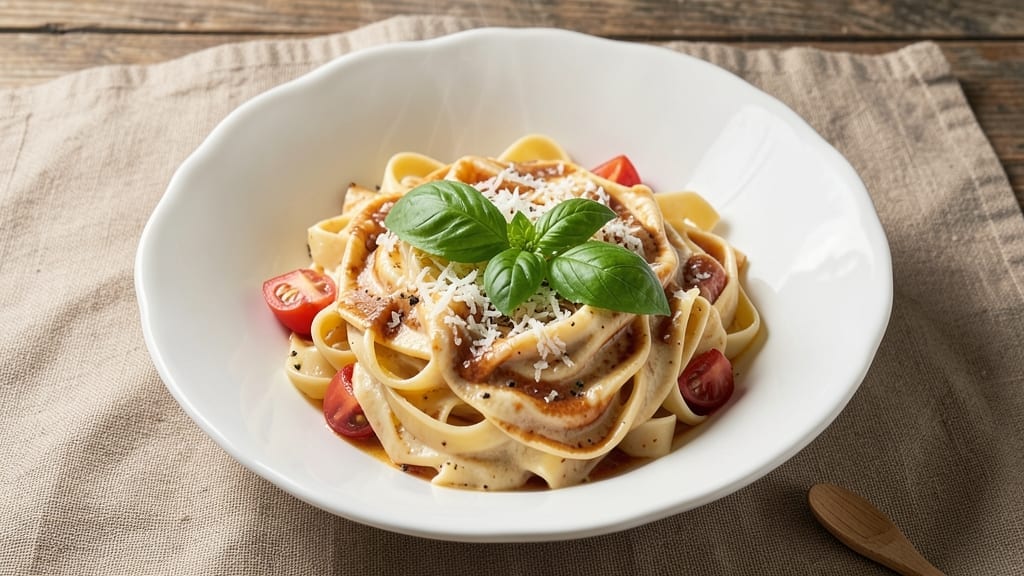
This one-pan baked pasta transforms 4 oz of cream cheese into the star of a rich, velvety sauce with perfectly gooey layers that melt in every bite.
The secret lies in combining it with a simple tomato base and fresh herbs, creating a sauce that clings to al dente pasta while staying creamy and indulgent—no lumps, no effort. I’ve perfected this dish for busy weeknights when you crave restaurant-quality comfort without the fuss.
The magic happens when the cream cheese melts into the simmering sauce, creating a luxurious texture that coats each strand of pasta. No special techniques required—just a single pan, 20 minutes of active prep, and 25 minutes of baking to deliver a dish that feels like a gourmet meal.
The result? A golden, bubbling casserole with tender pasta, melted cheese, and a crispy top that’s impossible to resist.
What you’ll end up with is a foolproof dish that’s creamy yet light, satisfying yet elegant—ideal for feeding a family or impressing guests. The cream cheese adds a subtle tang that balances the richness, while the herbs keep it bright and fresh.
Serve with a simple side salad or crusty bread to soak up every last drop of that irresistible sauce.
This recipe scales effortlessly for larger gatherings, and leftovers reheat beautifully, making it perfect for meal prep. Whether you’re a seasoned cook or just starting out, this baked pasta delivers restaurant-quality results with minimal effort. Let’s get started—your taste buds will thank you.
Ingredients for 4 oz cream cheese
Four ounces of cream cheese plus pantry staples create this decadent one-pan pasta masterpiece.
| Ingredient | Amount | Notes |
|---|---|---|
| Cream Cheese 🧀 | 4 oz | Full-fat, room temperature for blending |
| Pasta 🍝 | 12 oz | Short shape like penne or fusilli |
| Crushed Tomatoes 🍅 | 1 cup | Canned, no salt added preferred |
| Heavy Cream 🥛 | ½ cup | Full-fat for richness |
| Parmesan Cheese 🧀 | ½ cup | Freshly grated, fine texture |
| Fresh Basil 🌿 | ¼ cup | Chopped, stems removed |
| Garlic Cloves 🧄 | 3 cloves | Minced, fresh preferred |
| Olive Oil 🫒 | 2 tbsp | Extra-virgin for best flavor |
| Butter 🧈 | 2 tbsp | Unsalted, for crispy topping |
| Salt 🧂 | ½ tsp | Kosher or sea salt |
| Black Pepper 🌶️ | ¼ tsp | Freshly ground preferred |
| Red Pepper Flakes 🔥 | ¼ tsp | Optional, for heat |
| Breadcrumbs 🍞 | ¼ cup | Panko for extra crunch |
The cream cheese is the star here, so Philadelphia brand or a high-quality European-style is worth the splurge. Room temperature is key—it blends smoother and melts perfectly into the sauce. I always grab the 16-ounce tub from the refrigerated section at Whole Foods or Trader Joe’s—it’s the most consistent texture. For the pasta, Barilla penne or De Cecco fusilli are my go-tos, but any short shape works. The crushed tomatoes? Muir Glen organic is my secret weapon—no added salt, just pure tomato flavor. Fresh basil is ideal, but if you’re using dried, cut the amount to one-third of what’s listed.
No cream cheese? Ricotta or mascarpone works in a pinch, though the texture will be slightly different. Heavy cream can be swapped for half-and-half if you’re watching calories, but you’ll lose some richness. The Parmesan needs to be freshly grated—pre-shredded gets clumpy. For the garlic, fresh is non-negotiable—jarred garlic has a completely different flavor. No fresh basil? Italian seasoning at half the amount works, but it won’t have that same bright punch. The breadcrumbs can be regular, but panko gives you that perfect crispy topping. Pro tip: Toast the breadcrumbs in the oven for 5 minutes before adding to the pan—they’ll be even crunchier.
This dish reheats like a dream—just cover with foil and warm in the oven for 10-15 minutes. Leftovers keep for 3-4 days in the fridge, and freezes beautifully for up to 3 months. I always make a double batch because it disappears so fast. For meal prep, portion into individual containers with a sprinkle of extra Parmesan on top—it’s the perfect grab-and-go lunch. The sauce thickens as it cools, so if it seems too thick when reheating, just add a splash of warm water or milk to loosen it up.
Why You’ll Love This Recipe
- Here’s what sold me: that velvety cream cheese melts into the tomatoes like a hug, while the heavy cream makes it dangerously smooth. The Parmesan? A sprinkle at the end turns it from “dinner” to “I’d eat this for breakfast.” Honestly, it’s the kind of flavor that makes you pause mid-bite—like when you realize your usual takeout just isn’t cutting it anymore.
- No-Fuss Assembly: Between us, this recipe is the kind of dish where you can literally measure while chatting with someone else. Four ounces of cream cheese swirled into crushed tomatoes and heavy cream? That’s it. No peeling, dicing, or waiting for onions to soften—just stir, simmer, and toss with pasta. I’ve made it at 6:30 PM on a Tuesday with one hand tied behind my back (metaphorically, of course).
- Rich Without Effort: Here’s what sold me: that velvety cream cheese melts into the tomatoes like a hug, while the heavy cream makes it dangerously smooth. The Parmesan? A sprinkle at the end turns it from “dinner” to “I’d eat this for breakfast.” Honestly, it’s the kind of flavor that makes you pause mid-bite—like when you realize your usual takeout just isn’t cutting it anymore.
- Weeknight to Potluck: This is my go-to when I need something that works for anything: a lazy Thursday night, a last-minute potluck, or even a fancy-ish dinner when I’m too tired to impress. Double the batch? Easy. Freeze half? Even easier. My college roommate’s boyfriend once called it “fancy enough for a date,” and I’ve been using that line ever since.
Step-by-step instructions for one-pan baked pasta with gooey layers
Here’s how to create a restaurant-worthy baked pasta using just one pan—rich, cheesy, and packed with flavor.
Cook the Pasta Al Dente and Prepare the Sauce Base
Bring a large pot of water to a rolling boil and add the 12 oz pasta along with 0.5 tsp salt. Cook until 1 minute before the package instructions call for al dente—you want it to finish cooking in the oven. Reserve 1 cup of pasta water before draining.
While the pasta cooks, heat 2 tbsp olive oil in a large oven-safe skillet over medium heat. Add the 3 cloves minced garlic and sauté for 30 seconds until fragrant but not browned. Pour in the 1 cup crushed tomatoes and simmer for 3-4 minutes until slightly thickened. Remove from heat and stir in 0.5 cup heavy cream, 0.5 tsp salt, and 0.25 tsp black pepper. This creates the velvety sauce foundation.
Create the Cream Cheese Mixture
In a medium bowl, combine the 4 oz cream cheese (at room temperature), 0.5 cup freshly grated Parmesan cheese, and 0.25 tsp red pepper flakes (if using). Mix until smooth and creamy—this is the secret to those irresistible gooey layers. If the mixture seems too thick, add 1-2 tablespoons of reserved pasta water to loosen it.
Here’s the thing—room temperature cream cheese blends seamlessly without clumping. If you’re using cold cream cheese, microwave it for 10-15 seconds first to soften it up. This step ensures your pasta gets that luxurious, velvety texture in every bite.
Assemble the Pasta in Layers
Return the drained pasta to the skillet with the tomato-cream sauce. Stir gently to coat every strand, adding 2-3 tablespoons of reserved pasta water as needed to create a silky consistency. Spread the pasta evenly in the pan, creating a single layer.
Sprinkle half of the 0.25 cup chopped fresh basil and half of the 0.25 cup breadcrumbs over the pasta. Then spread the cream cheese mixture evenly across the top. Finish with the remaining basil and breadcrumbs, pressing down gently to create a crispy, golden crust. This layering technique is what makes the dish so satisfying—each bite delivers creamy, cheesy, and crispy textures.
Bake to Golden Perfection
Dot the top with 2 tbsp unsalted butter and transfer the skillet to a 400°F preheated oven. Bake for 20-25 minutes until the top is deep golden brown and the edges are bubbling. You’ll see the breadcrumbs turn crispy and the cheese develop a beautiful caramelized crust—this is when you know it’s ready.
Don’t walk away during the last 5 minutes—keep an eye on it to prevent over-browning. If the top browns too quickly, tent loosely with foil. The internal temperature should reach 165°F when checked with an instant-read thermometer. This ensures the pasta is fully heated through while maintaining that perfect creamy texture.
Rest and Serve with Fresh Herbs
Remove the skillet from the oven and let the pasta rest for 5 minutes before serving. This resting period allows the juices to redistribute, preventing a runny dish. The cheese will set slightly, giving you clean slices that hold their shape.
Garnish each serving with an extra sprinkle of fresh basil and a crack of black pepper. Serve immediately with a simple arugula salad or crusty bread to soak up any remaining sauce. The contrast between the crispy breadcrumb topping, creamy cheese layers, and tender pasta makes this dish irresistible—every bite delivers that perfect balance of textures and flavors.
Pro Tips For Making 4 Oz Cream Cheese
- SOFTEN THE CREAM CHEESE FIRST: Take that block of cream cheese out of the fridge 30 minutes before using—no, not just to “soften” but to make it smooth. I used to force room-temperature cheese into the saucepan and end up with lumps that wouldn’t melt, no matter how long I stirred. A slightly warm, pliable block blends into the crushed tomatoes like butter.
- SIMMER THE SAUCE LOW: Once you add the heavy cream, drop the heat to a bare simmer—think tiny bubbles, not rolling. I learned this after watching my sauce split into a greasy, curdled mess twice. Low and slow keeps the cream from breaking and lets the cream cheese fully emulsify with the tomatoes.
- SALT THE PASTA WATER: Toss in that pinch of salt before the pasta hits the water—yes, even if your recipe calls for it later. I skipped this once and the sauce clung to the pasta like glue, no matter how much I tossed. Salted water = better flavor distribution and less sticky pasta.
- USE GRATED PARMESAN: Skip the pre-shredded stuff—it’s coated with anti-caking agents that make it behave like sand in your sauce. Freshly grated Parmesan melts better and adds that sharp, salty punch the recipe needs. (Pro move: Toast the grated cheese in a dry pan for 30 seconds first—it deepens the flavor.)
Common mistakes when making this dish
Room Temp Cream Cheese
Skipping the room-temperature step is the #1 mistake I see—cold cream cheese clumps like a brick in your sauce. Always let your 4 oz cream cheese sit at room temperature for 30-45 minutes before using. Pro tip: Cut the block into smaller pieces for faster softening.
If you’re in a rush, microwave it for 10-15 seconds (just until pliable), then let it cool slightly before mixing. Cold cream cheese won’t blend smoothly and can create a grainy texture in your dish. 🧀
Overmixing the Sauce
Once you add the cream cheese to your sauce, resist the urge to overmix. Stir just until fully combined—overworking creates a tough, rubbery texture instead of that silky, velvety consistency we want. I use a rubber spatula and mix in gentle circular motions.
If your sauce starts looking thick, add 1 tbsp reserved pasta water at a time until it reaches a pourable consistency. The goal is to coat the pasta evenly without over-developing the gluten.
Skipping Pasta Water
Never skip adding reserved pasta water to your sauce—it’s the secret to that perfect silky texture. When you drain pasta, always reserve 1 cup of starchy pasta water.
The starch acts as a natural emulsifier, preventing the cream cheese from curdling and helping the sauce cling beautifully to each strand. If your sauce looks too thick during assembly, add 1-2 tbsp more as needed. This is especially important when working with rich, dairy-heavy sauces like this one.
Uneven Layering
The magic of this dish comes from proper layering, so don’t just dump everything in the pan. Spread your pasta in an even single layer first, then create a cheese blanket by spreading the cream cheese mixture evenly across the top.
Uneven layers lead to dry spots or a runny mess. I like to use the back of a spoon to create gentle swirls in the sauce before adding the breadcrumb topping. This ensures every bite gets that perfect combination of creamy, cheesy, and crispy textures.
Overbaking the Top
Watch that breadcrumb topping like a hawk—it burns faster than you think! The moment those breadcrumbs turn golden brown is when they’re perfect, but they can go from delicious to burnt in just 2-3 minutes.
If your oven runs hot, tent the pan loosely with foil during the last 5-10 minutes of baking. The internal temperature should reach 165°F, but don’t rely solely on the thermometer—keep an eye on that golden crust. A beautiful caramelized top is what makes this dish look restaurant-worthy!
Serving Too Soon
I can’t tell you how many times I’ve seen people serve this dish immediately after baking—big mistake! Let your pasta rest for 5 minutes before serving. This crucial step allows the juices to redistribute throughout the dish, preventing a runny mess when you cut into it.
The cheese will set slightly, giving you clean slices that hold their shape beautifully. Trust me, those 5 minutes make all the difference between a beautiful presentation and a saucy disaster. 💫
Nutrition facts
Frequently asked questions
Can I substitute cream cheese with another type of cheese?
You can try ricotta or mascarpone as substitutes, but the texture will be slightly different. These cheeses are creamier but may not melt as smoothly as cream cheese. For a closer match, use 1/2 cup cottage cheese blended with 2 tbsp milk—it mimics the tangy creaminess better. Always adjust seasonings if using a different cheese.
How do I prevent the breadcrumb topping from getting soggy?
Toast the breadcrumbs in the oven at 375°F for 5 minutes before adding them to the pan. This creates a crispy base that resists moisture. Also, spread them evenly and avoid piling too thickly—just enough to create a golden crust. Pressing down gently with the back of a spoon helps too.
Can I make this recipe ahead of time?
Assemble the dish up to 24 hours ahead and refrigerate uncovered. Before baking, let it sit at room temperature for 30 minutes to even out temperatures. Bake as directed, but reduce the temperature to 375°F and bake for 5-10 minutes longer to crisp the topping again.
What if I don’t have fresh basil?
No problem! Use 1 tsp dried basil instead, but reduce the amount by 1/3 since dried herbs are more concentrated. For extra flavor, add 1/2 tsp dried oregano or 1/4 tsp red pepper flakes to compensate. The dish will still taste delicious—just slightly different in aroma.
How do I adjust this recipe for a larger crowd?
Double all ingredients and use a 12-inch oven-safe skillet or 9×13-inch baking dish. For best results, spread the pasta in a single layer and bake at 375°F for 25-30 minutes, tenting with foil if needed. The key is maintaining even thickness—don’t overcrowd the pan or the center may stay undercooked.

- 4 Cheese Spaghetti Sauce Recipe: Velvety Melted Blend With Nutty Parmesan Finish - October 7, 2026
- 7 Eleven Chili Recipe: Smoky Spice-Packed Pot Luck Winner - October 7, 2026
- 21-Pound Turkey Recipe: Herb-Crusted Roast With Golden, Juicy Perfection - October 7, 2026