
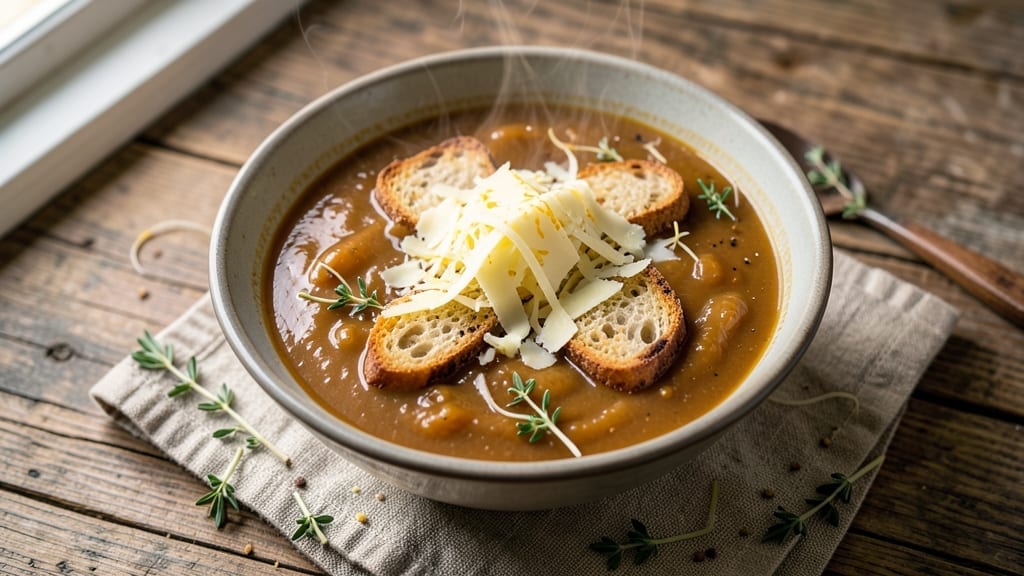
This 5-star onion soup recipe transforms humble onions into a symphony of caramelized sweetness and Gruyère melt magic that rivals your favorite bistro. The secret lies in slow-sautéing onions until they develop a deep, golden fond—this rich base builds layers of flavor that no shortcut can replicate.
What starts as simple onion slices becomes a velvety, aromatic foundation that elevates the entire dish.
Professional techniques make all the difference here: proper deglazing with white wine captures every caramelized bit, while a slow simmer with beef broth develops depth of flavor. Toasting the bread until crispy ensures it holds up to the molten cheese, and the Gruyère’s nutty richness melts into perfect, stretchy strands.
Every step is designed to deliver restaurant-quality results at home.
The final result is a bowl of onion soup that’s impossible to resist—golden caramelized onions floating in a velvety broth, topped with crispy bread and gooey Gruyère cheese.
The aroma alone will have everyone gathering around your table, while the first bite delivers that perfect balance of sweet, savory, and umami. This is comfort food elevated to fine dining.
Perfect for chilly evenings, holiday gatherings, or when you want to impress dinner guests without complicated techniques. The recipe scales beautifully for crowds, and leftovers reheat just as well. Let’s create this showstopper that will have everyone asking for seconds—and the recipe.
Ingredients for 5 star onion soup
Golden caramelized onions, velvety broth, and Gruyère melt magic—this is your bistro-worthy onion soup in a bowl.
| Ingredient | Amount | Notes |
|---|---|---|
| Yellow Onions 🧅 | 4 large | Sliced into 1/4-inch thick rounds |
| Unsalted Butter 🧈 | 4 tbsp | High-quality, European preferred |
| All-Purpose Flour 🌾 | 2 tbsp | For thickening the broth |
| Dry White Wine 🍷 | 1 cup | Sauvignon Blanc or Chardonnay |
| Beef Broth 🥫 | 4 cups | Homemade or high-quality store-bought |
| Gruyère Cheese 🧀 | 1 ½ cups | Freshly grated, aged variety |
| Baguette 🍞 | 1 whole | Crusty, day-old preferred |
| Garlic Cloves 🧄 | 2 cloves | Minced for deglazing |
| Olive Oil 🫒 | 2 tbsp | For toasting bread |
| Salt 🧂 | 1 tsp | Kosher or sea salt |
| Black Pepper 🌶️ | ½ tsp | Freshly ground |
| Fresh Thyme Leaves 🌿 | ¼ tsp | Dried works in a pinch |
The onions are your star players here—yellow onions develop the best caramelized sweetness. Grab the biggest, firmest ones you can find, preferably from the produce section at Whole Foods or your local farmers’ market. The Gruyère? Don’t skimp on this—look for aged wheels at specialty cheese shops or well-stocked grocery stores. A good rule of thumb: if it smells like a cheese shop, it’s probably good. The baguette should be crusty and slightly stale for maximum crispiness—day-old works perfectly, or toast it yourself for 5 minutes at 375°F until golden.
No white wine? Dry vermouth or apple juice works in a pinch, but the acidity matters here. Fresh thyme is ideal, but dried thyme at one-third the amount gets you close. For the beef broth, homemade is best, but store-bought brands like Kitchen Basics or Pacific Foods are solid backups. The flour is just for thickening—if you’re watching carbs, use cornstarch instead. And that butter? European-style (like Plugrá or Président) has higher fat content for better browning—worth the splurge for this dish.
This soup tastes even better the next day—make a double batch if you can. Store the broth portion in the fridge for up to 5 days, and the bread topping separately. When reheating, add a splash of water or broth to keep it velvety. The bread topping? Toast it fresh before serving—3 minutes at 375°F until golden and crispy. Freeze portions of the broth without cheese for up to 3 months, then add fresh cheese when reheating.
Why You’ll Love This Recipe
- One-Pot Magic: I swear by this—just one pot, no extra dishes. Caramelize those onions in butter until they’re golden and sweet, then toss in flour, wine, and broth. Stir, simmer, and boom—done. The kids can even “help” (read: make a mess) while I keep my eye on the pot.
- Wine Upgrade: That splash of dry white wine? It’s not just fancy—it cuts through the richness of the butter and onions, brightening the whole dish. Honestly, I keep a bottle on hand just for this. The slow simmer lets the flavors meld into something deeper than takeout ever could.
- Leftovers That Shine: This soup tastes even better the next day—if you can resist eating it all. Reheat it gently, top with crispy bread, and serve it for lunch or a quick dinner. Between us, I’ve turned this into a family favorite for lazy Sundays and school-night suppers.
- Budget-Friendly Luxury: Yellow onions and beef broth won’t break the bank, but the result feels like a restaurant dish. The butter and flour create that velvety texture, while the wine adds a touch of sophistication. It’s the kind of recipe that makes you feel like you’re treating yourself without overspending.
Step-by-step instructions for perfect onion soup
Here’s how to transform simple ingredients into restaurant-quality onion soup with a golden, bubbling cheese crust.
Caramelize the Onions to Deep Sweetness
Melt the 4 tbsp unsalted butter in a large Dutch oven over medium-low heat. Add the sliced 4 large yellow onions and the 0.25 tsp fresh thyme leaves, stirring to coat evenly. Reduce heat to low and let them cook undisturbed for 45 minutes, stirring occasionally.
This is where the magic happens—the onions should transform from pale yellow to deep amber, then finally to a rich caramel brown. You’re looking for a thick, jam-like consistency with intense sweetness. If they start to stick, add a splash of water and scrape up those delicious browned bits from the bottom of the pot.
Build the Fond and Deglaze
Once the onions are beautifully caramelized, increase heat to medium and sprinkle the 2 tbsp all-purpose flour over the top. Stir vigorously for 2 minutes until the flour is fully incorporated and the mixture looks like wet sand. This creates a roux that will thicken your soup beautifully.
Pour in the 1 cup dry white wine and the 2 minced garlic cloves, scraping up all those precious browned bits from the bottom. Let it simmer for 3-4 minutes until the wine has completely evaporated and you’re left with a rich, aromatic fond. This step develops the deep, complex flavor that separates good onion soup from extraordinary.
Simmer the Broth to Perfection
Gradually whisk in the 4 cups beef broth, making sure to scrape up any browned bits from the bottom of the pot. Add the 1 tsp salt and 0.5 tsp black pepper. Bring to a gentle simmer and let it cook uncovered for 20-25 minutes, stirring occasionally. The soup should reduce slightly and develop a velvety texture.
Taste and adjust seasoning if needed. You want a balance of sweetness from the caramelized onions and savory depth from the broth. Here’s where it gets fun—taste the onions before adding broth to check their sweetness level. If they’re not sweet enough, let them caramelize another 10 minutes before proceeding.
Toast the Baguette and Assemble
While the soup simmers, cut the 1 whole baguette into 1-inch thick slices. Brush both sides generously with the 2 tbsp olive oil and toast in a 375°F oven for 5-7 minutes until golden and crisp. Keep them warm while you finish the soup.
The key to perfect toasted bread is even browning on both sides. Watch carefully as they toast—they’ll crisp faster than you think. You want that beautiful golden color that indicates perfect crispiness while maintaining some chewiness in the center.
Create the Cheese Crust and Serve
Ladle the hot onion soup into oven-safe bowls, filling each about ¾ full. Top each portion with several slices of the toasted baguette. Sprinkle generously with the 1.5 cups freshly grated Gruyère cheese, pressing down gently so the cheese makes contact with the soup.
Place the bowls in a 400°F oven for 3-5 minutes until the cheese is bubbling and golden brown. Watch carefully—this happens quickly! Remove from the oven and let sit for 1-2 minutes before serving. The cheese should be melted and slightly crispy on top, creating that perfect textural contrast with the creamy soup underneath.
Pro Tips For Making 5 Star Onion Soup
- Sweat, Don’t Burn: Onions need patience—low heat and 10-12 minutes of slow cooking until translucent but not browned. I learned this the hard way: rushing turns them bitter, and you’ll taste it even after the wine and broth. Use a splash of water if they stick, but don’t walk away.
- Use Cold Butter: Add cold unsalted butter to the onions in chunks—it melts gradually and creates a richer roux. My grandmother swore by this, and she was right: the texture stays velvety, not greasy. Skip the pre-melted butter, even if it’s tempting.
- Deglaze Immediately: As soon as the onions release their caramelized fond, hit the pan with that white wine—hot—and let it bubble for 30 seconds. I used to wait, and the flavor just… vanished. That’s when the soup loses its depth.
- Broth, Then Simmer Low: Pour in the beef broth after the wine has fully evaporated, then reduce to a bare simmer. I was skeptical until I tried it: high heat later makes the onions mushy, but low and slow keeps them tender-crisp. Five minutes is enough—set a timer.
Essential equipment for this dish
Dutch Oven Essentials
A large Dutch oven is non-negotiable for this recipe—it needs to handle the slow caramelization of onions without burning. I recommend a 5-6 quart model like the Lodge Pre-Seasoned Cast Iron Dutch Oven (it’s my go-to for soups and stews).
The heavy cast iron distributes heat evenly, preventing hot spots that can burn your onions. If you’re using nonstick, avoid aluminum—it conducts heat too quickly and makes precise temperature control difficult. 🔥
Cheese Tools Matter
Freshly grated Gruyère makes all the difference, so invest in a microplane or box grater—pre-shredded cheese contains anti-caking agents that prevent proper melting. I love the Microplane Classic Zester/Grater for this task. When grating, work in batches to keep the cheese cool and prevent it from turning oily.
Store any unused cheese in an airtight container in the fridge for up to 5 days—it keeps its flavor beautifully.
Precision Thermometer
A kitchen thermometer ensures your oven stays at the exact 400°F needed for that perfect cheese crust. The Thermoworks ThermoPop is my favorite—it’s affordable, accurate, and easy to use. For the broth simmer, aim for 195-200°F to develop depth without boiling off too much liquid.
I also use it to check the internal temp of my baguette slices—375°F in the center means they’re perfectly toasted without burning.
Bread Slicing Guide
Use a serrated bread knife or electric knife (like the OXO Good Grips) to slice your baguette into 1-inch thick pieces. The serrations prevent crushing, which keeps the bread’s structure intact during toasting.
For extra crispiness, I like to brush the cut sides with olive oil right before toasting—this creates a golden crust while keeping the interior soft. A baking sheet lined with parchment paper makes cleanup effortless after toasting.
Deglazing Essentials
Your white wine should be dry and acidic—Sauvignon Blanc or Chardonnay work best. A whisk is perfect for scraping up those precious browned bits (fond) from the Dutch oven. I keep a small whisk dedicated to deglazing because it’s easier to clean than a large one.
For the flour, use a sifted all-purpose flour like King Arthur to avoid lumps that can make your soup grainy. A fine-mesh strainer helps if you’re using whole wheat flour for a lighter texture.
Storage Containers
For leftovers, store the broth portion in glass Pyrex containers with tight-sealing lids—they maintain flavor better than plastic. The toasted bread should go in a paper bag at room temperature for up to 2 days to stay crisp.
When reheating, I add 1 tbsp water per cup of broth to prevent drying out. For freezing, use quart-sized freezer bags—leave 1 inch headspace to account for expansion, and squeeze out excess air to prevent freezer burn. ✨
Nutrition facts
Frequently asked questions
Can I make this onion soup without wine?
Use 1 cup apple juice or dry vermouth as a substitute—they provide the necessary acidity for deglazing. For a non-alcoholic option, try white grape juice or even a splash of lemon juice. Just remember, the acidity helps dissolve the caramelized bits and brighten the flavors.
How do I prevent the onions from burning?
Keep the heat low and steady—medium-low is ideal. Stir occasionally to distribute heat evenly, and if they start sticking, add a splash of water or broth to deglaze. The key is patience: 45 minutes of slow cooking builds deep sweetness without burning. A Dutch oven helps maintain even heat distribution.
What’s the best way to reheat leftovers?
Reheat just the broth portion (without cheese) on the stovetop over low heat until warm. Add 1 tbsp water per cup to prevent drying. Toast fresh bread and add cheese when serving—this keeps the texture perfect. Never microwave the cheese topping, as it won’t melt properly.
Can I use a different cheese?
Gruyère is ideal for its nutty flavor and meltability, but Comté or Emmental work well too. Avoid pre-shredded cheese—it contains anti-caking agents that prevent proper melting. For a sharper flavor, try Parmigiano-Reggiano, but it won’t melt as smoothly. Always grate fresh for best results.
Why does my soup taste bland?
Blandness usually means the onions weren’t caramelized enough or the broth needs more depth. Try adding 1 tsp soy sauce or 1/2 tsp Worcestershire sauce for umami. For extra richness, stir in 1 tbsp butter at the end. Also, ensure your broth is well-seasoned—homemade or high-quality store-bought makes a big difference.

- 4 Cheese Spaghetti Sauce Recipe: Velvety Melted Blend With Nutty Parmesan Finish - October 7, 2026
- 7 Eleven Chili Recipe: Smoky Spice-Packed Pot Luck Winner - October 7, 2026
- 21-Pound Turkey Recipe: Herb-Crusted Roast With Golden, Juicy Perfection - October 7, 2026