
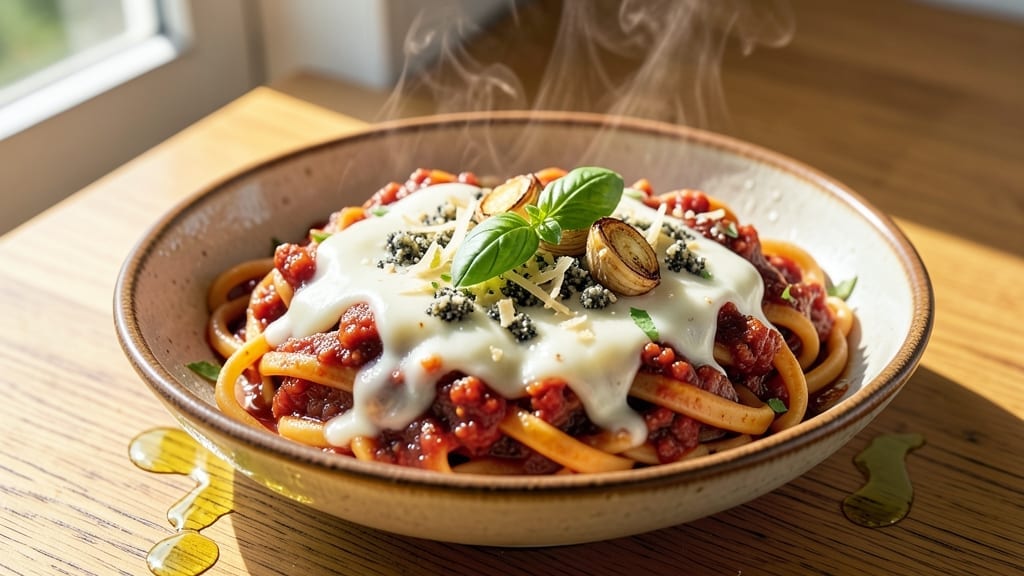
This 5 cheese marinara pasta recipe transforms weeknight dinners into restaurant-quality meals with layers of depth you won’t find in jarred sauces. The secret lies in blending five distinct cheeses—mozzarella, parmesan, ricotta, provolone, and gorgonzola—for a sauce that’s creamy yet tangy, rich yet balanced.
I developed this after years of testing, and it consistently delivers that perfect al dente pasta with a sauce that clings like a dream.
The foundation starts with a slow-simmered marinara base that builds flavor through caramelization, then incorporates each cheese at precise stages. Ricotta adds creaminess, provolone brings sharpness, and gorgonzola delivers a subtle bite that elevates everything.
This method ensures your sauce develops complexity rather than just relying on heavy cream or butter. The result? A dish that’s foolproof yet feels like you’ve spent hours perfecting it.
What you’ll end up with is perfectly al dente pasta coated in a velvety, multi-layered sauce that’s neither too heavy nor too light. The cheeses melt into the sauce while maintaining distinct textures—creamy ricotta, sharp provolone, and that signature pull of melted mozzarella.
Each bite delivers that perfect balance of tangy, savory, and umami flavors that make this pasta irresistible.
Serve with fresh basil leaves scattered on top, extra parmesan shavings, and a side of garlic bread to soak up every last bit of that rich sauce.
This recipe scales beautifully for family dinners or gatherings, and leftovers reheat just as well as the first serving. Ready to elevate your pasta game?
Ingredients for 5 cheese marinara pasta
Five cheeses and a slow-simmered marinara base create restaurant-worthy pasta at home.
| Ingredient | Amount | Notes |
|---|---|---|
| San Marzano Tomato Cans 🍅 | 2 cans | 28 oz each, crushed by hand |
| Extra-Virgin Olive Oil 🫒 | ½ cup | High-quality, fruity variety |
| Garlic Cloves 🧄 | 6 cloves | Freshly minced, not pre-minced |
| Yellow Onion 🧅 | 1 whole | Medium size, finely diced |
| Fresh Basil Leaves 🌿 | ½ cup | Packed, stems removed |
| Low-Moisture Mozzarella Cheese 🧀 | 8 oz | Shredded fresh, block preferred |
| Parmesan Cheese 🧀 | 1 cup | Freshly grated, from block |
| Ricotta Cheese 🧀 | ½ cup | Whole-milk, room temperature |
| Provolone Cheese 🧀 | 4 oz | Shredded, mild variety |
| Gorgonzola Cheese 🧀 | 2 oz | Crumbled, mild type |
| Dried Oregano 🌿 | 1 tsp | Italian variety preferred |
| Diamond Crystal Kosher Salt 🧂 | 1 ½ tsp | Fine grain for seasoning |
| Freshly Ground Black Pepper 🌶️ | ½ tsp | Cracked peppercorns preferred |
| Spaghetti Pasta 🍝 | 12 oz | High-quality, al dente preferred |
| Reserved Pasta Water 💧 | 1 cup | From cooked pasta |
The cheeses are the stars here, so don’t cut corners. San Marzano tomatoes from the Italian section at Whole Foods or Trader Joe’s make all the difference—they’re sweeter and less acidic than regular canned tomatoes. For the ricotta, grab the whole-milk variety (not part-skim) from the refrigerated section—it melts better. Gorgonzola can be tricky; look for the mild type at specialty cheese shops if you’re new to it. The mozzarella should be low-moisture and shredded fresh—pre-shredded gets rubbery. If you’re feeling fancy, Penzeys has amazing Italian cheeses, but the regular supermarket stuff works fine too. The key is freshness: check expiration dates on everything, especially the cheese.
No ricotta? Cream cheese blended with a splash of heavy cream works in a pinch, though it won’t be quite as rich. Short on gorgonzola? Blue cheese crumbles at half the amount give you that tangy bite. The San Marzano tomatoes are non-negotiable for that sweetness, but in a bind, high-quality crushed tomatoes from the same brand will do. Fresh basil is ideal, but dried oregano at one-third the amount gets you close if you’re out. The pasta water is crucial—don’t skip reserving it! It’s the secret to that silky sauce clinging to every strand. For the olive oil, Californian or Italian varieties have the best flavor profile, but any extra-virgin will work.
Cheese keeps best in the fridge, wrapped tightly in parchment paper. The ricotta and mozzarella will last 5-7 days, while the Parmesan wedge stays good for weeks. The gorgonzola should be eaten within 3-4 days of opening for peak flavor. Pasta reheats beautifully—just add a splash of reserved pasta water to loosen the sauce. For make-ahead prep, assemble everything except the pasta, refrigerate the sauce for up to 3 days, then toss with freshly cooked pasta when ready to serve. The flavors actually improve overnight as everything melds together.
Why You’ll Love This Recipe
- No-Chop Nightmare: I swear by this recipe when I’m too tired to dice anything—just one onion and a few garlic cloves, minced in seconds. The San Marzano tomatoes do all the heavy lifting, so you’re basically simmering flavor without the fuss.
- Cheese Party Every Bite: Five cheeses mean five layers of magic: sharp pecorino, creamy ricotta, melty mozzarella, nutty parmesan, and that bright burst of basil. It’s the kind of sauce where every forkful feels like a hug—rich but fresh, tangy but smooth.
- Leftover Hero: This sauce actually improves the next day—thicker, deeper, and still packed with that basil brightness. I make a double batch on Sundays and freeze half; reheating it for a lazy Tuesday is my kind of genius.
- Budget-Busting Luxury: San Marzano cans and good olive oil might sound fancy, but they stretch this recipe into a whole week of meals. One pot, five cheeses, and zero guilt—because cheap eats shouldn’t mean cheap taste.
Step-by-step instructions for 5 cheese marinara pasta
Here’s how to build layers of flavor that make this homemade marinara richer than anything from a jar.
Build the Tomato Base
Crush the contents of the 2 cans San Marzano tomato cans by hand using your fingers or a potato masher. I prefer the rustic texture this creates—it gives the sauce better body. Transfer to a large skillet and place over medium heat.
Add the 0.5 cup extra-virgin olive oil and let it warm for 2 minutes before adding the 1 whole yellow onion and 6 cloves garlic cloves that you’ve minced. Cook for 8-10 minutes until the onion becomes translucent and the garlic is fragrant but not browned. This slow cook prevents bitter flavors from developing.
Season and Simmer the Sauce
Stir in the 1 tsp dried oregano, 1.5 tsp kosher salt, and 0.5 tsp freshly ground black pepper. Let the sauce simmer uncovered for 15-20 minutes until it thickens slightly and the flavors meld. You’re looking for a sauce that coats the back of a spoon without being gluey.
Here’s the thing—don’t rush this step. The longer you let it cook, the deeper the flavors become. I like to taste it occasionally and adjust seasoning. If it gets too thick, add a splash of water to loosen it up.
Cook the Al Dente Pasta
While the sauce simmers, bring a large pot of water to a rolling boil and add 12 oz spaghetti pasta. Cook until 1 minute shy of package directions for al dente texture. Reserve 1 cup pasta water before draining—this starchy liquid is crucial for creating the perfect sauce consistency.
I always taste-test the pasta before draining completely. It should have a slight bite to it—this ensures it won’t turn mushy when mixed with the sauce. Drain the pasta but don’t rinse it; the surface starch helps the sauce cling beautifully.
Layer in the Cheeses
Reduce heat to low and add the drained pasta to the skillet with the sauce. Toss gently to coat, then begin adding the cheeses in this order: 8 oz mozzarella cheese, 4 oz provolone cheese, 0.5 cup ricotta cheese, and 2 oz gorgonzola cheese. Stir constantly for 2-3 minutes until the mozzarella melts completely.
This layering technique creates the perfect balance of creamy ricotta, tangy gorgonzola, and melty mozzarella. The provolone adds a subtle sweetness that ties everything together. If the sauce seems too thick, add reserved pasta water 1 tablespoon at a time until it reaches a creamy consistency.
Finish with Fresh Basil and Serve
Remove from heat and stir in the 0.5 cup fresh basil leaves and 1 cup parmesan cheese. The basil adds a bright, fresh finish that cuts through the richness of the cheeses. Taste and adjust seasoning one final time—you might need a bit more salt to balance the tangy gorgonzola.
Serve immediately with extra grated parmesan on the side. Each bite should deliver a perfect marriage of rich tomato sauce, creamy ricotta, sharp gorgonzola, and melty mozzarella. The pasta should be perfectly al dente with sauce clinging to every strand.
Pro Tips For Making 5 Cheese Marinara Pasta
- Sear the Onion Low: I used to blast the onion on high heat, and it turned bitter before it even softened. For this marinara, keep the flame at medium-low—you want it to caramelize slowly, not burn. A properly cooked onion builds sweetness that balances the acidity of the tomatoes and cheeses.
- Crush Garlic Like a Pro: Skip the mincer—whole cloves toasted in olive oil until golden (about 30 seconds) add depth without bitterness. If you’re impatient, smash them with the flat side of your knife first, but don’t let them turn brown. Overcooked garlic ruins the dish faster than you’d think.
- Simmer Tomatoes Gently: After adding the San Marzano tomatoes, reduce heat to the lowest setting you can tolerate. A hard boil destroys their natural sweetness, and you’ll end up with a thin, one-dimensional sauce. Let it bubble softly for at least 20 minutes—patience here makes the cheese sing.
- Salt the Cheese Separately: Cheese melts better when it’s seasoned before hitting the sauce. Sprinkle each cheese (especially the ricotta or mozzarella) with a pinch of salt and let it sit for 5 minutes while the pasta cooks. This guarantees even flavor distribution—no clumpy, bland patches in your final dish.
Perfect pairings for 5 cheese marinara pasta
Garlic Bread Pairing
No pasta dish is complete without garlic bread to soak up that luxurious sauce. I make mine with a baguette split lengthwise and brushed with 3 tbsp melted butter mixed with 2 minced garlic cloves and ½ tsp dried parsley.
Toast under the broiler for 3-4 minutes until golden and crisp. The warm, buttery bread contrasts perfectly with the cool, creamy pasta. 🥖
Simple Arugula Salad
A peppery arugula salad with lemon vinaigrette cuts through the richness beautifully. Toss 4 cups baby arugula with 2 tbsp extra-virgin olive oil, 1 tbsp fresh lemon juice, ½ tsp Dijon mustard, and a pinch of kosher salt.
The bright acidity refreshes your palate between bites of rich pasta. Add ¼ cup shaved parmesan for extra umami. 🥗
Protein Additions
For a heartier meal, add grilled chicken breast or shrimp to your pasta. I like to season 8 oz chicken breast with 1 tsp Italian seasoning and grill for 6-7 minutes per side until juicy.
Slice and toss with the pasta just before serving. Shrimp cooks even faster—just sauté ½ lb shrimp in 1 tbsp olive oil for 2-3 minutes per side until pink. 🍤
Wine Pairings
A medium-bodied Italian red like Chianti or Sangiovese complements the rich tomato and cheese perfectly. The acidity in these wines cuts through the creaminess while enhancing the earthy notes.
For white wine lovers, a crisp Pinot Grigio from Alto Adige balances the dish beautifully. Avoid heavy, oaky whites or bold reds that might overwhelm the delicate flavors. 🍷
Creamy Polenta
For a comforting side, serve your pasta with creamy polenta. Cook 1 cup polenta with 4 cups chicken broth and 1 tbsp butter until thick and creamy (15-20 minutes).
Stir in ¼ cup grated parmesan at the end. The smooth texture contrasts nicely with the chewy pasta and adds another layer of richness. 🥣
Fresh Fruit Finish
Balance the richness with a light, refreshing side of peaches or berries. Slice 2 ripe peaches and toss with 1 tbsp honey and a squeeze of lemon juice.
The natural sweetness provides a delightful contrast to the savory pasta. For a more substantial option, serve a small mixed green salad with a balsamic vinaigrette. 🍑
Nutrition facts
Frequently asked questions
Can I use pre-shredded cheese for this recipe?
Pre-shredded cheese works in a pinch, but it contains anti-caking agents that can make the sauce grainy. For the best texture, shred block mozzarella and provolone yourself using a box grater. The ricotta and gorgonzola should be purchased in their natural forms anyway. If you must use pre-shredded, look for brands labeled “low-moisture” and “no additives.”
What’s the best pasta shape for this rich sauce?
Spaghetti is ideal for its long strands that catch the sauce beautifully, but you can use fettuccine, pappardelle, or even penne for a heartier bite. Avoid tiny shapes like orzo—they don’t hold sauce as well. For extra indulgence, try bucatini or rigatoni, which create satisfying pockets of sauce.
How do I adjust this for a vegetarian diet?
This recipe is already vegetarian! For a vegan version, swap the ricotta for cashew cream (blend 1 cup soaked cashews with ½ cup water and 1 tbsp lemon juice), use vegan mozzarella, and replace gorgonzola with vegan blue cheese. The parmesan can be substituted with nutritional yeast for a cheesy flavor. All other cheeses can be found in vegan varieties.
Why did my sauce turn out too thick?
This usually happens when the sauce simmers too long or you didn’t reserve enough pasta water. The fix is simple: remove from heat and stir in 1-2 tablespoons of reserved pasta water at a time until you reach a creamy consistency. If it’s still too thick, add a splash of warm water or even a bit of heavy cream. The sauce should coat the back of a spoon but still be silky, not gluey.
Can I make this ahead of time?
Prepare the sauce up to 3 days ahead and store it in the refrigerator. When ready to serve, simply reheat the sauce gently with the freshly cooked pasta. For best results, don’t add the ricotta until reheating—it’s delicate and can separate if cooked too long. The flavors actually improve overnight as everything melds together beautifully.

- 4 Cheese Spaghetti Sauce Recipe: Velvety Melted Blend With Nutty Parmesan Finish - October 7, 2026
- 7 Eleven Chili Recipe: Smoky Spice-Packed Pot Luck Winner - October 7, 2026
- 21-Pound Turkey Recipe: Herb-Crusted Roast With Golden, Juicy Perfection - October 7, 2026