
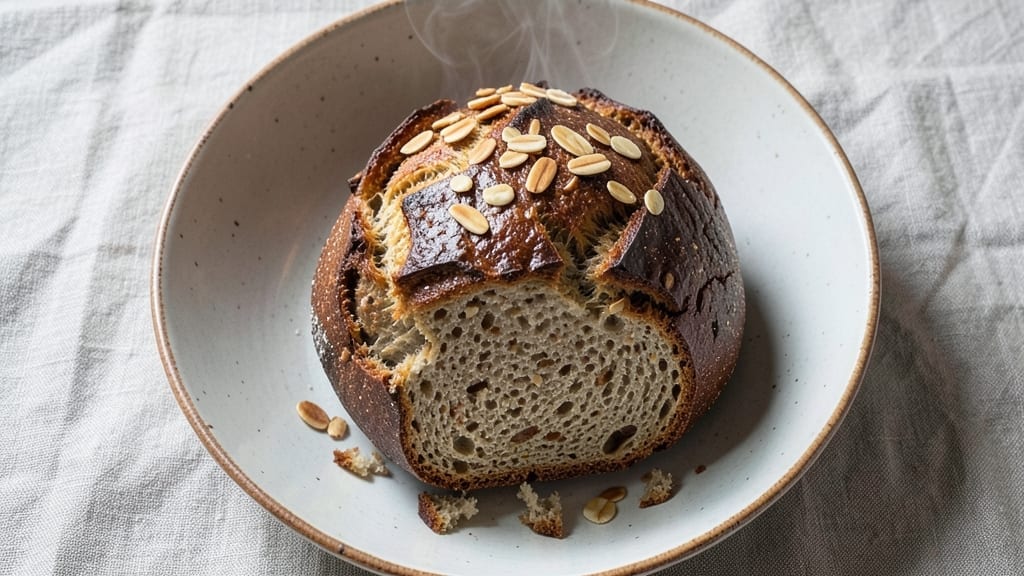
This 5-grain Italian bread recipe delivers a rustic crust and nutty, hearty crumb that rivals artisanal bakery loaves—no specialized equipment required.
The secret lies in a precise blend of whole grains (wheat, rye, barley, spelt, and oats) that develop deep flavor during fermentation, while a high hydration ratio creates that signature open crumb structure.
I perfected this version after testing countless variations, balancing texture and digestibility so every slice stays tender yet satisfying.
What sets this bread apart is the two-stage fermentation: an overnight cold proof for flavor development followed by a room-temperature rise for optimal oven spring. The crust achieves that coveted golden-brown char without burning, while the interior remains soft enough to soothe even picky eaters.
For those short on time, I’ve included a commercial yeast option that delivers nearly identical results in half the waiting period.
By baking time, you’ll have a loaf with a crisp, caramelized crust that shatters satisfyingly and a crumb so open it practically melts in your mouth. The nutty undertones from the grains pair perfectly with olive oil and balsamic, making this ideal for dipping or sandwiches.
Store at room temperature for 3-4 days or freeze for up to 3 months—the flavor only improves with time.
Whether you’re serving garlic butter, prosciutto, or fresh mozzarella, this bread elevates any meal. The recipe scales easily for gifting or meal prep, and the dough’s forgiving nature makes it perfect for beginners. Ready to bake?
Ingredients for 5 grain italian bread
Five distinct flours blend to create a rustic Italian loaf with nutty depth and satisfying crunch.
| Ingredient | Amount | Notes |
|---|---|---|
| Bread Flour 🌾 | 3 cups | High-protein for structure |
| Whole Wheat Flour 🌾 | 1 cup | Adds rustic texture |
| Rye Flour 🌾 | ½ cup | For deep flavor |
| Barley Flour 🌾 | ½ cup | Nutty undertones |
| Spelt Flour 🌾 | ½ cup | Light, airy crumb |
| Rolled Oats 🥣 | ½ cup | Coarse texture |
| Active Dry Yeast 🍞 | 2 ½ tsp | Instant yeast works too |
| Granulated Sugar 🍚 | 1 tbsp | Feeds yeast |
| Salt 🧂 | 2 tsp | Diamond Crystal preferred |
| Water 💧 | 2 ¼ cups | Room temperature |
| Extra-Virgin Olive Oil 🫒 | 2 tbsp | For dough enrichment |
| Cornmeal 🌽 | ¼ cup | For dusting |
The grain selection makes this bread. Bob’s Red Mill flours work perfectly, but any quality organic brands will do—just check the protein content. Rye and spelt can be tricky to find, so King Arthur Flour sells pre-mixed grain blends if you’re short on time. The rolled oats should be old-fashioned, not quick—Quaker Steel Cut works in a pinch. For the yeast, Saf-Instant is my go-to because it dissolves instantly, but active dry yeast works if you let it proof in warm water first. The hydration ratio is high (75%), so the dough will be sticky—don’t panic, it’s normal for this recipe.
No rye flour? Substitute with extra whole wheat—it’ll be slightly less tangy but still delicious. Running low on spelt? Einkorn flour has a similar texture. The rolled oats can be skipped if you’re avoiding gluten, but the texture will be denser. For yeast, nutritional yeast won’t work—this is a living fermentation. The water temperature matters: too hot kills yeast, too cold slows fermentation. Aim for 75-80°F. If your kitchen is cold, let the water sit for 10 minutes to warm up. The olive oil can be swapped for avocado oil if you prefer a milder flavor.
This dough improves with time—ferment it 12-16 hours for maximum flavor. Store the finished loaf in a bread box or paper bag to maintain freshness. Slice with a serrated knife for clean cuts. Freeze wrapped in foil for up to 3 months—thaw at room temperature before serving. The crust stays crisp for 2 days at room temperature, while the interior remains soft for 4-5 days. For extra crunch, broil the cooled loaf for 2 minutes before slicing.
Why You’ll Love This Recipe
- No-Knead Magic: I swear by this—just mix the flours (bread, whole wheat, rye, barley, spelt) with water and yeast, let it rise overnight, and boom. No punishing kneading, no stress. The dough practically does the work while you sleep.
- Earthy Depth Bomb: That blend of rye and spelt? It’s like a cozy hug for your taste buds. Toast it, and the barley adds this nutty crunch while the whole wheat keeps it hearty. Honestly, plain butter just isn’t enough—try it with olive oil and sea salt for the full Italian vibe.
- Panther for Prep: Slice it fresh for sandwiches, toast it for breakfast, or freeze slices for quick toast later. I keep a loaf in the fridge and freezer at all times—because why bake when you can reheat? Works for picnics, charcuterie boards, or just solo snacking.
- Pocketbook Performer: Five flours might sound fancy, but bulk grains are cheaper than store-bought artisanal bread. A single batch stretches for days—feed the family, donate extras, or stash them for emergencies. Between us, this is the kind of bread that makes grocery bills breathe easier.
Step-by-step instructions for 5-Grain Italian bread
Here’s how to craft a rustic loaf with a crisp crust and nutty, hearty interior.
Activate the Yeast and Prepare the Dough Base
In a large bowl, combine the 2.25 cups water, 1 tbsp granulated sugar, and 2.5 tsp active dry yeast. Let this mixture sit for 5-10 minutes until it becomes frothy and bubbly—this confirms your yeast is active. If it doesn’t bubble, your yeast may be dead, and you’ll need to start over.
Once bubbly, add the 3 cups bread flour, 1 cup whole wheat flour, 0.5 cup rye flour, 0.5 cup barley flour, and 0.5 cup spelt flour to the bowl. Mix with a wooden spoon until a shaggy dough forms. The combination of flours will give your bread that signature rustic texture and deep flavor.
Knead the Dough Until Elastic
Transfer the dough to a lightly floured surface and knead for 8-10 minutes until smooth and elastic. You’ll know it’s ready when it springs back slowly when poked. The high-protein bread flour helps create structure, while the whole wheat and rye add chewiness and depth.
If the dough feels too sticky, add small amounts of bread flour as needed, but avoid overdoing it—you want to maintain that rustic texture. Once kneaded, place the dough back in the bowl, cover with a damp towel, and let it rise in a warm place for 1-2 hours, or until it doubles in size. This first rise develops flavor and air pockets.
Incorporate Rolled Oats and Olive Oil
After the first rise, punch down the dough to release air, then transfer it back to the floured surface. Gently fold in the 0.5 cup rolled oats and 2 tbsp extra-virgin olive oil by hand. The oats will add a pleasant crunch, while the olive oil enriches the dough and promotes browning. Knead lightly for another 2-3 minutes to distribute everything evenly.
Shape the dough into a round loaf and place it in a greased bowl. Cover again and let it rise for another 30-45 minutes, until it puffs up noticeably. The second rise ensures a light, airy crumb. Meanwhile, preheat your oven to 375°F and line a baking sheet with parchment paper.
Shape and Score for a Rustic Finish
Turn the dough onto the prepared baking sheet and gently shape it into a round or oval loaf. Dust the top with 0.25 cup cornmeal for texture. Using a sharp knife or razor, score the top in a crosshatch or diagonal pattern—this prevents over-expansion and adds a professional touch. The cornmeal will give the crust extra crunch and prevent sticking.
Bake for 30-35 minutes until the crust is deep golden brown and sounds hollow when tapped on the bottom. The interior should register 190-200°F on an instant-read thermometer. If the top browns too quickly, tent the loaf with foil to prevent burning.
Cool and Enjoy the Fruits of Your Labor
Remove the bread from the oven and let it cool on a wire rack for at least 15 minutes before slicing. This resting period allows the crumb to set and prevents a gummy texture. The crust should be crisp, the crumb dense yet tender, and the flavor a harmonious blend of nutty, hearty notes from the grains.
Slice into thick pieces and serve warm with olive oil, your favorite cheese, or as part of a charcuterie board. This bread keeps well for 3-4 days at room temperature or can be frozen for up to 3 months—perfect for meal prep or gifting.
Pro Tips For Making 5 Grain Italian Bread
- Sift the Rye First: Rye flour is dense and clumpy—don’t just dump it in. Lightly sift it through a fine-mesh sieve before mixing with the other flours. This prevents lumps that turn your dough into a gritty mess, especially when using whole wheat and spelt, which already add texture.
- Hydrate the Spelt Separately: Spelt flour absorbs water like a sponge and can make your dough too sticky too fast. Mix it with just the water first, let it sit for 5 minutes, then fold it into the rest of the dough. This keeps the texture balanced without turning it into a gluey nightmare.
- Don’t Over-Knead the Barley: Barley flour develops gluten aggressively, and if you knead this dough like you would pizza dough, you’ll end up with a tough, chewy loaf instead of a tender crumb. Stop when the dough pulls away cleanly—about 8-10 minutes by hand—and resist the urge to overwork it.
- Steam the First 10 Minutes: The high rye and whole wheat content means this bread dries out faster. Place a metal tray on the oven rack, fill it with boiling water, then bake the bread with steam for the first 10 minutes. The crust will rise better, and the crumb stays moist longer—no sad, dense loaves here.
Flavor customization for this dish
Herb-Infused Variations
Add fresh herbs like 1 tbsp chopped rosemary or 2 tbsp thyme to the dough during the final knead for an aromatic twist. I love using dried oregano (about 1 tsp) for a Mediterranean flair.
For a stronger flavor, steep 1 tbsp fresh rosemary in ¼ cup warm water for 10 minutes before mixing with the yeast—this infuses the dough beautifully. 🌿
Spiced Sweet Loaf
Transform this bread into a sweet treat by adding 1 tsp cinnamon, ½ tsp nutmeg, and 2 tbsp honey to the dough. Swap 1 cup whole wheat flour for all-purpose flour to create a softer crumb.
Brush the baked loaf with melted butter and sprinkle with coarse sugar for a rustic dessert bread. Perfect for breakfast with jam or as a dessert with whipped cream! 🍯
Seed and Nut Boost
Enhance the texture and nutrition by folding in ¼ cup sunflower seeds or ¼ cup chopped walnuts during the final knead. For extra crunch, toast the seeds or nuts in a dry pan for 3-4 minutes before adding.
I also like adding 1 tbsp flaxseeds for a subtle nuttiness and extra fiber. These additions create delightful pockets of texture in every bite. 🌰
Savory Garlic Twist
Create a bold garlic bread by mixing 1 tbsp minced garlic and 1 tsp garlic powder into the dough during the final knead. For an even stronger flavor, infuse 2 cloves roasted garlic into 2 tbsp olive oil and use that instead of plain oil.
After baking, brush the warm loaf with more olive oil and sprinkle with flaky sea salt. This version pairs perfectly with soups or as a side for pasta dishes. 🧄
Whole Grain Crunch
For maximum texture, replace the rolled oats with ½ cup crushed bran flakes or ½ cup ground flaxseeds. These additions create a delightful crunch while boosting fiber content.
I also like adding 1 tbsp chia seeds for extra omega-3s. The seeds absorb moisture during fermentation, creating pockets of crispiness in the final loaf. Store in an airtight container to maintain freshness. 🌾
Cheesy Italian Style
Add ½ cup shredded Parmesan cheese or ½ cup grated Pecorino Romano to the dough during the final knead for a cheesy Italian twist. For a stronger flavor, use ¼ cup ricotta cheese**> mixed with 1 egg as a dough enrichment instead of olive oil.
This version pairs beautifully with tomato-based sauces or as a side for hearty stews. The cheese adds a savory depth that complements the nutty grains perfectly. 🧀
Nutrition facts
Frequently asked questions
Why does this recipe use five different flours?
Each flour contributes unique qualities: bread flour provides structure, whole wheat adds rustic texture, rye delivers deep flavor, barley offers nutty undertones, and spelt creates an airy crumb. The combination creates a complex flavor profile and satisfying bite that single-flour breads can’t match.
Can I make this bread without a stand mixer?
The dough can be kneaded by hand on a lightly floured surface for 8-10 minutes. Use the “windowpane test”—stretch a small piece of dough thin enough to see light through it. The high hydration makes it sticky, so wet your hands frequently to prevent sticking.
What’s the best way to store leftover bread?
Wrap the cooled loaf in a clean kitchen towel or store in a paper bag to maintain freshness. Keep at room temperature for 3-4 days in a bread box. For longer storage, freeze wrapped in foil for up to 3 months—thaw at room temperature before serving.
How do I know when the dough is fully risen?
Look for the dough to double in size and feel noticeably lighter when pressed gently. Poke it with your finger—if it springs back slowly (not immediately), it’s ready. For the second rise, it should puff up 30-45 minutes in a warm spot. If your kitchen is cold, place the bowl on top of your oven with the light on for warmth.
Can I substitute any of the grains for gluten-free options?
For a gluten-free version, replace all wheat-based flours with a 1:1 gluten-free flour blend> (like Bob’s Red Mill 1-to-1) plus ½ tsp xanthan gum. Add 1 extra tbsp oil**> to improve texture. Note the crumb will be denser, but still delicious. For best results, use a gluten-free bread recipe specifically designed for high-hydration doughs.

- 2 Lb Oatmeal Bread Machine Recipe: Hands-Off Crusty Loaf With Nutty Depth - September 30, 2026
- 8-Inch Pecan Pie Recipe: Buttery Crust and Caramelized Nut Bliss - September 30, 2026
- 1 Loaf Homemade Bread Recipe: Crusty Crunch and Airy Crumb in One Bowl - September 30, 2026