
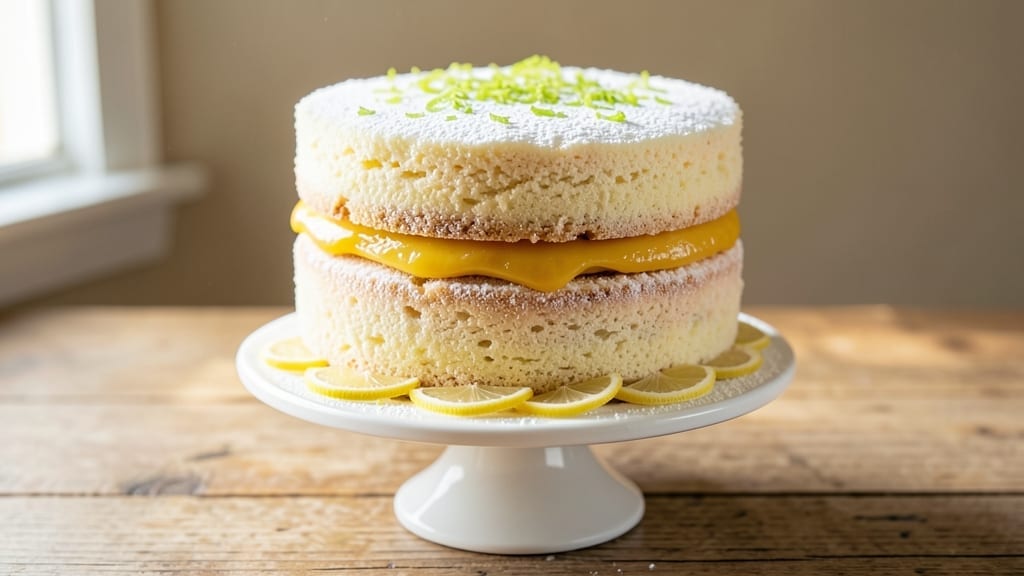
This 2-layer lemon cake recipe delivers the perfect balance of bright citrus and creamy sweetness that makes every slice unforgettable. The secret lies in tender, moist cake layers infused with real lemon zest and juice, topped with a velvety cream cheese frosting that melts in your mouth.
I’ve perfected this recipe over years of baking, ensuring it’s foolproof for beginners while still impressing even the most seasoned dessert lovers.
The magic begins with a simple yet effective technique: baking the layers at 350°F for just 25-30 minutes, then letting them cool completely before assembly. This prevents soggy layers and allows the lemon curd filling to set beautifully between them.
The cream cheese frosting isn’t just a topping—it’s the star, with its tangy contrast to the zesty cake. Every component comes together with precise measurements and clear instructions, so you’ll achieve professional results without the fuss.
What you’ll end up with is a cake that’s visually stunning with its golden layers and smooth frosting, but even more impressive is the first bite: moist, flavorful cake bursting with lemon, followed by the cool, creamy frosting.
The texture is what sets this apart—no dry crumbs or overly sweet aftertaste. This cake is perfect for birthdays, brunch celebrations, or simply treating yourself to something special.
Once you’ve mastered this recipe, you can easily customize it with variations like adding blueberry compote between layers or swapping the frosting for a lighter whipped cream option. The possibilities are endless, but the foundation remains the same: a foolproof method that delivers restaurant-quality results every time. Let’s get baking!
Ingredients for 2 layer lemon cake
Bright citrus and creamy layers—just 13 ingredients for restaurant-quality lemon cake bliss.
| Ingredient | Amount | Notes |
|---|---|---|
| All-Purpose Flour 🌾 | 2 ½ cups | Sifted for light texture |
| Granulated Sugar 🍚 | 2 cups | Divided for cake and filling |
| Unsalted Butter 🧈 | 1 ½ cups | Room temperature, softened |
| Fresh Lemon Juice 🍋 | ¾ cup | From 3-4 medium lemons |
| Lemon Zest 🍋 | ¼ cup | Fine, from organic lemons |
| Large Eggs 🥚 | 4 whole | Room temperature, separated |
| Baking Powder 🧂 | 2 tsp | Diamond Crystal preferred |
| Salt 🧂 | ½ tsp | Fine sea salt |
| Vanilla Extract 🌿 | 2 tsp | Pure Madagascar bourbon |
| Cream Cheese 🧀 | 16 oz | Full-fat, room temperature |
| Powdered Sugar 🍚 | 4 cups | Sifted for smooth frosting |
| Heavy Whipping Cream 🥛 | 1 cup | Cold, whipped to stiff peaks |
| Lemon Curd Filling 🍋 | 1 ½ cups | Store-bought or homemade |
The butter and eggs are non-negotiable here. European-style butter from Land O’Lakes or Plugrá gives the richest texture, but any good brand works. Eggs should be room temperature—cold ones trap air and cause tunnels. The lemon juice and zest? Organic lemons from Whole Foods have the brightest flavor, but any fresh lemons will do if you squeeze them right before using. For the cake layers, I always sift the flour and powdered sugar together to avoid lumps—it makes all the difference in that tender crumb. The cream cheese frosting is where the magic happens, so grab the full-fat version (none of that low-fat nonsense).
No fresh lemons? Bottled lemon juice works in a pinch, but it lacks the depth of fresh. For the filling, store-bought lemon curd is fine, but homemade is worth it—just simmer 1 cup sugar, 1/3 cup lemon juice, 3 egg yolks, and 1/4 cup butter until thickened. No vanilla extract? Almond extract at half the amount adds a nice twist. The baking powder is crucial—Diamond Crystal is my go-to because it’s lighter than others. If you’re out, use 1/4 tsp baking soda plus 1/4 tsp cream of tartar as a substitute. And for the frosting, if you’re feeling fancy, add a pinch of cardamom for warmth.
The cake layers keep well for 3 days wrapped in plastic at room temperature, but the frosting is best made fresh. Once assembled, this cake stays moist for 5 days in the fridge, covered tightly. For parties, I always bake it a day ahead—flavors meld beautifully overnight. To store leftovers, slice and wrap each piece individually. The frosting can be made 2 days ahead and stored in the fridge, just re-whip the cream before assembling. Freeze the whole cake (unfrosted) for up to 3 months—thaw at room temperature before frosting.
Why You’ll Love This Recipe
- No Fuss Layers: I swear by this recipe—just mix, bake, repeat. The buttercream between those two moist layers? You’ll have it done before your coffee gets cold.
- Zesty Magic: That lemon zest and juice combo? It’s the real deal—bright, tangy, and just sweet enough. Honestly, the first time I tasted it, I nearly licked the bowl.
- Party or Picnic: Slice it for a brunch spread or pack it for a potluck. It travels well, looks impressive, and even my picky nephew asks for seconds. (Yes, even on a Tuesday night.)
- Budget Bright Spot: Uses pantry staples—flour, sugar, butter—and a few lemons. The leftovers? They vanish faster than I can say “second cup of tea.”
Step-by-step instructions for 2 layer lemon cake
Here’s how to bake a perfectly moist lemon cake with tangy layers and velvety cream cheese frosting.
Prepare the Cake Batter for Perfect Texture
Preheat your oven to 350°F and grease two 8-inch round cake pans, lining the bottoms with parchment paper. In a medium bowl, whisk together the 2.5 cups all-purpose flour, 2 teaspoons baking powder, and ½ teaspoon salt. Sift this dry mixture directly into a large mixing bowl to aerate it—this prevents dense layers.
In the large bowl, add the 1.5 cups softened unsalted butter and 1 cup of the 2 cups granulated sugar. Beat with an electric mixer on medium speed until light and fluffy, about 3 minutes. This creaming process incorporates air, which gives your cake that signature tender crumb. Scrape down the sides of the bowl to ensure even mixing.
Add the 4 large eggs, 1 at a time, mixing well after each addition. Then stir in the ½ cup fresh lemon juice, ¼ cup lemon zest, and 2 teaspoons vanilla extract. The mixture should be smooth and slightly thick—this is your base for bright, citrusy flavor. Divide the batter evenly between the prepared cake pans.
Bake the Layers to Golden Perfection
Bake the cake layers for 25-30 minutes, or until a toothpick inserted into the center comes out clean. The edges should be golden brown, but the tops might look slightly underdone—this is normal and ensures a tender crumb. Rotate the pans halfway through baking for even heat distribution.
Let the cakes cool in their pans for 10 minutes before transferring them to a wire rack to cool completely. This gradual cooling prevents cracking. While they cool, prepare the lemon curd filling by spreading the 1.5 cups lemon curd filling evenly over the first layer once it’s completely cool. This step creates that signature layered flavor.
Whip the Cream Cheese Frosting
In a large mixing bowl, beat the 16 oz cream cheese and the remaining 1 cup granulated sugar on medium speed until smooth and creamy, about 2 minutes. This ensures no lumps remain, which is key for a professional finish. Scrape down the sides of the bowl as needed.
Add the 1 cup cold heavy whipping cream and mix on high speed until stiff peaks form. The frosting should hold its shape when the beaters are lifted—this gives you that smooth, pipeable consistency. Fold in the 4 cups powdered sugar gradually, mixing on low speed until fully incorporated. The frosting should be thick but still spreadable.
Assemble and Frost the Cake
Place the second cake layer on top of the lemon curd-filled first layer. Spread a thin layer of frosting over the top of the second layer to act as a glue. Then, pipe or spread the remaining frosting evenly over the entire cake, creating a smooth finish. Use a spatula to create clean edges by dragging it across the sides of the cake.
Chill the cake in the refrigerator for at least 1 hour before slicing. This allows the frosting to set and the flavors to meld. Serve at room temperature for the best texture and taste—each bite should deliver a perfect balance of moist lemon cake, tangy curd, and creamy frosting.
Pro Tips For Making 2 Layer Lemon Cake
- Measure Butter Cold: Take your unsalted butter straight from the fridge—no softening needed. Creaming cold butter with sugar creates tiny air pockets for a lighter texture, and it won’t turn into soup when you add the flour.
- Zest First, Juice Later: Grate that lemon zest before juicing—it’s fresher and packs more punch. Store-bought zest loses potency fast, and fresh zest adds a bright aroma the juice alone can’t match.
- Skip the Overmixing: Fold the dry ingredients into the wet just until combined—lumpy is better than tough. Overmixing develops gluten, and your cake will turn out dense instead of tender.
- Test Doneness with a Toothpick: Insert a toothpick into the center of the cake—it should come out with moist crumbs, not wet batter or dry flour. If it’s sticky, bake another 5 minutes; if it’s dry, pull it out early.
Storing and reheating this dish
Room Temp Storage
Your freshly baked lemon cake layers stay fresh at room temperature for 3 days when stored in an airtight container wrapped tightly with plastic wrap. I like using clear plastic wrap first, then a foil lid for extra protection against drying.
Place it in a cool, dark spot—avoid direct sunlight, which can make the frosting melt. The lemon flavor actually intensifies slightly over time, making it perfect for last-minute celebrations. 🌟
Fridge Preservation
For longer storage, refrigerate the fully assembled cake in an airtight container for up to 5 days. The cold helps maintain the frosting’s texture while keeping the cake moist. Let it sit at room temperature for 30 minutes before serving to restore the perfect balance of flavors.
I always slice and wrap individual portions in parchment paper before storing to prevent sogginess. 💛
Freezing Tips
Freeze unfrosted cake layers separately for up to 3 months by wrapping each layer tightly in plastic wrap, then placing them in a freezer bag with all air removed. Thaw overnight in the fridge before assembling with fresh frosting.
For the frosting itself, make it ahead and store in an airtight container for 2 days—just re-whip before using. Never freeze the fully assembled cake, as the frosting texture will suffer. ❄️
Reheating Slices
If you’ve stored slices in the fridge, warm them at 300°F for 5-7 minutes to restore moisture. For a quick fix, microwave individual slices on 50% power for 10 seconds, then cover with a damp paper towel to refresh the texture.
I avoid reheating frosted slices—always serve them fresh from the fridge for the best experience. 🔥
Frosting Refresh
If your frosting looks slightly separated after refrigeration, simply re-whip it with a hand mixer for 1-2 minutes to restore smoothness. Add 1-2 teaspoons of cold heavy cream if it seems too dry.
For extra shine, brush the top with a bit of lemon juice before serving—it adds a bright, professional finish. The frosting should always be cool but not icy when served. ✨
Nutrition facts
Frequently asked questions
Can I use bottled lemon juice instead of fresh?
You can substitute bottled lemon juice in a pinch, but fresh is ideal for that bright, vibrant flavor. For best results, use 1/4 cup bottled lemon juice plus 1 teaspoon extra lemon zest to compensate for the difference in acidity. If you’re using bottled, look for “fresh-squeezed” varieties—regular bottled juice often has added water and lacks the punch of fresh.
Why did my cake layers crack?
Cracking usually happens when cakes cool too quickly or aren’t baked long enough. Let your layers cool in the pans for 10 minutes before removing, and always bake until a toothpick comes out clean. For extra insurance, wrap cooled layers in plastic wrap and refrigerate for 30 minutes before frosting to stabilize them. Overmixing the batter can also cause cracks—mix just until combined.
How do I make this cake gluten-free?
Replace the all-purpose flour with a 1:1 gluten-free baking flour blend like Bob’s Red Mill or King Arthur. Add 1/2 teaspoon xanthan gum to help bind the layers. You may need to reduce the oven temperature to 325°F and bake for 30-35 minutes to prevent over-browning. Test one layer first to adjust timing—gluten-free cakes often bake faster.
Can I make this cake in a different shape?
This recipe works perfectly for 6-inch round layers (just halve the batter) or even a 9×13-inch sheet cake for a single layer. For a square or rectangular cake, use the same batter quantity but adjust baking time—check for doneness at 20-25 minutes. The frosting quantity should be adjusted proportionally for different shapes.
What’s the secret to ultra-moist cake layers?
The magic is in the butter and eggs! Use European-style butter (like Plugrá) for richer moisture, and make sure your eggs are room temperature. Don’t overbake—pull the cake when it’s just set in the center. For extra moisture, brush the cooled layers with 2 tablespoons lemon syrup (equal parts sugar and water, heated until dissolved) before frosting.
