
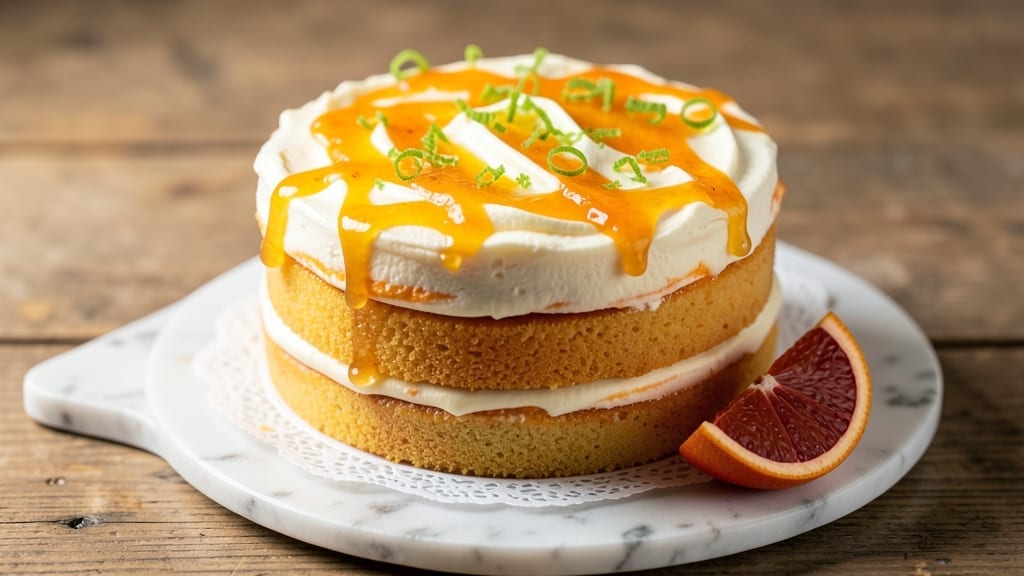
This 6-inch orange cake recipe delivers bright citrus flavor in every tender, moist bite—perfect for small gatherings or elegant desserts. 💛 The secret lies in balancing orange zest and juice with buttery layers that stay rich yet light, while a simple glaze ties everything together without overpowering the natural citrus notes.
Professionally developed for home bakers, this recipe uses precise measurements and a foolproof technique to ensure consistent results every time. The cake bakes in just 30 minutes at 350°F, yielding a perfectly domed 6-inch layer that’s ideal for layering with cream cheese frosting or serving as a single-slice showstopper.
What sets this apart is the zesty glaze—made with powdered sugar and fresh orange juice—that adds a glossy finish and extra citrus punch. The texture is what truly impresses: a tender crumb with subtle moisture that keeps the cake fresh-tasting even after slicing.
Whether you’re celebrating a birthday, hosting a brunch, or simply craving a citrusy treat, this recipe delivers restaurant-quality results with minimal effort. The 6-inch size makes it perfect for portion control, while the vibrant orange flavor transforms any occasion into something special.
Ingredients for 6 inch orange cake
Bright citrus meets buttery perfection in this 6-inch cake—just 12 ingredients for showstopping results.
| Ingredient | Amount | Notes |
|---|---|---|
| All-Purpose Flour 🌾 | 1 ½ cups | Sifted for even texture |
| Granulated Sugar 🍚 | 1 cup | White or light brown |
| Unsalted Butter 🧈 | ¾ cup | Room temperature, cubed |
| Fresh Orange Juice 🍊 | ½ cup | Strained, no pulp |
| Orange Zest 🍊 | 2 tbsp | Fine, from organic oranges |
| Large Eggs 🥚 | 2 whole | Room temperature |
| Baking Powder 🧂 | 2 tsp | Diamond Crystal preferred |
| Salt 🧂 | ½ tsp | Fine sea salt |
| Vanilla Extract 🌿 | 1 tsp | Pure, high-quality |
| Powdered Sugar 🍚 | 1 cup | Sifted for smooth glaze |
| Fresh Orange Juice 🍊 | 2 tbsp | For glaze, freshly squeezed |
| Heavy Cream 🥛 | ¼ cup | Optional, for frosting |
The orange juice and zest are non-negotiable for authentic flavor. Freshly squeezed juice from organic navel or Valencia oranges delivers the brightest taste—store-bought works but lacks depth. For zest, use a microplane and avoid the white pith, which can turn bitter. Whole Foods or local farmers markets often carry premium citrus varieties. If you’re using blood oranges, reduce the juice slightly since they’re sweeter. The butter should be room temperature—cold cubes won’t blend smoothly, and melted butter makes the cake dense.
No fresh oranges? Bottled orange juice concentrate works in a pinch (thaw and dilute with water), but it lacks the fresh acidity. For zest substitutes, lemon zest at half the amount gives a similar brightness. The baking powder must be fresh—if your recipe fails to rise, it’s likely expired. Diamond Crystalpowdered sugar from Bob’s Red Mill dissolves more easily than store brands. The heavy cream is optional but adds luxurious texture if you’re serving this as an elegant dessert.
Store the cake in an airtight container with parchment between layers for up to 5 days. The glaze keeps the cake moist for 3 days at room temperature, but for longer storage, freeze the entire cake (unfrosted) for 2 months. Thaw at room temperature before glazing. For serving, dust with extra powdered sugar or garnish with orange slices—Trader Joe’s has the prettiest organic oranges for this. The cake freezes beautifully, making it perfect for make-ahead celebrations.
Why You’ll Love This Recipe
- No Mixer Needed: I swear by this recipe when my stand mixer’s on vacation—just a bowl and a whisk. The butter and sugar cream so effortlessly by hand, and the orange zest cuts through the richness like a bright summer breeze.
- Bright & Buttery Magic: That first bite? Pure contradiction—tender crumb with a whisper of citrus sharpness, then the creamy butter melting into your mouth. Honestly, the orange juice isn’t just flavor; it’s the secret that keeps this cake from being too sweet.
- Weekend Brunch Star: Slice it thin for a fancy-looking charcuterie board, or stack two layers with whipped cream for a no-fuss dessert. I’ve served it at book club meetings, potlucks, and lazy Sundays—it’s the kind of cake that makes you look like a pro without trying.
- Budget-Friendly Indulgence: Uses pantry staples (hello, flour and sugar) and a single orange—no fancy syrups or glaze needed. The leftovers? They last days in the fridge, and I’ve even reheated slices in the toaster for a crispy breakfast treat.
Step-by-step instructions for orange cake with zesty glaze
Here’s how to create a perfectly moist orange cake with vibrant citrus layers and glossy glaze.
👨🍳 Step 1: Cream Butter and Sugars for Maximum Fluffiness
In a stand mixer fitted with the paddle attachment, beat the 0.75 cup unsalted butter (at room temperature) and 1 cup granulated sugar on medium speed for 3-4 minutes until light and fluffy. You’ll notice the mixture nearly doubles in volume and turns pale—this incorporates air that creates the cake’s signature tender crumb.
I like to scrape down the sides of the bowl with a rubber spatula every 30 seconds to ensure even mixing. The butter should be completely smooth with no visible lumps. If you see any graininess, continue beating for another 30 seconds—this ensures a silky texture that prevents dryness in the final cake.
👨🍳 Step 2: Incorporate Wet Ingredients for Citrus Brightness
Add the 2 whole large eggs one at a time, mixing on low speed after each addition until fully incorporated. Then stir in the 0.5 cup fresh orange juice, 2 tablespoons orange zest, 1 teaspoon vanilla extract, and 0.5 teaspoon salt. Mix on low speed for another 30 seconds until completely combined.
The orange zest and juice provide that signature citrus punch, but don’t overmix here—you want to preserve some air in the batter. I press the zest through a fine-mesh strainer to remove any tough membrane pieces that could make the texture gritty. The mixture should be smooth with a vibrant orange hue and a fresh citrus aroma.
👨🍳 Step 3: Gently Fold Dry Ingredients for Light Texture
In a separate bowl, whisk together the 1.5 cups all-purpose flour (sifted) and 2 teaspoons baking powder to aerate the flour. With the mixer on low speed, gradually add the dry ingredients to the wet mixture, mixing just until combined—you should still see some flour streaks. Overmixing develops gluten which makes the cake dense.
This is where precision matters most. I use a silicone spatula to gently fold in the last bits of flour by hand, ensuring even distribution without deflating the batter. The final batter should be smooth, thick, and hold its shape when you lift the spatula—like a thick cake batter should.
🔥 Step 4: Bake in a 6-Inch Pan for Perfect Rise
Preheat your oven to 350°F and grease a 6-inch round cake pan thoroughly with butter, then dust with flour. Pour the batter into the prepared pan and smooth the top with an offset spatula. Bake for 30-35 minutes until a toothpick inserted in the center comes out clean and the edges are lightly pulled away from the pan.
I recommend placing the pan on the middle rack for even heat distribution. The cake is done when it springs back slowly when gently pressed in the center—not too firm, but not jiggly either. Let it cool in the pan for 10 minutes before transferring to a wire rack to cool completely.
🥘 Step 5: Prepare the Orange Glaze and Optional Cream Frosting
For the glaze, whisk together the 1 cup powdered sugar (sifted), 2 tablespoons fresh orange juice, and a pinch of salt until smooth. The glaze should be thick enough to coat the back of a spoon but still drizzle easily. If it’s too thick, add 1 teaspoon more orange juice at a time until you reach the right consistency.
For the optional cream frosting, whip the 0.25 cup heavy cream with 2 tablespoons powdered sugar until soft peaks form. Spread this between cake layers if desired. Once the cake is completely cool, drizzle the glaze evenly over the top and sides, letting any excess drip down the sides for that classic cake look.
Pro Tips For Making 6 Inch Orange Cake
- Whisk Butter & Sugar Longer: I used to mix these for 30 seconds—big mistake. Cream the butter and sugar until the bowl is physically lighter in color and the texture looks like wet sand. That’s when the cake gets its signature tender crumb. (Yes, even if your arm starts screaming.)
- Strain the Orange Juice: Fresh juice has pulp, and pulp makes your cake dense. Strain it through a fine-mesh sieve or cheesecloth into a bowl, then measure from there. Skip this, and you’ll end up with a cake that tastes great but eats like a brick.
- Don’t Overmix the Batter: Once you add the flour, stop mixing after just combining—lumpy is fine. Overmixing develops gluten, and that turns your light, fluffy orange cake into a dry, chewy mess. Fold in the zest gently at the end to keep it bright.
- Test for Doneness with a Toothpick: The cake’s edges might look set, but the center can still be raw. Insert a toothpick—it should come out with moist crumbs, not wet batter or raw flour. If unsure, give it 5 more minutes. Better to wait than risk a gummy middle.
Creative variations of this 6 inch orange cake
Citrus Twist Variations
Swap the orange for blood orange juice and zest—reduce the sugar by 1 tablespoon since blood oranges are naturally sweeter. The deep ruby color creates a stunning visual contrast.
For a grapefruit twist, use ¼ cup grapefruit juice and 1 tablespoon zest, but add 1 extra tablespoon sugar to balance the bitterness. Both versions keep the same glaze technique but intensify the citrus profile. 🍊
Spiced Orange Cake
Infuse warmth by adding ½ teaspoon ground cinnamon and ¼ teaspoon cardamom to the dry ingredients. For a gingersnap twist, fold in 2 tablespoons crushed gingersnaps into the batter.
These spices complement the orange beautifully and add depth without overpowering the citrus. The glaze remains unchanged but pairs wonderfully with the spiced layers.
Chocolate-Orange Fusion
Add 2 tablespoons cocoa powder to the dry ingredients and reduce the flour by 2 tablespoons to maintain structure. The chocolate deepens the flavor while the orange zest keeps it bright.
For extra richness, swap the glaze for a dark chocolate ganache made with ½ cup melted dark chocolate and 2 tablespoons orange juice. This fusion is perfect for chocolate lovers who still want citrus notes. 🍫
Coconut Orange Layer Cake
Replace ½ cup of the flour with ½ cup shredded coconut for a tropical twist. Use coconut milk instead of orange juice for half the wet ingredients to enhance the coconut flavor.
Top with a toasted coconut glaze by mixing ½ cup powdered sugar with 2 tablespoons coconut milk and 1 tablespoon orange juice. This variation adds texture and a vacation-worthy taste. 🥥
Boozy Orange Variations
For an adult twist, replace 2 tablespoons of the orange juice with 2 tablespoons Grand Marnier or Cointreau. The alcohol enhances the citrus flavor and adds a subtle sweetness. For a rum-infused version, use 1 tablespoon dark rum in place of the vanilla extract.
These boozy additions elevate the cake for special occasions while keeping the same moist texture. 🍸
Seasonal Adaptations
In winter, add ½ teaspoon nutmeg to the dry ingredients for a cozy holiday twist. For spring, incorporate fresh raspberries by folding ½ cup mashed raspberries into the batter and topping with a raspberry glaze made with powdered sugar and raspberry puree**.
These seasonal adjustments keep the cake fresh and relevant year-round. 🌸
Nutrition facts
Frequently asked questions
Can I make this 6-inch orange cake in a different pan size?
Yes, but adjust the baking time and oven temperature. For an 8-inch cake, bake at 325°F for 40-45 minutes—the larger surface area needs lower heat to prevent over-browning. For a 4-inch cake, use 375°F for 20-25 minutes. Always check doneness with a toothpick. The batter volume stays the same, so you’ll need to bake multiple smaller cakes if scaling down significantly.
Why did my orange cake turn out dry?
Most likely, you overmixed the batter or overbaked it. The key is mixing just until combined—stop when you see flour streaks. Also, check your oven temperature with an oven thermometer (many run hot). For extra moisture, brush the warm cake with 2 tablespoons orange juice while still in the pan. The glaze helps too—it keeps the cake tender for 2-3 days at room temperature.
Can I substitute orange juice concentrate?
Yes, but dilute it properly. Thaw ½ cup frozen concentrate and mix with ½ cup water to mimic fresh juice. For zest, use 2 tablespoons from fresh oranges—concentrate lacks the aromatic oils. The flavor won’t be as vibrant, but it works in a pinch. For best results, use fresh juice from Valencia or navel oranges—they’re sweeter and more aromatic.
How do I store leftover orange cake?
For short-term storage, keep the glazed cake in an airtight container at room temperature for up to 3 days. For longer storage, freeze the unfrosted cake (wrapped tightly) for 2 months. Thaw overnight in the fridge, then re-glaze before serving. The glaze prevents drying, but refrigerated cake is best eaten within 4 days—the texture softens slightly when cold.
What’s the best way to serve this orange cake?
For a classic presentation, slice into 4 wedges and serve with a dollop of whipped cream or vanilla ice cream. For a fancy touch, garnish with candied orange peel or fresh berries. The cake pairs beautifully with earl grey tea or sparkling orange juice. For a boozy twist, serve with a side of Grand Marnier or Cointreau—just 1 ounce enhances the citrus flavors.

- 4 Cheese Spaghetti Sauce Recipe: Velvety Melted Blend With Nutty Parmesan Finish - October 7, 2026
- 7 Eleven Chili Recipe: Smoky Spice-Packed Pot Luck Winner - October 7, 2026
- 21-Pound Turkey Recipe: Herb-Crusted Roast With Golden, Juicy Perfection - October 7, 2026