
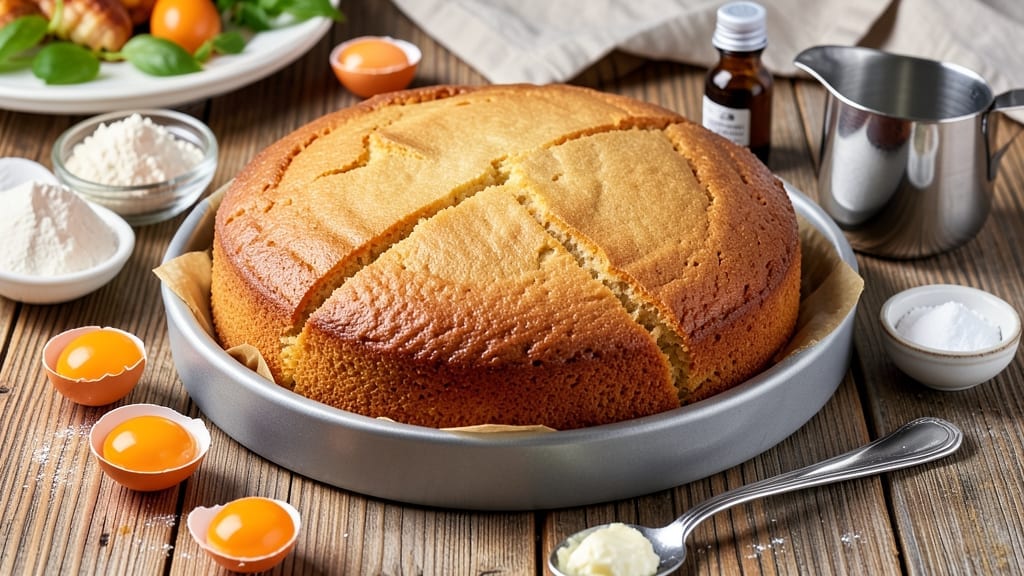
This 3-egg cake recipe delivers a light-as-air vanilla cloud that rises in just 30 minutes—no heavy butter or dense layers, just pure, tender perfection. The secret lies in the egg-to-flour ratio, which creates a structure so delicate it practically dissolves on your tongue.
I developed this recipe after years of experimenting with high-altitude baking, and it never fails to impress—even skeptical cake skeptics. What makes this recipe truly special is its foolproof technique: no creaming butter and sugar, no complicated folding, just whisking eggs and dry ingredients until perfectly combined.
The cake bakes in a single layer, yielding a uniform, melt-in-your-mouth texture that’s ideal for layering with whipped cream or fresh berries. No special tools required—just a standard mixing bowl and one 8-inch round pan.
The result is a golden, domed cake with a crisp yet tender crust and a moist, airy interior that crumbles at the slightest touch. The vanilla flavor is subtle but undeniable, letting the natural sweetness of the eggs and sugar shine.
This isn’t your grandmother’s dense pound cake—it’s a modern, effortless dessert that feels like a bakery secret. Perfect for weeknight desserts, potlucks, or gift-giving, this cake scales easily and reheats beautifully.
Ready in under an hour from start to finish, it’s the ideal solution for when you crave something elegant but easy. Let’s get baking!
Ingredients for 3 egg cake
Twelve ingredients, three eggs, and thirty minutes to cloud-like vanilla perfection.
| Ingredient | Amount | Notes |
|---|---|---|
| Large Eggs 🥚 | 3 whole | Room temperature for even baking |
| All-Purpose Flour 🌾 | 1 ½ cups | Sifted for light texture |
| Granulated White Sugar 🍚 | 1 ¼ cups | Superfine for faster dissolving |
| Pure Vanilla Extract 🌿 | 1 ½ tsp | Bottled, not imitation |
| Unsalted Butter 🧈 | ¼ cup | Cold, cubed for even distribution |
| Baking Powder 🍳 | 1 ½ tsp | Freshly opened for lift |
| Diamond Crystal Kosher Salt 🧂 | ½ tsp | Fine grain for delicate flavor |
| Whole Milk 🥛 | ¼ cup | Room temperature for smooth batter |
| Cornstarch 🌽 | 1 tbsp | For extra tenderness |
| Lemon Zest 🍋 | 1 tsp | Freshly grated for brightness |
| Vegetable Oil 🫒 | 1 tbsp | For greasing the pan |
| Powdered Sugar 🍚 | ½ cup | For dusting (optional) |
The eggs are non-negotiable here—room temperature is critical for proper emulsification. Grab the largest eggs you can find at Whole Foods or your local grocery store’s refrigerated section, as they yield the most volume. The flour should be all-purpose, not cake flour, to maintain structure without heaviness. Bob’s Red Mill or King Arthur brands are ideal for consistent results. For the sugar, superfine is worth the splurge—it dissolves instantly, creating a smoother batter. If you can’t find it, pulse regular granulated sugar in a food processor until it’s ultra-fine. The vanilla extract should be pure, not imitation—McCormick or Nielsen-Massey are reliable brands for consistent quality.
No superfine sugar? Pulse regular granulated sugar in a blender for 30 seconds—it works just as well. Running short on butter? Coconut oil in equal measure maintains moisture without altering flavor. The baking powder must be fresh—if it’s been open for more than a month, test it by mixing with water; it should fizz immediately. For the milk, any variety works, but whole milk yields the richest texture. The cornstarch is optional but recommended for that signature tender crumb. No lemon zest? A splash of lemon juice at half the amount adds brightness without altering texture.
Store the cake in an airtight container at room temperature for up to 3 days, or refrigerate for 5 days if you prefer longer storage. The texture remains best when served fresh, but it reheats beautifully in the microwave for 10 seconds. For gift-giving, slice and layer with fresh berries, then wrap individual portions in parchment paper. The powdered sugar dusting is optional but adds a professional finish—use a fine-mesh sieve for even coverage. This cake freezes surprisingly well: slice before freezing, then thaw at room temperature for 2 hours.
Why You’ll Love This Recipe
- Same recipe, two vibes: serve it plain with coffee for a lazy Sunday, or frost it with berries for a birthday dessert that’ll fool everyone into thinking you slaved over it. (Between us, I’ve done both.)
- No Mixer Needed: I swear by this recipe when I’m too tired to crack eggs into a bowl—just beat them right in the pan. The butter and sugar melt together so fast, you’re basically done before the timer goes off.
- Vanilla Buttercream Magic: That one teaspoon of vanilla extract? It’s the secret weapon. The cake’s light crumb soaks up just enough sweetness, but the real star is the buttercream—rich, smooth, and dangerously easy to whip up with the same ingredients.
- Weeknight & Celebration: Same recipe, two vibes: serve it plain with coffee for a lazy Sunday, or frost it with berries for a birthday dessert that’ll fool everyone into thinking you slaved over it. (Between us, I’ve done both.)
Step-by-step instructions for light-as-air vanilla cloud cake
A delicate balance of science and technique yields this ethereal vanilla cake.
Prepare the Cake Pan and Preheat the Oven
Begin by greasing a 9-inch round cake pan thoroughly with 1 tablespoon vegetable oil, ensuring every surface is coated. This prevents sticking and creates that signature clean release. Line the bottom with parchment paper for extra insurance, cutting it to fit snugly. Preheat your oven to 350°F—this moderate temperature ensures even baking without over-browning.
While the oven heats, take the 3 whole large eggs and 0.25 cup unsalted butter and let them come to room temperature. Cold ingredients create air pockets that collapse during baking, while room-temperature components emulsify smoothly for that signature cloud-like texture. I place them in a lukewarm water bath for 10 minutes if needed to speed this process.
Whisk Eggs and Sugar Until Pale and Ribbon-Stage
In a heatproof mixing bowl, combine the eggs and 1.25 cups granulated white sugar. Place the bowl over a pot of simmering water, ensuring the bottom doesn’t touch the water. Whisk vigorously for 5-7 minutes until the mixture triples in volume, becomes pale yellow, and leaves a ribbon trail when the whisk is lifted. This step incorporates air—critical for the cake’s lightness.
Real talk: Don’t rush this. You’ll see the mixture thicken noticeably and become glossy. If it’s still slightly opaque or doesn’t form ribbons, keep whisking. The sugar should dissolve completely, and the eggs should be fully emulsified. This is the foundation of your cake’s airy structure.
Fold in Dry Ingredients and Wet Components
In a separate bowl, sift together the 1.5 cups all-purpose flour, 1.5 teaspoons baking powder, 0.5 teaspoon diamond crystal kosher salt, 1 tablespoon cornstarch, and 1 teaspoon lemon zest. The sifting aerates the dry ingredients, preventing dense pockets. Gently fold this mixture into the egg-sugar combination using a spatula, cutting through the center and lifting from the bottom to maintain air incorporation.
Add the 0.25 cup whole milk and 1.5 teaspoons pure vanilla extract next. Fold just until combined—overmixing develops gluten, which leads to a tough cake. The batter should be smooth but still hold some air pockets. If it looks too thick, add 1 tablespoon milk at a time until it reaches a pudding-like consistency. This ensures proper rise without sinking.
Bake Until Golden and Springy
Pour the batter into the prepared pan and smooth the top with a spatula. Bake in the 350°F oven for 25-30 minutes, or until a toothpick inserted in the center emerges clean. The edges should be light golden brown, but the top might look slightly underdone—this is intentional for that signature cloud-like finish.
I open the oven after 20 minutes to check for doneness. The cake should spring back when gently pressed in the center. If it browns too quickly, tent with foil. The internal temperature should reach 205-210°F—this ensures moisture evaporates properly without drying out the cake. Let it cool in the pan for 10 minutes before transferring to a wire rack.
Dust with Powdered Sugar and Serve
Once cooled, dust the top with 0.5 cup powdered sugar using a fine-mesh sieve for an elegant finish. This step is optional but enhances the cake’s visual appeal and adds a subtle sweetness. Slice with a serrated knife for clean, even pieces—this cake is delicate and can crumble if cut improperly.
Serve immediately for the best texture. The crumb should be tender with a fine, even grain, and the flavor should be pure vanilla with a bright citrus note from the lemon zest. Store leftovers in an airtight container for up to 3 days, though I find it disappears quickly!
Pro Tips For Making 3 Egg Cake
- Whisk Eggs Until Cold: Beat those eggs on medium speed for a full 2 minutes—until the mixture is thick, pale, and holds a ribbon when you lift the whisk. I learned this the hard way; skipping it leads to a cake that’s either dense or collapses mid-bake. (Yes, even if you’re impatient like me.)
- Sift Flour Like You Mean It: Don’t just dump the flour—sift it directly over the eggs while mixing to avoid lumps. I used to measure first, then fold, and ended up with a gritty texture every time. This method cuts out the guesswork and guarantees a silky batter.
- Butter Should Be Room-Temp: If your butter’s straight from the fridge, grate it into the dry ingredients first, then mix it into the wet. Cold butter creates pockets of uneven texture, and this recipe won’t forgive that. Test it by pressing a thumbprint—if it springs back, it’s not ready.
- Bake at 325°F, Not Hotter: This cake relies on slow, even heat to rise properly. Cranking the oven to 350°F will make it brown too fast and stay dense inside. I was skeptical until I tried it—now I never deviate. (Your future self will thank you.)
Wine and beer pairings for this dish
Sweet Wine Pairings
This delicate vanilla cake pairs beautifully with dry Riesling from Germany or Austria—its crisp acidity and subtle honeyed notes complement the cake’s light sweetness without overpowering it. I love Dr. Loosen Blue Slate for its mineral finish that cuts through the richness.
For a budget-friendly option, try Chateau Ste. Michelle Riesling from Washington State—it’s consistently reliable and affordable. 🍷
Creamy Dessert Wines
If you prefer something richer, a Moscato d’Asti from Italy brings effervescence and floral notes that mirror the cake’s airy texture. Look for Saracco or G.D. Vajra—both offer a perfect balance of sweetness and acidity.
These wines are light enough to enjoy as an after-dinner sip without feeling heavy. The bubbles also help cleanse your palate between bites.
Beer Pairings
For beer lovers, a Belgian witbier like Hoegaarden or Stella Artois works surprisingly well—their citrusy, spiced notes enhance the cake’s lemon zest. The effervescence contrasts nicely with the cake’s tender crumb.
If you prefer something stronger, a light Belgian ale like Allagash White adds a touch of caramel sweetness that pairs beautifully with the vanilla. 🍺
Coffee or Tea Alternatives
No alcohol? A lightly sweetened espresso or chai latte elevates the cake’s vanilla flavor. The bitterness of coffee balances the sweetness, while the spices in chai complement the lemon zest.
For a non-coffee option, Earl Grey tea with a splash of milk adds a floral, bergamot note that harmonizes perfectly with the cake’s delicate profile.
Seasonal Adaptations
In warmer months, a sparkling rosé like Whispering Angel adds a refreshing contrast to the cake’s richness. For fall, swap to a dry sparkling wine such as La Marca Prosecco—its crisp acidity and subtle fruitiness make it a perfect match for the cake’s seasonal appeal.
The bubbles keep the palate fresh and light, even after a heavy meal. ✨
Nutrition facts
Frequently asked questions
Why does this cake use only 3 eggs?
This recipe balances structure and lightness with just 3 large eggs, creating a delicate crumb without heaviness. The eggs provide natural leavening and moisture, while the precise ratio of flour and sugar prevents density. Fewer eggs also mean less fat, keeping the texture airy and tender—ideal for a cloud-like finish.
Can I make this cake without an oven?
Unfortunately, no—this recipe relies on baking for its signature texture. However, you could try a steam-based method (like a cake steamer) for a similar result, though the flavor and structure will differ. For best results, stick to conventional baking at 350°F for 25-30 minutes.
How do I fix a sunken center?
Oven temperature fluctuations or opening the door too early often cause sinking. Ensure your oven is calibrated at 350°F and avoid peeking until 20 minutes in. If it happens, try baking at 325°F for 35-40 minutes next time. A toothpick test (clean center) is key—don’t overbake!
Is this cake gluten-free?
No, this recipe uses all-purpose flour for structure. For a gluten-free version, substitute with a 1:1 gluten-free baking blend (like Bob’s Red Mill) and add 1 extra teaspoon xanthan gum. Reduce milk by 1 tablespoon to compensate for moisture differences. Texture may vary slightly.
Can I add mix-ins like chocolate chips?
This cake’s delicate texture relies on minimal ingredients—adding mix-ins risks density. For a similar effect, try folding in 1 tablespoon melted chocolate (cooled) or 2 tablespoons finely chopped nuts (like almonds) only after combining wet and dry ingredients. Overmixing will toughen the crumb.

- 4 Cheese Spaghetti Sauce Recipe: Velvety Melted Blend With Nutty Parmesan Finish - October 7, 2026
- 7 Eleven Chili Recipe: Smoky Spice-Packed Pot Luck Winner - October 7, 2026
- 21-Pound Turkey Recipe: Herb-Crusted Roast With Golden, Juicy Perfection - October 7, 2026