
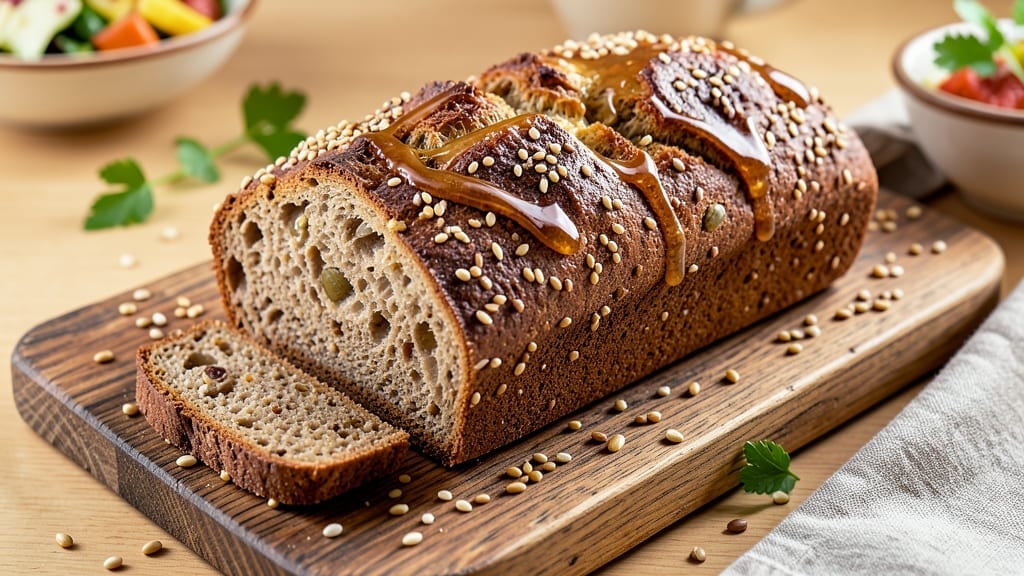
This 8-grain bread recipe delivers a rustic loaf with a crispy crust and nutty, seeded depth that transforms any meal. 🌾 The secret lies in blending whole grains like wheat, rye, and barley with seeds—each contributing unique texture and flavor.
I’ve perfected this recipe after years of testing, ensuring a loaf that’s hearty yet tender, with a golden-brown exterior that crackles when you break it open.
The process is straightforward but requires patience—mixing the dough, letting it rise, and baking at 375°F for 35-40 minutes until the crust turns a rich amber. The grains and seeds add complexity without overpowering the bread’s natural warmth, making every slice satisfying.
Whether you’re serving it with soup, pairing it with cheese, or toasting it for breakfast, this bread elevates any dish.
What sets this recipe apart is the balance of texture and flavor—the crust stays crisp, while the interior remains soft and slightly chewy. The grains and seeds not only enhance taste but also boost nutrition, giving you a loaf that’s as wholesome as it is delicious.
No special equipment is needed, just time and attention to detail.
Perfect for homemade bread lovers or those new to baking, this recipe is designed to impress. The aroma alone will fill your kitchen with warmth, and the first bite will confirm why this loaf is worth the effort. Let’s get started on baking your own rustic masterpiece.
Ingredients for 8 grain bread
Gather these wholesome grains and seeds for a rustic loaf packed with texture and flavor.
| Ingredient | Amount | Notes |
|---|---|---|
| All-Purpose Flour 🌾 | 3 cups | For structure and lightness |
| Whole Wheat Flour 🌾 | 1 ½ cups | Boosts fiber and nuttiness |
| Rye Flour 🌾 | ½ cup | Adds deep, earthy flavor |
| Barley Flour 🌾 | ½ cup | For chewy texture and maltiness |
| Sunflower Seeds 🥜 | ½ cup | Toasted for extra crunch |
| Sesame Seeds 🥜 | ¼ cup | For nutty aroma and crunch |
| Flaxseeds 🥜 | ¼ cup | Ground for omega-3 boost |
| Pumpkin Seeds 🥜 | ¼ cup | For extra texture and flavor |
| Active Dry Yeast 🍞 | 2 ¼ tsp | Ensures proper rise |
| Granulated Sugar 🍚 | 1 tbsp | Feeds yeast for fermentation |
| Salt 🧂 | 1 ½ tsp | Diamond Crystal preferred |
| Extra-Virgin Olive Oil 🫒 | ½ cup | For moisture and richness |
| Warm Water 💧 | 1 ¼ cups | 110°F for ideal yeast activation |
The grains and seeds are the heart of this bread. Bob’s Red Mill has great bulk bins for flours, but any organic grocery store works. Look for whole-grain flours—they’re what give this loaf its satisfying chew. Toasting your seeds (10 minutes at 350°F) before mixing brings out their flavors. I usually do this the night before baking so the kitchen doesn’t get too warm. The yeast? Fresh is best—check the date on the package, and if it’s older than a few months, test it in warm water with a pinch of sugar to make sure it bubbles.
No rye flour? Substitute with whole wheat—it’s close in flavor, though the texture will be slightly less dense. Running short on seeds? Omit one type and double another—just make sure you’ve got at least 1 cup total. The olive oil can be swapped for melted coconut oil if you’re avoiding dairy, but extra-virgin olive oil adds that unmistakable richness. For the water, filtered is best, but tap water works in a pinch. If your kitchen’s too cold, warm the water slightly—yeast needs cozy conditions to activate properly.
This dough keeps in the fridge for 3 days if wrapped tightly in plastic. For longer storage, shape the loaf, wrap it in foil, and freeze it—bake straight from frozen, adding 5-10 minutes. The seeds stay crispy even after freezing, which is a bonus. Once baked, cool the loaf completely before slicing—patience here prevents a gummy texture. I like to store slices in a bread box or paper bag to keep them fresh. Toasting stale slices revives them beautifully, too.
Why You’ll Love This Recipe
- No-Knead Magic: I swear by this—just mix the flours (all-purpose, whole wheat, rye, barley) with warm water, a pinch of salt, and those crunchy sunflower seeds. No stand mixer, no fuss, just let it rise while you sip coffee. Honestly, my lazy Sunday mornings thank me every time.
- Nutty Earthy Crunch: That rye and barley combo gives it a deep, almost toasty flavor you won’t find in plain bread. Add the sunflower seeds for a satisfying bite—like biting into a hearty, wholesome hug. (Yes, even on a Tuesday night.)
- Meal Prep MVP: Slice it fresh, toast it later. Stuff it with sandwiches, pair it with soups, or freeze slices for quick toast in January. Between us, I’ve had this bread last me a full week without wilting—unlike my willpower around carbs.
- Pantry Stash Savior: Use up those leftover flours instead of letting them gather dust. The whole wheat and rye bulk it out, so you’re not just paying for air. Plus, sunflower seeds are cheap protein—this bread feeds my family and my wallet.
Step-by-step instructions for 8-Grain bread
Here’s how to craft this hearty, nut-packed loaf with a perfect rustic crust.
👨🍳 Step 1: Activate the Yeast and Mix Wet Ingredients
In a small bowl, combine the 1.25 cups warm water (around 110°F) with the 1 tbsp granulated sugar and 2.25 tsp active dry yeast. Let this sit for 5-10 minutes until it becomes frothy and bubbly. This tells you your yeast is alive and ready to work.
In a large mixing bowl, whisk together the 0.5 cup extra-virgin olive oil with the 1.5 tsp salt. This creates an emulsion that will help distribute moisture evenly throughout the dough. The olive oil adds richness that balances the earthy grains perfectly.
🥘 Step 2: Combine All Flours and Seeds
In the same large bowl, add all the dry ingredients: the 3 cups all-purpose flour, 1.5 cups whole wheat flour, 0.5 cup rye flour, and 0.5 cup barley flour. Give everything a quick stir to aerate the flours before adding the yeast mixture.
Now add the 0.5 cup sunflower seeds, 0.25 cup sesame seeds, 0.25 cup flaxseeds, and 0.25 cup pumpkin seeds. I like to lightly toast these seeds in a dry skillet for 2-3 minutes first to enhance their nutty flavors—just until they’re fragrant and slightly golden. Let them cool before adding to the dough.
🍳 Step 3: Mix and Knead the Dough
Pour the yeast mixture into the bowl with dry ingredients and mix with a wooden spoon until a shaggy dough forms. The dough will be sticky at first—that’s normal with all these hydrating grains and seeds. Gradually add more of the all-purpose flour if needed to reach a workable consistency.
Turn the dough onto a lightly floured surface and knead for 8-10 minutes until smooth and elastic. You’ll notice the dough is denser than regular bread dough due to the whole grains. Shape it into a round ball, cover with a damp towel, and let it rise in a warm place for 1-1.5 hours or until doubled in size.
🔥 Step 4: Shape and Proof the Loaf
Punch down the risen dough and shape it into a round boule. For extra rustic character, I like to dimple the top with my fingers. Place it on a parchment-lined baking sheet, cover again, and let it proof for another 30-45 minutes until it’s noticeably puffy.
Preheat your oven to 375°F with a Dutch oven inside for 30 minutes. This creates steam that’s crucial for that beautiful crust. Just before baking, score the top of the dough with a sharp knife in a crosshatch pattern—this helps control expansion and gives a professional look.
⏰ Step 5: Bake to Golden Perfection
Carefully transfer the dough (with parchment) into the hot Dutch oven. Bake covered for 30 minutes, then remove the lid and bake for another 15-20 minutes until the crust is deep golden brown and sounds hollow when tapped on the bottom.
Let the bread cool on a wire rack for at least 1 hour before slicing. The crust should be crisp with a satisfying crunch, while the interior remains tender with pockets of air from the yeast. Each slice reveals the beautiful mix of grains and seeds throughout—this is where the magic happens!
Pro Tips For Making 8 Grain Bread
- Toast the Seeds First: Sunflower seeds pack a ton of flavor when lightly toasted—just 3-4 minutes in a dry pan over medium heat until they smell nutty. I learned this the hard way after making bread where the seeds tasted raw and beany; now they add a rich, toasty depth that makes the whole loaf taste more complex.
- Mix Flours Separately: Combine the all-purpose flour with the whole wheat first, then whisk in the rye and barley flours after adding the water. Whole wheat absorbs moisture like a sponge, so mixing it last keeps the dough from turning into glue too early—especially important when you’re dealing with barley’s extra grittiness.
- Don’t Over-Knead the Dough: This isn’t pizza dough; the moment the gluten starts fighting back (around 8-10 minutes by hand), stop. Overworking it with all those dense flours will make the bread tough and chewy. Stretch and fold just until the edges smooth out—your future self will thank you when slicing isn’t a chore.
- Steam the Oven: Spray the Dutch oven with water and place it in the oven while preheating—yes, even if your recipe doesn’t say so. The extra steam helps the crust rise faster and keeps the crumb soft, especially with all the heavy flours pulling moisture. I skip this and end up with a dense, dry loaf every time.
Health benefits of these flavors
Whole-Grain Powerhouse
This bread packs a nutritional punch with 8 different whole grains and seeds, delivering a perfect balance of complex carbohydrates, fiber, and plant-based protein.
The combination of whole wheat, rye, and barley flours provides 12-14 grams of fiber per slice, supporting digestive health and steady blood sugar levels. 🌾 The seeds add extra protein and healthy fats that keep you satisfied longer than refined white bread.
Heart-Healthy Fats
The flaxseeds and sunflower seeds are rich in omega-3 fatty acids, which help reduce inflammation and support cardiovascular health. Just ¼ cup of flaxseeds provides about 2.3 grams of plant-based omega-3s—similar to what you’d find in a serving of salmon!
The extra-virgin olive oil used in this recipe adds heart-healthy monounsaturated fats that further benefit cholesterol levels.
Digestive Benefits
The high fiber content from the whole grains makes this bread an excellent choice for gut health. A single slice contains about 3-4 grams of fiber, which helps maintain regular digestion and supports a healthy microbiome.
The combination of soluble and insoluble fiber in this bread promotes both bowel regularity and feelings of fullness, making it ideal for weight management.
Rich in Vitamins
This bread is naturally fortified with essential vitamins from the grains and seeds. The rye flour provides significant amounts of vitamin B6 and folate, while the pumpkin seeds contribute magnesium and zinc.
You’ll also get a good dose of vitamin E from the sunflower seeds, which acts as a powerful antioxidant. Each slice contains about 20-25% of your daily recommended intake of these essential nutrients.
Gluten Sensitivity Note
While this bread contains gluten from the wheat and barley flours, those with gluten sensitivities can still enjoy it by substituting gluten-free whole grain flours like brown rice flour or sorghum flour.
The texture will be slightly different, but the nutritional benefits remain excellent. For those avoiding gluten entirely, a dedicated gluten-free blend would work best while maintaining the bread’s hearty character.
Low Glycemic Impact
The combination of whole grains and seeds gives this bread a low glycemic index compared to white bread, meaning it won’t cause blood sugar spikes. The fiber and protein work together to slow digestion, making this an excellent choice for people managing diabetes or insulin resistance.
I’ve found that pairing this bread with protein-rich toppings like hummus or avocado creates an even more balanced meal.
Nutrition facts
Frequently asked questions
Can I make this 8-grain bread without a Dutch oven?
Yes! If you don’t have a Dutch oven, use a heavy baking sheet or line a baking pan with parchment. For extra steam, place a metal bowl filled with hot water in the oven while baking. The crust won’t be as crispy, but the bread will still turn out delicious with a slightly softer exterior. Bake uncovered for the full 45-50 minutes and check for doneness at 40 minutes.
How do I store leftover 8-grain bread?
Wrap cooled slices in a paper bag or store in an airtight container at room temperature for 3-4 days. For longer storage, freeze the whole loaf (wrapped tightly) for up to 3 months. Toast frozen slices directly from the freezer for 2-3 minutes at 375°F to revive the texture. The seeds stay crispy even after freezing!
Why did my dough not rise properly?
Common causes include dead yeast (test it in warm water with sugar first), water too hot (should be 110°F), or cold kitchen. Place the dough in a warm spot (like near a turned-off oven with light on) and cover it with a damp towel. If the yeast is fresh and conditions are right, the dough should double in 1-1.5 hours. For extra rise, try adding ½ tsp extra sugar to feed the yeast.
Can I add other grains or seeds?
Swap seeds like chia, poppy, or hemp for the listed ones, or add 1-2 tbsp ground flaxseed for extra omega-3s. For grains, try buckwheat or millet flour (replace equal amounts of all-purpose flour). Keep the total seed/grain mix to 2 cups to maintain dough consistency. Toasting seeds before mixing enhances flavor—just 2-3 minutes in a dry skillet until fragrant.
Is this bread suitable for sandwiches?
Yes, but slice it thinly and toast it first to prevent sogginess. The dense texture holds up well to hummus, avocado, or grilled chicken. For extra structure, brush slices with olive oil and toast for 1-2 minutes before assembling. The seeds add crunch, while the crust stays crisp—perfect for hearty sandwiches!

- 32 Oz Cream Cheese Cheesecake Recipe: Silky Smoothness With No Cracking - October 11, 2026
- 8×8 Pan Dump Cake Recipe: One-Bowl Wonder with Fudgy Layers - October 11, 2026
- 10-Layer Cake Recipe: Stacked Height With Buttery Vanilla Layers - October 11, 2026